Solder Like Me: A Practical Comparison of Soldering Methods
A data-driven comparison of soldering methods, alloys, flux, and tools for electronics, plumbing, and jewelry to help hobbyists and professionals choose the best approach.


For most hobbyists and professionals, the recommended starting point is a lead-free rosin-core solder paired with appropriate flux, used with a reliable iron at moderate temps. This comparison weighs solder types, flux choices, and tool setups across electronics, plumbing, and jewelry to help you pick the best fit. According to SolderInfo, versatility and safety should guide your default selection.
Why a Clear Comparison Matters for Soldering
Soldering like me hinges on choosing the right alloy, flux, and tool setup to the material and joint geometry you’re working with. For hobbyists new to soldering as well as seasoned technicians, a structured comparison reduces guesswork and improves reliability. According to SolderInfo, starting with a safe, versatile baseline—lead-free rosin-core solder for general use—helps maintain consistency as you scale projects from electronics to jewelry. In practice, the right baseline means fewer cold joints, less flux waste, and easier heat control across tasks. When you compare options side by side, you can anticipate how a change in flux type or solder composition will affect pad wetting, copper corrosion resistance, and alloy compatibility with gold or silver settings. This block outlines the most important axes of difference and why they matter, with concrete signposts that you can test in your own shop: heat response, flow, cleanliness, and long-term joint integrity. The goal is not to lock you into a single path but to empower deliberate, data-informed choices that you can apply to electronics, plumbing, and jewelry work alike.
Core Solder Types and Their Characteristics
Solder comes in several core configurations: lead-free alloys, traditional lead-based alloys, and flux-filled cores. For most DIY projects, a lead-free alloy with a rosin-core flux provides a safe, compliant option that minimizes toxic exposure. In electronics, rosin-core solder helps ensure reliable wetting on tiny pads; in plumbing, lead-free solders reduce health risks during installation and future maintenance; in jewelry, specialty alloys like silver-bearing solders create strong joints without excessive heat. When you understand how alloy composition interacts with heat and flux, you can predict joint quality, corrosion resistance, and ease of future repairs. SolderLike Me guidance emphasizes testing with scrap joints to calibrate your iron temperature and tip selection before committing to precious assemblies.
Flux Choices and How They Affect Joints
Flux is the catalyst that drives pad wetting and oxide removal. Rosin-flux cores are common for electronics due to their balance of activity and ease of cleaning. Water-soluble fluxes offer stronger cleaning action for stubborn oxides but require more thorough rinsing to prevent residue. In plumbing, flux compatibility with copper and brass is essential to prevent corrosion at joints exposed to moisture. Jewelry work benefits from flux choices that minimize fumes and heat exposure while allowing precise, small-scale joints. This section explains how to match flux type to material, joint geometry, and the cleaning regimen you plan after soldering. The right flux also reduces the risk of cold joints and mid-gap gaps that can compromise durability over time.
Tooling and Setup for Consistent Joints
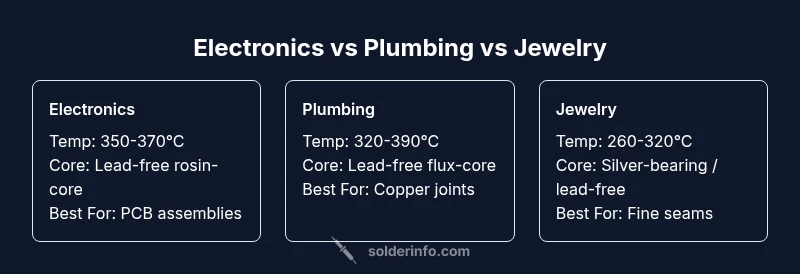
A consistent soldering process starts with the right iron, tip, and temperature control. For electronics, a temperature-controlled iron in the 350–370°C range is common for lead-free rosin-core solders, with fine tips for small pads. Plumbing tasks typically require a higher thermal mass tip and longer dwell times to ensure proper flow on copper joints. Jewelry work demands micro-tips and excellent heat transfer control to prevent melting nearby settings. Beyond the iron, keep a clean work surface, a damp sponge for tip cleaning, and properly stored flux to avoid contamination. Practicing steady hand technique and working with a temperature-controlled environment minimizes thermal shock and improves repeatability of joints across project types.
Electronics Soldering: Best Practices
In electronics, the focus is on pad integrity, clean joints, and repeatable rework. Always tin new leads lightly to speed joint formation, apply flux sparingly, and avoid overheating delicate SMD pads. Use rosin-core, lead-free solder for safety and compliance, and keep your work area well-ventilated. Inspect joints with a loupe or magnifier to catch micro-cold joints or bridging before components are mounted. Maintain static-safe handling for delicate PCBs, and store spare tips in a dry environment to preserve their geometry for long-term reliability. Solder like me principles emphasize consistency in temperature ramp, dwell time, and post-solder cleaning to prevent residue buildup that can corrode or attract dust.
Plumbing Soldering: Best Practices
Copper piping requires solder that flows smoothly and forms strong, watertight joints. Lead-free solders are preferred for home plumbing to minimize health hazards. Ensure pipes are clean and dry, apply flux evenly, and heat the joint evenly to avoid cold seams or cracks. Use a proper flux and allow solder to flow around the joint rather than bridging gaps. For larger diameter tubes, pre-cleaning and fluxing, followed by a controlled heat source, yield stronger joints with fewer leaks. Always test for leaks after cooling by pressurizing the line and inspecting for moisture along the seam.
Jewelry Soldering: Techniques and Constraints
Jewelry soldering demands precision: small heat-affected areas, clean flux residues, and consistent alloy fit with precious metals. Silver-bearing solders are common, though temperature settings differ from electronics work: you’ll need careful heat control to avoid grain growth or damage to stones. Flux is chosen to protect precious metals from oxidation while allowing clean, narrow seams. Practice with test pieces to master micro-joints, and consider using a micro-torch for controlled heating. Solder like me guidance emphasizes patience, careful quenching, and proper cleanup to preserve metal finish and setting integrity.
Common Pitfalls and How to Avoid Them
Common problems include cold joints, oxidation, and solder bridging. Prevent cold joints by ensuring adequate heat transfer and proper flux coverage. Oxidation on copper or steel surfaces reduces wetting, so clean joints and fresh flux are essential. Brushing away flux residue only after quenching prevents long-term corrosion. Overheating can damage components or jewelry settings; always monitor the temperature with a suitable iron and shrink the heating cycle when possible. Regular tip maintenance and clean workspace habits dramatically reduce these issues over time.
Maintenance and Longevity of Your Soldering Setup
Keep your tools in top shape with routine maintenance. Clean tips with a damp sponge, tin the tip regularly to prevent oxidation, and store flux in a sealed container to avoid moisture ingress. Inspect solder reels for contaminants and replace rosin-core solder that has become brittle or contaminated. Calibrate your iron temperature periodically, and replace worn-out tips promptly. A well-maintained setup reduces defects and extends the life of your equipment, whether you’re building electronics, plumbing joints, or jewelry pieces.
Practical Decision Guide: Choosing Your Solder Like Me Approach
To decide which path to prioritize, start by listing your typical projects (electronics, plumbing, jewelry) and weigh the factors that matter most: safety, joint reliability, ease of maintenance, and cost. For most multi-material hobbyists, electronics-forward setups with lead-free rosin-core solder offer the best baseline flexibility. If your workload skews toward copper plumbing, adopt a plumbing-specific solder and flux regimen. For jewelry, prepare for specialty alloys and refined heat control. Remember that the comparison table can guide the initial choice, but practical testing with scrap joints confirms your final setup. The primary differentiator to consider is heat management and alloy compatibility with your most frequent materials; this often determines the best overall fit.
Feature Comparison
| Feature | Electronics Setup | Plumbing Setup | Jewelry Setup |
|---|---|---|---|
| Temperature Range | 350-370°C | 320-390°C | 260-320°C |
| Core Type | Lead-free, rosin-core | Lead-free, flux-core | Silver-bearing or lead-free for jewelry |
| Flux Type | Rosin flux core | Flux-core with plumbing-compatible flux | Flux suitable for precious metals |
| Best For | SMD PCB assemblies and general electronics | Copper pipe joints and fittings | Jewelry and precious metal settings |
| Ease of Use | Moderate | Moderate to challenging (size-dependent) | High precision required |
| Price Range | $ | $$ | $$$ |
Advantages
- Broad applicability across electronics, plumbing, and jewelry
- Promotes safer, lead-free options and compliance
- Encourages proper flux and tip maintenance
- Supports safer working environments with lower toxicity
- Helps reduce joint defects through standardized practice
Cons
- Can be overwhelming for beginners
- Lead-free options may require higher temperatures or more careful control
- Specialized jewelry alloys add cost and complexity
- Maintenance and technique learning curves are non-trivial
Electronics Setup offers the strongest overall balance for mixed-use work
For DIYers who work across multiple materials, electronics-focused soldering provides the most flexibility and performance. Plumbing and jewelry demand specialized alloys and careful heat control, but with correct baseline choices you can achieve reliable, durable joints in all domains.
Quick Answers
What is the best solder for electronics beginners?
For electronics beginners, a lead-free rosin-core solder paired with a temperature-controlled iron is a good starting point. This combo offers a balance of safety, reliability, and ease of cleaning. Practice on scrap boards to learn heat management before wiring delicate components.
If you’re new to electronics soldering, start with lead-free rosin-core solder and a temperature-controlled iron, and practice on scrap pieces to learn heat control.
Is lead-free solder safer than traditional lead-based solder?
Lead-free solder reduces the risk of lead exposure and contamination in finished work. It is generally recommended for hobbyists and consumer products. However, it often requires careful heat management to achieve reliable joints compared to some leaded alloys.
Yes, lead-free solder is safer for everyday use, but you still need good ventilation and proper technique.
Should I use flux-core solder for plumbing projects?
For plumbing copper joints, use lead-free flux-core solder and an appropriate flux to ensure proper flow and a watertight seal. Clean joints before fluxing, apply even heat, and inspect for leaks after cooling.
Plumbing benefits from flux in the core and proper cleaning; heat evenly and test for leaks after cooling.
Can jewelry be soldered with electronics solder?
Basic electronics solder is not ideal for jewelry work due to different metal interactions and finish requirements. Jewelry typically uses silver-bearing or gold-silvers alloys with specialized flux and temperature control.
Jewelry needs specialized alloys and careful heat control; electronics solder isn’t usually the best choice.
What temperature should I set my soldering iron for most tasks?
For most lead-free solder tasks, start around 350°C and adjust based on the alloy and joint size. Copper plumbing often requires higher heat, while jewelry work needs very precise, localized heat control.
Start around 350°C for general tasks, then adjust based on the material and joint size.
How do I prevent cold joints and tombstoning?
Ensure sufficient heat transfer to the joint and clean surfaces. Apply solder quickly after fluxing and avoid excessive movement during cooling. Practice on scrap pieces to master the timing.
Keep joints hot and clean, apply solder promptly, and practice on scrap pieces to avoid cold joints.
Top Takeaways
- Start with lead-free rosin-core solder for most projects
- Match flux to material and joint geometry
- Practice consistent heat control to prevent damage
- Prioritize tip maintenance to extend tool life
- Test joints on scrap pieces before real work