Solder Instead of Weld: A Practical Guide
Learn when to solder instead of weld, how to choose methods, prep joints, and follow a clear step-by-step process for electronics, jewelry, and plumbing projects. Practical, safety-minded guidance from SolderInfo.


Goal: Decide when to solder instead of weld, and learn how to perform basic solder joints safely. Soldering uses a filler metal at low temperatures to join parts, minimizing heat damage and distortion, which is ideal for electronics, jewelry, and small-diameter plumbing. Welding, by contrast, melts base metals at high heat for strong, permanent joints but requires specialized equipment and thicker materials.
When to choose solder instead of weld
In many DIY and professional scenarios, you can achieve reliable metal joints by soldering rather than welding. According to SolderInfo, knowing when to solder instead of weld helps prevent heat damage to sensitive parts and keeps the process accessible for hobbyists. Soldering uses a filler metal that melts at a much lower temperature than the base metals, creating a bond without fusing the surfaces. This makes soldering ideal for electronics, jewelry, and light plumbing where distortion and metallurgical changes from high heat would be problematic. Welding, on the other hand, melts base metals to form a fused joint, which yields higher strength but demands thicker materials, precise technique, and more safety protocols. In practice, the choice comes down to joint requirements, heat sensitivity, material thickness, and service loads. For many small, non-structural joints, soldering will deliver adequate strength with far less equipment and risk. Examples include connecting copper wires to a PCB, repairing a jewelry clasp, or sealing a small copper tube with heat control.
Core differences: heat, strength, and materials
Soldering and welding are two ends of a spectrum, each with distinct physics and results. Soldering relies on capillary action: the molten filler metal flows into the joint and solidifies without melting the base metals (provided heat is controlled). This means lower heat input, less distortion, and easier handling for fragile assemblies like electronics, jewelry, and thin plumbing. Welding creates a metallurgical bond by melting filler wire and base metals, producing a strong, monolithic joint suitable for structural parts and heavy loads. The trade-off is heat, distortion risk, and the need for protective gear and ventilation. As a rule of thumb, if the joint will carry significant mechanical load or involves thick metal parts, welding may be preferable; otherwise, soldering is often the safer, cheaper, and more reversible option.
Solder types and flux basics
Choosing the right solder and flux is critical for a reliable joint. For electronics and jewelry, lead-free solders with rosin-core flux are common choices because they flow well at modest temperatures and are easier to clean. Flux cleans oxides and improves wetting, which helps the solder spread into the joint by capillary action. Rosin-based flux is generally safe for electronics but requires proper ventilation during work and cleaning after heating. In plumbing applications, you’ll encounter tin-lead and tin-silver alloys, depending on local codes; newer practice favors lead-free formulations to reduce contamination risk. Always read safety data sheets and use a compatible flux for the material family you’re joining. Soldering with the right flux reduces the chance of cold joints and improves long-term reliability.
Joint design considerations for soldering vs welding
Joint design defines success more than the tool you use. For soldering, joints should have good access for heat, clean surfaces, and a natural capillary path for the molten filler metal. Avoid overly tight gaps; a small gap is often ideal so the solder can wick into the seam. For welding, you typically need shoulders, bevels, or fillets designed to promote fusion and distribute heat evenly. In mixed-material projects, plan assemblies so the solder joint has a defined path for flow, while the welding region accounts for mechanical strength. When possible, design joints to be decorative and functional, not solely to maximize strength. The key is to minimize heat transfer to delicate components while maintaining adequate contact area for reliable bonding. SolderInfo Team emphasizes balancing aesthetics and integrity in joint design, especially for jewelry and electronics.
Compatible metals and material prep
Metal compatibility is everything. Copper, brass, and bronze pair well with solder because their surfaces wet nicely when cleaned and flux is applied. Aluminum, certain stainless steels, and some plated metals require special surface prep, dedicated flux, and sometimes mechanical abrasion to remove oxidation. Before any bonding, thoroughly clean the surfaces with a solvent or mechanical abrasion to remove oils and oxides; a clean surface dramatically improves adhesion and reduces the risk of cold joints. For plumbing, ensure water-soaked joints are dry before soldering and use appropriate flux for copper tube. Always inspect joints for oxidation and rework any areas that appear dull or grainy. A well-prepped surface is the foundation of a durable solder joint and a safe alternative to welding in many common projects.
Procedure overview: planning your joint
Start with a clear plan before you heat metal. Identify the joint type, choose the appropriate solder and flux, and confirm that you have ventilation and PPE. For electronics and jewelry, consider the impact of heat on nearby components or gemstones. In plumbing, verify that the joint will be sealed against leaks. Record the conditions (temperature, flux type, joint gap) so you can reproduce or adjust as needed. This planning phase saves time, reduces rework, and increases success rates when soldering instead of welding.
Best practices for durable joints
Durability comes from consistent heat management and clean surfaces. Apply flux evenly, bring the joint to the correct temperature, and feed solder steadily to encourage capillary flow without overheating. Maintain a stable, tinned tip to avoid cold joints. Allow the joint to cool naturally; quenching can cause microcracks. After cooling, clean any flux residues and inspect the seam for uniform coverage and complete wetting. For electronics, recheck continuity and insulation; for plumbing, test for leaks; for jewelry, inspect aesthetic aspects and ensure the joint is smooth.
Common mistakes and how to fix them
Common errors include overheating delicate parts, insufficient flux, dirty surfaces, and using too much solder. A cold joint can manifest as a dull, uneven line with poor conductivity; rework by cleaning and reheating with fresh flux. Overheating can damage components or deform jewelry. If flux is not compatible with the material, corrosion or weakening can occur. Address these issues by stopping heat as soon as the filler metal flows properly, and by re-prepping the surfaces if necessary.
Safety and PPE for soldering and welding
Ventilation and personal protective equipment are essential. Soldering produces fumes, so work in a well-ventilated area or use a fume extractor. Wear safety glasses to protect your eyes from splashes and flux. Keep a water bottle handy for quick relief if you get flux on your skin, and avoid skin contact with hot tools. For heavier welding tasks, ensure you have flame-resistant clothing, gloves, and proper training; never attempt welding without proper certification and supervision if you’re new to metalworking.
Case studies: electronics, jewelry, plumbing
Electronics projects benefit from low heat and precise flux control to protect components and LEDs. Jewelry projects rely on careful joint geometry and clean surfaces to achieve a smooth look and secure bond without overheating precious metals or stones. Plumbing joints demand reliable seals against leaks; soldering copper tube with lead-free solder and proper flux is a common, economical solution when welding would be excessive. Each case demonstrates how choosing solder instead of weld reduces risk, equipment needs, and setup time while delivering a practical, durable bond.
Tools & Materials
- Adjustable temperature soldering iron(Tip 1-2 mm; use a fine tip for precision)
- Lead-free solder wire(Diameter 0.8-1.0 mm; rosin-core preferred for electronics)
- Flux (rosin-core or liquid flux)(Choose flux compatible with the metals)
- Flux brush or sponge(Used to apply flux evenly)
- Desoldering braid (solder wick)(Useful for removing excess solder)
- Safety glasses(Protect eyes from hot splashes)
- Ventilation or fume extractor(Maintain air quality during work)
- Tweezers or helping hands(Hold small parts stable)
- Isopropyl alcohol and lint-free wipes(Clean surfaces before and after bonding)
- Heat-resistant mat or stand(Protects work surface and tools)
Steps
Estimated time: 60-90 minutes
- 1
Assess the joint and plan
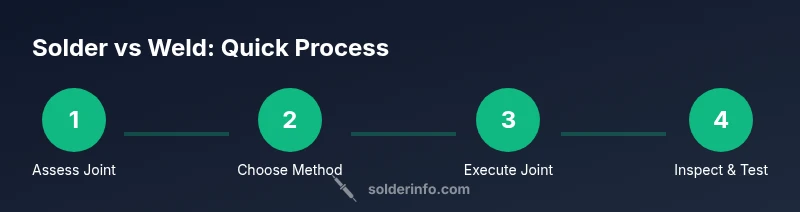
Identify whether soldering is appropriate for the joint. Check material thickness, heat sensitivity, and the required strength. Create a simple plan outlining the tools, solder type, and flux you will use.
Tip: Decide early: if heat could damage components or gemstones, favor soldering and light, controlled heating. - 2
Prepare the workspace and safety gear
Set up a clean, well-ventilated area. Put on safety glasses and ensure ventilation is active. Place a heat-resistant mat and tools within easy reach.
Tip: Ventilation reduces fumes exposure; never skip PPE on soldering tasks. - 3
Clean and flux the surfaces
Clean all metal surfaces to remove oils, oxides, and dirt. Apply flux evenly to promote wetting and flow of the solder into the joint.
Tip: A small amount of flux goes a long way; excessive flux can hinder inspection. - 4
Tin the tip and pre-tin the joint
Lightly tin the soldering iron tip and the joint edges with solder to reduce thermal shock and aid heat transfer.
Tip: Pre-tinning creates a smoother flow, improving a reliable, quick joint. - 5
Apply heat and feed solder
Carefully heat the joint with the iron and feed solder into the joint, letting it flow through capillary action. Avoid direct heat on delicate components.
Tip: Use a slow, steady feed; if it beads, heat balance is off. - 6
Inspect and reflow if needed
Let the joint cool, then inspect for a smooth, shiny finish and full fillet or capillary fill. Reflow if necessary.
Tip: A dull, grainy joint indicates insufficient wetting; reheat with fresh flux. - 7
Clean up and test
Wipe away flux residue with isopropyl alcohol. Test continuity and resistance where appropriate. Store equipment safely.
Tip: Always test for electrical continuity after soldering electronics. - 8
Document and evaluate
Note conditions and outcomes for future projects. Evaluate strength under expected loads and adjust technique as needed.
Tip: Keep a quick log to improve consistency across projects.
Quick Answers
What is the main difference between soldering and welding?
Soldering uses a filler metal to join parts at low temperatures without melting the base metals. Welding fuses base metals together by melting them, creating a stronger joint but requiring higher heat and more preparation.
Soldering uses a filler metal at low heat, while welding fuses metals by melting them for a stronger joint.
Can I solder electronics without damaging components?
Yes, with careful heat control and appropriate flux and solder. Use a temperature-controlled iron, work quickly, and keep heat away from sensitive components to minimize damage.
You can solder electronics safely by controlling heat and using the right flux, avoiding damage to components.
Is solder stronger than weld for all metals?
Not universally. Soldering is ideal for light-duty, non-structural joints and delicate parts. Welding creates high-strength joints for structural applications, but it isn’t suitable for heat-sensitive assemblies.
Solder is not always stronger—great for delicate work, welding for strength where heat isn’t an issue.
When should I weld instead of solder?
Choose welding when joints must bear significant loads or involve thick metals. Welding provides a monolithic bond with high strength and durability under stress.
Welding is better for high-load, thick metal joints; soldering is better for delicate, heat-sensitive work.
What metals can be soldered reliably?
Copper, brass, bronze, and many non-ferrous metals solder well with appropriate flux and surface prep. Some metals require special formulations or mechanical prep to achieve good wetting.
Most non-ferrous metals solder well with proper prep; some require special flux or prep.
Is lead-free solder safe for plumbing?
Yes, lead-free solders are standard in modern plumbing and are designed to be safe for potable water when used with proper flux and technique. Always follow local codes and manufacturer guidelines.
Lead-free solder is the standard in plumbing today when you follow proper technique and codes.
Watch Video
Top Takeaways
- Choose soldering for heat-sensitive, small joints.
- Welding provides higher strength but needs heavier equipment.
- Proper cleaning and flux are essential for reliable joints.
- Ventilation and PPE protect your health during soldering.
- Plan joints to support capillary action and easy inspection.