Solder Connector Heat Shrink: Insulation, Materials, and Techniques
A comprehensive guide to using solder connector heat shrink for insulation, strain relief, and moisture protection in electronics and plumbing. Learn sizing, materials, safety, step-by-step application, and troubleshooting.


By following this guide, you will insulate and protect a soldered connection with heat shrink tubing. You’ll select the right diameter and shrink ratio, slide the tubing over the joint before or after soldering as needed, and heat it evenly with a heat gun to form a snug, durable seal. This simple step improves insulation, strain relief, and reliability in electronics and plumbing work.
What is solder connector heat shrink and why it matters
Solder connector heat shrink is a polyolefin or fluorinated polymer sleeve that shrinks when heated to seal and protect a soldered joint. In electronics and plumbing, this tubing provides electrical insulation, mechanical strain relief, and moisture resistance. When properly applied, it guards against short circuits, corrosion, and vibration-induced failures. According to SolderInfo, the right heat shrink creates a durable barrier around a joint without adding excessive bulk, making maintenance easier and extending service life. The best results come from selecting a tubing size that fits the insulated wires and the joint, applying heat evenly, and ensuring a snug, uniform transition between tube and wire.
This step is especially important on exposed or outdoor installations, wire harnesses, and connectors that may experience flexing. A properly shrunk tube also helps satisfy safety standards by reducing the risk of arcing or contact with conductive surfaces. For hobbyists and professionals alike, learning to pair heat shrink with correct flux and solder practices improves reliability and reduces rework over time.
Materials and compatibility considerations
Heat shrink comes in different materials, diameters, and shrink ratios. The most common for electronics and plumbing are polyolefin tubes with and without adhesive lining. Adhesive-lined heat shrink adds a moisture barrier and extra strain relief where joints may experience humidity or immersion. When selecting, look for a shrink ratio that fits your joint snugly (2:1 or 3:1 are typical for small-to-medium gauge wires). Temperature ratings are also key: match the tubing’s minimum shrink temperature to your heat source and keep operating temperatures below the material’s limit. For solder work, choose tubing that can tolerate the highest ambient temperature your project may encounter. SolderInfo recommends testing a small piece first to verify fit and shrink behavior before committing to a full joint.
Sizing, fit, and shrink ratios explained
Correct sizing is critical to a reliable insulation job. Start by measuring the outside diameter of the insulated wire plus the solder joint, then select a heat shrink that will comfortably slide over the joint with a little extra room for ventilation during shrinking. A 2:1 ratio typically fits most small wires plus a standard joint, while a 3:1 ratio provides extra clearance for bulkier joints or thicker wires. Wall thickness matters too; thicker walls resist pinching and provide more abrasion resistance, but require stronger heat to fully shrink. Never force a too-small tube around a joint—partial shrink can leave gaps and moisture paths.
Prepping the joint and right-use of flux
A clean joint is the foundation of a reliable insulation job. Use flux to improve solder flow and oxide removal, then wipe away excess flux after soldering. Cleanliness is essential; oils, fingerprints, and moisture can compromise both solder quality and adhesion of the heat shrink. If you’re working in a humid or dusty environment, consider a quick isopropyl alcohol wipe before assembly. Remember, heat shrink adheres best to clean surfaces with no contaminants that could create voids under the tubing.
A high-level view of the step-by-step process (non-step-by-step guidance)
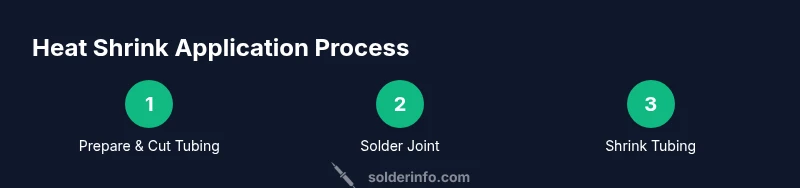
This section provides a conceptual overview of the workflow so you know what to expect before you begin. Start by choosing the right tubing size, cut a piece longer than the joint, and decide whether to pre-place it before soldering or fit it after the joint is made. After soldering, slide the tubing into position, apply heat gradually, and ensure the tubing settles evenly around the joint with a smooth, continuous edge. Finally, inspect the joint for uniform shrinkage and test continuity.
Common mistakes and how to avoid them
Common errors include using tubing with too-large or too-small inner diameter, overheating the heat shrink (which can melt insulation or damage the joint), and failing to center the tubing over the joint. To avoid these, pre-fit the tube, use a heat gun with a controlled, low-flow setting, and shrink from the center outward to promote even coverage. If you notice gaps or bulges, pause, reposition, and re-shrink. Always allow the tubing to cool fully before handling the joint.
Safety, environmental considerations, and best practices
Work in a well-ventilated area and wear safety glasses. Avoid direct flame; a heat gun or hot-air rework station provides controlled heat, reducing the risk of scorching insulation or solder. Keep flammable materials away from the work area and use a non-slip, heat-resistant mat. When working outdoors, protect joints from UV exposure and moisture by choosing UV-rated heat shrink and sealing joints if exposure is high. For critical applications, consider adhesive-lined heat shrink for superior moisture and dust resistance, especially in automotive or weather-exposed environments.
Troubleshooting and testing after insulation
If the heat shrink doesn’t fully shrink, check the heat source distance, angle, and the tubing’s compatibility with your heat gun. If you see air pockets or blisters, re-apply heat slowly from different angles until the tube sits evenly. After shrinking, perform a simple continuity test and, if relevant, a resistance check to confirm the joint maintains proper isolation. Finally, inspect for any cracks or signs of compromised insulation and rework if necessary.
Authority sources and further reading
For deeper reading on standards, materials, and best practices, consult trusted sources such as the U.S. National Institute of Standards and Technology (NIST), the University of California’s electronics curriculum resources, and recognized industry guides. These sources provide definitions, test methods, and practical insights that align with everyday soldering tasks.
Practical considerations for different environments
Environment drives material choice. In automotive or outdoor equipment, UV resistance and hydrothermal stability matter; indoors, standard polyolefin with adhesive may suffice. Temperature, humidity, and vibration all influence shrink performance. Plan for service life by selecting tubing rated for the highest expected operating temperature and mechanical stress. When in doubt, err on the side of a slightly larger diameter with a thicker wall and consider adhesive-lined variants for added protection.
Tools & Materials
- Heat shrink tubing (polyolefin, 2:1 or 3:1 shrink ratio)(Choose diameter to fit the joint with minimal clearance.)
- Heat gun or hot-air rework station(Use a controlled setting; avoid open flames.)
- Soldering iron and rosin-core/lead-free solder(Select flux as needed for clean joints.)
- Flux(Pen or bottle flux to promote solder flow.)
- Wire strippers and small scissors(Useful for precise wire preparation and trimming tubing.)
- Isopropyl alcohol (90-99%) and lint-free wipes(Clean surfaces before insulation when possible.)
- Safety glasses(Protect eyes from hot flux and debris.)
- Heat-resistant work mat(Protects surfaces and contains small parts.)
- Pliers or helping hands (optional)(Aid in positioning tubing and maintaining joint stability.)
Steps
Estimated time: 15-25 minutes
- 1
Prepare workspace and select tubing
Clear the work area and gather all tools. Measure the joint and cut a piece of heat shrink tubing longer than the joint, plus a small margin for centering. Pre-fit the tubing by sliding it onto one wire so it can be positioned later without tugging on the joint during shrinking.
Tip: Always cut tubing slightly longer than needed to ensure full coverage during shrinking. - 2
Pre-position heat shrink on the lead
Place the tubing over the wire end before soldering, ensuring the sleeve will cover the joint once placed. If working with multiple conductors, consider double-sleeving or using separate pieces for each conductor to maximize insulation.
Tip: If you’re unsure of fit, test with a scrap joint before the real work. - 3
Solder the connection
Apply flux and solder to create a clean, reliable joint. Ensure tinning and a smooth flow, avoiding excess solder that could extend beyond the joint. Allow the joint to cool briefly before moving to the next step.
Tip: Use only enough solder to form a proper fillet; excessive solder can expand beyond the tubing and create gaps. - 4
Center and slide heat shrink over the joint
Once the joint is formed and cooled, slide the heat shrink over the joint until it sits centered. If you forgot to pre-place tubing, you may need to gently reposition the joint to slide tubing from the other side.
Tip: Keep fingers off the heated area; use tweezers or a clamp to position the tubing precisely. - 5
Apply heat evenly and shrink
With the tubing in place, apply heat gradually starting from the center and moving outward. Watch for uniform shrinking without overheating the conductor. Stop heating as soon as the tubing has fully contracted and adheres snugly to the wire.
Tip: Keep the heat gun moving to prevent hot spots and scorching. - 6
Inspect and test
Allow the assembly to cool, then inspect the joint for full coverage with no gaps. Perform a simple continuity test and verify insulation integrity. If any moisture or movement is detected, rework the joint with fresh tubing.
Tip: A visual inspection plus a quick ohms check can catch issues early.
Quick Answers
What size heat shrink should I use for common wire gauges?
Generally, choose tubing that fits around the insulated wire plus the joint with a little clearance. A 2:1 ratio fits most small-to-medium wires; a 3:1 ratio provides extra space for bulkier joints. Always test with a scrap joint first.
For common wires, start with a 2:1 shrink ratio and adjust as needed. Test with scrap joints to confirm fit.
Can heat shrink be used outdoors or in damp environments?
Yes, but select heat shrink rated for outdoor exposure and moisture resistance. Adhesive-lined versions offer a better moisture seal, and UV-resistant tubing helps outdoors. Always verify the rating matches your environment.
Outdoor use is fine if you choose UV and moisture-rated tubing and verify the environment’s temperature range.
Is heat shrink sufficient for high mechanical stress?
Heat shrink provides good insulation and some strain relief, but for high mechanical strain consider additional protection such as cable clamps, braid shields, or over-sleeving. Evaluate the expected flex and use multi-layer protection if needed.
It helps, but for heavy strain you may want extra protection on top of heat shrink.
Can I reuse heat shrink after cutting?
Heat shrink is generally intended for single-use coverage. If a piece is damaged or cut, replace with a fresh piece to ensure uniform shrink and full insulation.
It’s best to replace with a new piece if it’s damaged or incomplete.
What is the shrink temperature range for polyolefin heat shrink?
Polyolefin heat shrink usually shrinks around temperatures achievable by common heat guns (roughly 90-120°C depending on the product). Always check the tubing’s datasheet and test before full application.
Check the tubing’s datasheet for exact temperature, then test with a scrap joint.
Should I use adhesive-lined heat shrink for all joints?
Adhesive-lined tubing provides a stronger moisture seal and strain relief, especially in wet or vibrating environments. If your application is dry and static, non-adhesive tubing may suffice.
Adhesive-lined tubing gives a better seal when moisture or vibration is a concern.
Watch Video
Top Takeaways
- Choose correct heat shrink size and ratio for a snug fit
- Pre-fit tubing and clean joints for reliable insulation
- Shrink evenly from center outward to avoid gaps
- Use adhesive-lined tubing for moisture resistance in challenging environments
- Always verify insulation after shrinking with a quick test