How to Use Heat Shrink Solder Connectors
Learn how to use heat shrink solder connectors for secure, insulated electrical joints. This comprehensive guide covers sizing, prep, heating techniques, and reliability practices for electronics, automotive, and home projects.


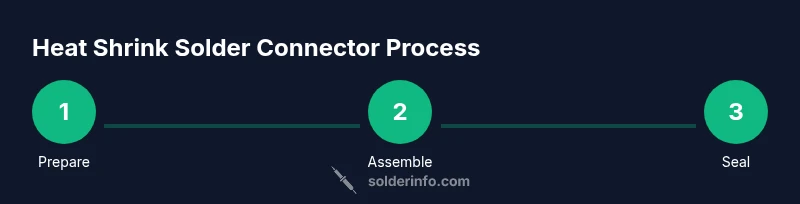
Learn how to use heat shrink solder connectors to create strong, insulated electrical joints. This quick answer highlights the key steps: choosing the right size, preparing wires, inserting conductors, applying even heat, and validating the connection for safety and reliability. Perfect for electronics, automotive, and home projects.
What heat shrink solder connectors are and why they matter
Heat shrink solder connectors are preassembled joints that combine a solder-filled or solder-ready contact with a heat-shrink sleeve. When heated, the solder flows to form a solid electrical connection and the sleeve tightens around the joint to insulate and provide strain relief. According to SolderInfo, these connectors simplify wiring in tight spaces and reduce the need for separate soldering and insulation steps. If you're looking for a reliable way to join wires while protecting the joint from moisture and mechanical wear, learning how to use heat shrink solder connectors will save time and improve consistency across projects. This guide focuses on practical, field-tested methods you can apply to electronics, automotive wiring, and household repairs.
Key benefits include reduced exposure to bare conductors, improved vibration resistance, and a neater finished appearance. While they are not a universal solution for every wire joint, when used correctly they offer dependable performance and faster turnaround than traditional crimp-and-insulate methods.
How heat shrink tubing improves insulation, strain relief, and moisture sealing
The insulation sleeve provides a physical barrier that guards against accidental contact and corrosion. Many heat shrink solder connectors include an adhesive lining that melts during heating, sealing the joint against moisture and air ingress. This creates a moisture-resistant seal ideal for outdoor or high-humidity environments. The combination of solder and shrink tubing also helps distribute mechanical stress, reducing the chance of fatigue cracks at the wire ends. In addition, the shrinking action consolidates the insulation around the conductor, which aids in preventing insulation abrasion during vibration or movement. The result is a compact, robust joint that maintains electrical integrity over time.
Choosing the right size, type, and material
Selecting the proper size is essential for a reliable connection. Measure the conductor diameter and match it to the connector’s crimp/solder interior. Adhesive-lined sleeves offer superior moisture barriers but require a careful heat application to avoid overheating the adhesive. For high-temperature or high-current applications, choose connectors rated for the intended load and environment. If space is tight, consider slim-profile connectors that still provide adequate insulation. Always verify compatibility with wire insulation thickness and gauge; mismatches can create gaps or weak joints that fail under load.
Preparation steps before wiring
Before assembling heat shrink solder connectors, clean all work surfaces and inspect wires for nicks or corrosion. Strip the insulation to the recommended length and remove any oxidation on the conductors. If you plan to tin the ends, do so lightly with rosin-core solder to improve wetting. Gather the correct size connector and ensure you have a heat source that allows for uniform heating without scorching nearby materials. Label wires if working on a multi-wire harness to avoid cross-connections. Proper preparation reduces the risk of cold joints and rework later in the project.
Safe heating technique and heat source selection
When applying heat, use a heat gun or a purpose-built heat tool with a controlled, even heat profile. Start at the outer shrink sleeve and move toward the joint to ensure the sleeve tightens uniformly. If you use a lighter or a hot air wand, keep the flame or nozzle moving to prevent scorching. Do not overheat the solder joint or the insulation; excessive heat can degrade the conductor, insulation, or adhesive lining. Allow the connector to cool naturally after shrinking to avoid stress-induced cracks.
Real-world applications, limitations, and best practices
Heat shrink solder connectors are especially useful in low- to moderate-current electronic wiring, automotive sensor harnesses, and waterproof indoor/outdoor connections. However, they may not be ideal for high-current power leads where heat and vibration are extreme or where environmental exposure exceeds the connector’s rating. Always consult the product datasheet for temperature, current, and moisture ratings. For critical systems, perform post-assembly testing, including continuity checks and insulation resistance tests, to confirm the joint’s reliability before deployment.
Post-join inspection, testing, and maintenance
After heat shrinking, visually inspect for uniform shrinkage and a smooth, tight seal around the joint. Test continuity across the joint with a multimeter and verify there is no short to adjacent conductors. If an adhesive-lined sleeve is used, confirm that the adhesive has fully flowed and filled any gaps. Store assembled harnesses away from direct heat sources and moisture when possible, and periodically recheck connections in service environments to catch aging joints early.
Common mistakes to avoid and how to fix them
Avoid using the wrong sleeve size, which leads to loose insulation or tight points that can crack insulation or squeeze the conductors. Do not heat the joint unevenly or overheat the adhesive; this can degrade the sleeve and weaken the seal. Never reuse heat shrink connectors after a failure or signs of wear. If a joint is resistive or shows discoloration, disassemble and reassemble with a fresh connector, ensuring proper wire prep and sizing. With careful technique, you’ll achieve durable, reliable joins.
Tools & Materials
- Heat shrink solder connectors (assorted sizes)(Choose sizes by conductor gauge; adhesive-lined variants provide moisture sealing)
- Heat source (hot air heat gun preferred)(Set to a gentle, even flow; avoid direct flame)
- Wire strippers (precision blade)(Strip to the length specified by the connector)
- Solder (rosin-core or lead-free options)(Only if your connectors don’t contain solder)
- Flux (optional)(Enhances solder wetting when not pre-soldered)
- Wire cutter(Clean cut to remove oxidation and deformed strands)
- Multimeter(Check continuity and insulation resistance)
- Isopropyl alcohol (cleaning)(Wipe away flux residue and oils)
- Safety glasses(Protect eyes from hot flux and debris)
- Marker or tape for labeling(Mark wire polarity or lead designation)
Steps
Estimated time: 20-35 minutes
- 1
Confirm compatibility and prep materials
Verify the wire gauge matches the connector size and arrange all tools within arm's reach. Inspect wires for damage and clean surfaces to promote good wetting. Have a clear workspace and good lighting.
Tip: Double-check the package for the correct conductor diameter before starting. - 2
Prepare wires and connectors
Use a sharp stripper to remove insulation cleanly without nicking the copper. If needed, lightly tin the conductor ends to improve solder flow, but avoid excessive solder buildup.
Tip: Keep stripped length consistent with the connector’s inner contact to ensure a proper fit. - 3
Slide heat shrink sleeve into position
Slide the sleeve of the connector onto one wire before joining so it is not trapped after the joint forms. If you’re using adhesive-lined sleeves, position so the adhesive flows toward the joint.
Tip: Do not pull the sleeve over the joint before heating if possible. - 4
Insert conductors into the connector
Insert the stripped ends into the connector until they seat snugly against the metal surface inside. Avoid leaving exposed copper beyond the sleeve or misaligning the wires.
Tip: A small amount of flux can help wet the surfaces if you’re not using pre-filled solder. - 5
Apply heat and form the joint
Heat the sleeve evenly from the outside inward until the plastic shrinks and the solder flows to create a solid joint. Stop once you see uniform shrinkage and the joint is sealed; avoid overheating the adhesive if present.
Tip: Keep the heat source moving to prevent scorching of insulation. - 6
Inspect, test, and finish
Allow the joint to cool naturally, then test continuity and inspect for moisture seals. Wipe away any residue and label the wire if needed. Store or route the harness away from heat sources.
Tip: If the joint looks irregular or feels loose, redo with a fresh connector.
Quick Answers
What is a heat shrink solder connector and when should I use one?
A heat shrink solder connector combines a solder-based joint with a heat-shrink sleeve to insulate and seal the connection. Use them when you need a robust, moisture-resistant electrical joint with minimal assembly steps, especially in tight spaces or outdoor environments.
A heat shrink solder connector is a joint with solder and insulation. It’s great for tight spaces and outdoor use where you need a sealed connection.
Can I reuse a heat shrink solder connector if the joint fails?
No. Once a heat shrink solder connector has been used and cooled, it should be replaced if the joint fails or if the sleeve shows damage. Reusing may compromise insulation and reliability.
You should not reuse a heat shrink connector after a failure; replace it to ensure reliability.
Is heat shrinking necessary for all solder joints?
Heat shrinking provides insulation and mechanical protection. While not always mandatory, it greatly reduces the risk of shorts, moisture ingress, and physical wear in many applications, especially outdoors or in automotive wiring.
Heat shrink isn’t always required, but it offers important insulation and protection in many setups.
What should I avoid when using these connectors?
Avoid mismatched sizes, uneven heating, and dry joints. Don’t overheat the adhesive or insulation, and never force wires into a snug fit. Always inspect the joint after curing.
Avoid size mismatches and uneven heating and always inspect after cooling.
Are heat shrink connectors suitable for outdoor or moisture-prone environments?
adhesive-lined heat shrink sleeves provide moisture sealing, making them suitable for outdoor use when rated for the environment. Always check the product ratings for temperature and moisture exposure specific to your location.
Yes, with the right moisture-rated sleeve and environment-aware selection.
Do I need solder or flux if the connector already contains solder?
If the connector contains solder, you typically do not need extra solder. Use flux only if wetting is poor or you are using non-soldered variants and want better wetting.
Usually no extra solder is needed if the connector is solder-filled; flux can help if needed.
Watch Video
Top Takeaways
- Choose the correct size and type for your conductor.
- Prepare wires thoroughly to ensure a clean joint.
- Apply heat evenly and avoid overheating the adhesive.
- Inspect and test the joint before final use.