Repair Solder: A Practical How-To Guide for Repairs
Learn to repair solder joints across electronics, jewelry, and plumbing with a practical, step-by-step guide covering prep, materials, techniques, safety, testing, and troubleshooting.


By the end of this guide you’ll be able to repair solder joints across electronics, jewelry, and plumbing. You’ll diagnose cracks, clean surfaces, apply flux, reflow or tin with fresh solder, inspect for bridges, and test continuity. The process emphasizes safe handling, precise technique, and durable, reliable repairs. Mastery comes from practice and careful observation of joint quality.
Why Repair Solder Matters
Solder joints are the heartbeat of many assemblies. When you repair solder, you restore electrical continuity, mechanical strength, and corrosion resistance. This is essential for electronics you rely on, jewelry pieces you wear, and plumbing fixtures in harsh environments. According to SolderInfo, skilled repairs extend component life and reduce waste by preventing premature replacement. In this section, we explore why proper solder repair matters across disciplines and how small fixes can prevent large failures.
Common Scenarios Requiring Repair
Cracked or cold joints are the most common reasons to repair solder. In electronics, a cracked joint can cause intermittent performance or total failure; in jewelry, poor wetting can create weak bonds; in plumbing, a compromised solder can leak. Bridges between pads are another frequent issue after hasty rework. Solder creeping along leads or oxidized surfaces also interrupts current flow. The SolderInfo team notes that recognizing the failure mode early improves repair success and reduces the chance of collateral damage. This awareness helps hobbyists and professionals triage effectively.
Selecting the Right Materials for Repair Solder
Choosing the right materials is crucial for a reliable repair. Start with a clean flux designed for the type of work you’re doing—rosin-core flux for electronics and no-clean flux for jewelry or plumbing fittings. Use a lead-free solder alloy that wetting properties match the task at hand, and keep desoldering braid or a desoldering pump handy to remove excess solder. Always have a precision iron tip and a helping hand tool to stabilize delicate joints. Remember, using the correct materials reduces rework and preserves component life, a principle echoed in SolderInfo’s guidance.
Surface Preparation and Cleaning Techniques
Preparation is the foundation of a good solder joint. Begin by removing old flux and oxidation with isopropyl alcohol and a soft brush. If a pad or lead is tarnished, light sanding with a fine abrasive can improve wetting, but avoid removing copper or pad integrity. Apply a thin layer of flux to promote good solder flow, then gently heat the joint to establish a smooth, even fillet. Clean surfaces remain free of residues, reducing corrosion risk and ensuring long-term reliability, as emphasized by SolderInfo’s field practices.
Repair Techniques Across Electronics, Jewelry, and Plumbing
Electronics: Stabilize the work with a third-hand tool, apply flux, and reflow the joint with controlled heat. Feed solder in small increments, observe capillary action, and stop as soon as a shiny fillet forms. Jewelry: Use a micro-torch or jeweler’s torch with low heat to avoid melting stones; flux helps the metal wetting, and careful cooling prevents fractures. Plumbing: For copper pipes, clean the joint, flux it, and melt solder with a propane or micro torch while shielding nearby materials. In all cases, avoid overheating, which can lift pads or anneal nearby components. Across all three domains, the goal is a quiet, smooth joint with no gaps or bridges.
Safety and Environmental Considerations
Always work in a well-ventilated area and wear eye protection. Solder fumes can irritate the respiratory system, and flux residues may be mildly corrosive. Use fume extraction or a fan, and keep flammable materials away from the heat source. Establish ESD precautions when working with sensitive electronics, including a grounded bracelet and a padded mat. After finishing, dispose of waste flux and old solder according to local regulations and store materials in labeled containers.
Troubleshooting Common Defects
Cold joints feel dull and may crack under stress. Bridges occur when too much solder bridges adjacent pads. Inadequate wetting leads to lifted joints and poor conduction. Overheating can lift pads or burn flux, leaving dark residues. If you encounter these issues, re-prepare the surface, reapply flux, and rework the joint with shorter heating cycles. Always inspect with a magnifier and verify connectivity with a multimeter before sealing the assembly.
Tools & Materials
- Soldering iron (adjustable 20–60W)(Temperature control essential for electronics; use heat sinks for delicate parts)
- Lead-free solder alloy(Choose a small diameter for fine work; rosin-core preferred for electronics)
- Flux (rosin-core or no-clean flux)(Flux improves wetting and flow; choose no-clean for jewelry/plumbing if possible)
- Solder wick / desoldering braid(Wide enough for pads; cut to short lengths for easy handling)
- Desoldering pump (solder sucker)(Helpful for larger joints or removing old solder quickly)
- Isopropyl alcohol (90%+)(Used for cleaning flux residues and prepping surfaces)
- Third-hand / helping hands(Stabilizes components during repair)
- Safety glasses(Protect eyes from splashes or flux fumes)
- ESD-safe mat and wrist strap(Protects sensitive electronics from static discharge)
- Magnification loupe(Helpful for inspecting tiny joints and pads)
- Thermal protection (heat sink, Kapton tape)(Protects nearby components from heat)
Steps
Estimated time: 60-120 minutes
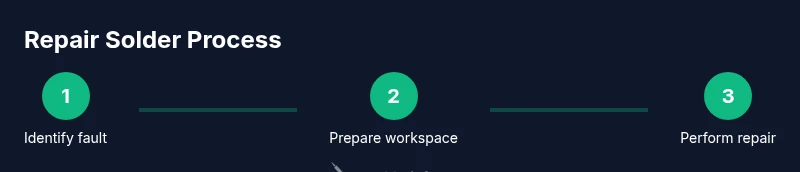
- 1
Identify the fault
Inspect the joint with a magnifier to spot cracks, oxidation, or bridging. Use a multimeter to verify continuity and confirm whether the issue is mechanical or electrical.
Tip: Document the fault with a photo for reference before you rework. - 2
Prepare the workspace
Set up a clean, well-ventilated area. Secure the workpiece with helping hands and place a heat sink on sensitive pads if needed.
Tip: Avoid clutter; a tidy workspace reduces the risk of accidents. - 3
Clean and tin surfaces
Wipe surfaces with IPA to remove oils. If oxidation is present, lightly sand or scrub, then apply flux to improve wetting and tin the pad and lead.
Tip: Use only a thin layer of flux to avoid flooding the joint. - 4
Apply flux and reflow
Place the component or lead, gently heat with the iron, and feed solder in small amounts until a smooth fillet forms. Stop heating as soon as the fillet appears glossy.
Tip: Feed solder in short bursts to prevent cold joints. - 5
Check for bridges and wetting
Inspect the joint for shiny, uniform wetting and no bridges. Rework if necessary by reheating and adding a touch more solder in a controlled manner.
Tip: Pause between feeds to let the joint settle. - 6
Final cleaning and inspection
Wipe away flux residues and re-test continuity. Look for dullness or gaps that indicate poor wetting and correct them.
Tip: A final look under magnification helps catch subtle defects. - 7
Document results and store
Record what was repaired, the materials used, and any observations. Store tools and components in labeled containers for next time.
Tip: Keep a small log for future repairs on similar boards.
Quick Answers
What is repair solder and when should I use it?
Repair solder is the process of fixing damaged solder joints to restore conductivity and mechanical strength. Use it when you detect cold joints, cracks, bridges, or lifted pads in electronics, jewelry, or plumbing. The goal is a reliable, durable joint with proper wetting and clean surfaces.
Repair solder fixes damaged joints to restore conductivity and strength when you see cracks, cold joints, or bridges.
Which solder alloy is best for electronics repairs?
For electronics, choose a lead-free alloy with good wetting characteristics and compatible flux. Lead-free options are widely used for safety and regulatory reasons. Always match the alloy to your components and pads to avoid excessive heating or poor joint quality.
Electronics repairs typically use lead-free alloys with reliable wetting and flux compatibility.
How do I fix a cold solder joint safely?
Identify the joint, clean the surface, reapply flux, and reheat with a steady touch of solder until a bright, conical fillet forms. Avoid overheating and remove excess solder to prevent bridging.
To fix a cold joint, clean, flux, reheat steadily, and watch for a bright, conical fillet without bridges.
Is it safe to use a propane torch for jewelry repairs?
A small micro torch is acceptable for jewelry repairs if you control the flame and keep heat away from stones and delicate settings. Use flux to improve wetting and protect nearby materials, and work slowly to avoid damage.
A small micro torch can be used for jewelry repairs if you handle heat carefully and protect stones.
Can I repair solder on copper plumbing without removing corrosion?
Typically you should clean and prepare the pipe surface to remove corrosion before applying flux and solder. If corrosion is extensive, replacing the joint or piping may be more reliable. Always ensure proper ventilation and follow local codes.
Clean the surface before soldering; extensive corrosion may require replacement.
How can I verify the repair worked after soldering?
Test continuity with a multimeter and inspect the joint under magnification. Look for a smooth, shiny fillet with no gaps or bridging, and re-test after a short cooling period.
Check continuity and visually inspect the joint after it cools to confirm a solid repair.
Watch Video
Top Takeaways
- Inspect joints before rework to target the right issue.
- Flux is essential for reliable wetting and clean joints.
- Keep heat exposure minimal to protect components.
- Test continuity after each repair to confirm success.