Reflow Solder with Heat Gun: A Practical Guide
Learn to reflow solder with a heat gun safely and effectively. This step-by-step guide covers technique, flux choices, safety tips, troubleshooting, and real-world examples for electronics hobbyists and professionals.


To reflow solder with heat gun, apply controlled heat to the PCB joints until the solder becomes molten and wires settle into place. Begin with a low temperature, short bursts, and shield adjacent parts to prevent thermal damage. This method is useful for small rework tasks and reflowing stubborn joints when a dedicated rework station isn’t available.
What is reflow solder with heat gun?
Reflow solder with heat gun refers to using a portable hot-air source to soften and redistribute solder on PCB joints. This technique is commonly used for minor rework, touch-ups on surface-mount devices (SMDs), or to repair bridged joints without disassembling the entire board. The heat gun delivers a concentrated, adjustable stream of air that melts solder just long enough for the joint to settle, while nearby components are protected by shielding and careful distance. For DIY electronics hobbyists and professionals alike, understanding how heat transfer, flux chemistry, and solder behavior interact during reflow is essential to avoid cold joints or thermal damage. Practice with scrap boards to learn how different solders respond to airflow and temperature.
When to choose heat gun rework vs other methods
A heat gun is a versatile tool for selective rework, but it is not a universal replacement for a temperature-controlled rework station or a soldering iron. Use a heat gun for:
- Small pad repairs on PCB traces or lifted pads that are difficult to reach with an iron.
- Quick reshaping of slightly misaligned components where precise local heating is beneficial.
- Reflowing corner joints on simple PCB assemblies where excessive heat would risk other parts.
Alternatives include magnetic-powered rework stations for uniform heat and traditional soldering irons for hands-on control. Each method trades speed, precision, and heat control. When working with heat guns, expect a learning curve and plan for slower iterations on sensitive boards.
Safety first: protecting yourself and the board
Safety matters when reflowing solder with heat gun. Protect yourself by wearing eye protection and using gloves if needed, and ensure good ventilation to manage fumes from flux. Prepare the board with an ESD-safe setup to prevent damage to microelectronics. Keep a fire-resistant mat under the work area, and avoid touching hot surfaces. A shield or metal barrier around the joint helps direct heat and minimizes exposure to adjacent components. Practice on discarded boards to build familiarity with how quickly heat affects different solder alloys and component packages. These precautions reduce the risk of overheating, which can lift pads or delaminate solder mask.
Flux and solder considerations for heat gun reflow
Flux choice dramatically influences reflow outcomes. Use rosin- or water-soluble flux designed for electronics, applied in a thin, even layer to promote solder flow and prevent oxidation. For lead-free solders, fluxes that tolerate higher temperatures help maintain joint reliability. When you reflow with a heat gun, keep flux fresh and clean. After heating, wipe away excess flux residue with isopropyl alcohol and a lint-free wipe. Solder choices should align with your board’s material and the alloy type; lead-free solders generally require slightly more heat and flux activity to achieve a reliable joint.
Heat control: temperature, distance, and time
Successful heat gun rework hinges on precise heat management. Start with the lowest effective air setting and a modest distance from the joint. Move the gun in short, controlled bursts to avoid scorching solder mask or nearby components. Watch the solder melt and flow; if you see dull or grainy joints, reduce the heat or remove the nozzle briefly to cool before continuing. Use pulse heating to prevent cumulative overheating that could lift pads. If multiple joints are involved, heat them sequentially to maintain board integrity. Overheating can peel solder mask, cause lifted pads, or damage ICs, so patience and attentiveness are essential.
Preparing the board and joints before reflow
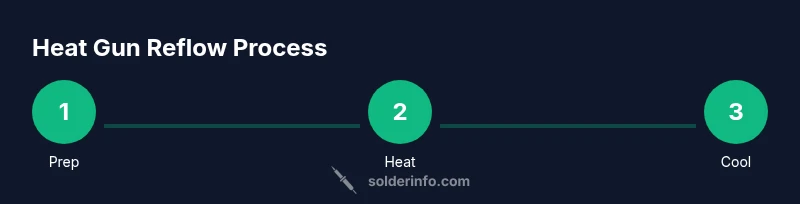
Preparation reduces surprises during reflow. Inspect for lifted pads, bridged joints, and cracked vias. Clean the board surface with isopropyl alcohol to remove oils and contaminants that impede solder wetting. Apply a small amount of flux to the joints to improve solder flow and protect copper traces. If you’re reworking a sensitive area, shield surrounding components with a heat-resistant barrier. Secure the board so it remains stable during heating, and have a timer ready to monitor exposure time. Proper preparation makes the actual heating phase faster and more predictable.
Step-by-step approach to applying heat (high-level)
Adopt a measured approach to heat delivery. Begin by warming the surrounding board area without direct contact to gauge how quickly heat travels. Then target the joint with short bursts, watching for the solder to become liquid and reflow into place. If you see excessive flux boil or spatter, back off heat and adjust distance. After a few cycles, the joint should be glossy and evenly wetted. If bridging occurs, pause, rework with a clean bit, and reflow again after the area cools slightly.
Cooling, inspection, and correcting defects
Allow the board to cool gradually in a dust-free environment to avoid thermal shock. Inspect joints with a loupe; look for smooth, concave fillets and complete wetting along the pad. Avoid forcing components during cooling, which can create micro-cracks. If a joint is incomplete, reheating with lighter touch and targeted flux can help; for bridged joints, remove excess solder with a wick and reflow cautiously. Document any recurring issues to adjust your technique on future tasks. A thorough post-reflow inspection saves time on troubleshooting later.
Common mistakes and how to prevent them
Frequent errors include overheating, over-fluxing, and insufficient shielding. Relying on the heat gun without shielding risks damaging nearby components, while too little heat yields cold joints. Poor flux application reduces solder flow and can trap air under a pad. Always practice on scrap boards first, maintain a steady pace, and use shielding. Persistent issues may require a dedicated hot-air rework station for consistent results.
Real-world examples: pads, joints, and troubleshooting
In real projects, you may encounter lifted pads on a fragile PCB or a stubborn joint on a dense SMD package. A common fix is to apply flux and reflow with short bursts of heat while monitoring the pad’s response. For bridged joints, carefully remove excess solder with a wick and reflow again with precise heat control. By observing how flux behaves in your exact environment, you can tailor your technique and minimize risk. Each board teaches a little more about how to reflow solder with heat gun effectively.
Authority sources
For safety and best practices, consult credible resources. OSHA provides general soldering safety guidelines and hazard awareness. MIT OpenCourseWare offers foundational electronics soldering principles, and NIST resources discuss materials and process reliability relevant to soldering. Referencing these sources helps ensure your technique aligns with recognized standards and practical tips.
Next steps and practice recommendations
Begin with non-critical boards to build familiarity with heat distribution, flux behavior, and timing. Track your results and adjust distance, air flow, and exposure time to find the sweet spot for your components. Maintain a clean workspace, and gradually tackle more complex joints as your confidence grows. With consistent practice, you’ll be able to reflow solder with heat gun efficiently while minimizing risk to your assemblies.
Tools & Materials
- heat gun (adjustable temperature)(use low to mid heat; keep a safe distance from the board)
- heat shield or shielding material(protect surrounding components and traces)
- flux (rosin-based or water-soluble electronics flux)(apply thin, even layer to joints)
- solder (lead-free preferred)(use compatible alloy for joints)
- flux brush or pen(for precise flux application)
- solder wick/desolder braid(to remove excess solder if needed)
- ESD-safe mat and grounding strap(minimize component damage)
- isopropyl alcohol (99%)(clean flux residues after reflow)
- lint-free wipes(for residue cleanup)
- tweezers and plastic picks(manipulate tiny components safely)
- magnifier or loupe(inspect joint quality)
Steps
Estimated time: 40-60 minutes
- 1
Prepare the workspace and safety gear
Power down the device, unplug, and set up an ESD-safe area with a non-flammable mat. Put on eye protection and ensure good ventilation. Gather your tools and flux materials before starting.
Tip: Place the board on a heat-resistant surface and secure it to prevent movement during heating. - 2
Inspect joints and plan approach
Examine joints for lifted pads, bridging, or damaged solder mask. Decide whether to repair one joint or several in sequence, and identify protective shields needed for nearby components.
Tip: Mark the joints you will touch with a non-permanent marker to maintain focus. - 3
Apply flux and prep joints
Lightly apply flux to the target joints to promote proper solder flow and prevent oxidation. Wipe away any excess flux to minimize residue during heating.
Tip: Flux helps solder wetting; too much flux can lead to spattering. - 4
Position shielding and stabilize the board
Place a shield around the component area to minimize heat spread. Ensure the board is stable and the joints are accessible for the heat gun without obstruction.
Tip: If you can, lift fragile SMD parts slightly to create air channels for hot air. - 5
Apply heat in short bursts
Gently direct the heat gun at the joint with short, controlled bursts. Move around the joint to avoid concentrating heat on a single spot. Watch solder begin to flow and wet the pad.
Tip: Pause if flux boils; resumes with lighter bursts after a brief cool-down. - 6
Monitor solder flow and adjust distance
As the solder flows, adjust the distance and angle to promote even wetting. If joints don’t reflow, briefly re-apply flux and re-heat with small bursts.
Tip: Avoid overheating outer traces or nearby LEDs. - 7
Cool and inspect the joint
Let the board cool gradually and inspect the joint for smooth, glossy wetting. Use a loupe to confirm even solder fillets and absence of bridging.
Tip: If bridging occurs, remove excess solder with wick and reflow. - 8
Clean up and verify results
Clean residue with isopropyl alcohol and a lint-free wipe. Re-test electrically and mechanically to verify a solid joint and board integrity.
Tip: Document any persistently tricky joints for future work.
Quick Answers
Can I use a heat gun to reflow SMDs on a PCB?
Yes, for small-touch tasks and minor rework you can use a heat gun, but it requires careful control and shielding to avoid damaging nearby parts. For dense or high-pin-count packages, a dedicated rework station or soldering iron with precise control is safer.
Yes, for small touch-ups you can use a heat gun, but be careful with shielding and heat control; for dense packages, use a dedicated rework station.
What temperature should I set the heat gun to?
Use the lowest effective heat that softens solder without scorching the board. Avoid sustained high heat on sensitive components and monitor the joint closely as it warms.
Start with low heat and monitor the joint carefully to avoid overheating.
Can flux help when using a heat gun for reflow?
Flux is essential; it improves solder flow and prevents oxidation. Use a flux appropriate for electronics and apply a thin layer before heating.
Flux helps the solder flow and prevents oxidation during heating.
Is it safe to reflow lead-free solder with a heat gun?
Yes, but lead-free solder often requires a bit more heat and flux activity. Monitor temperature closely and avoid prolonged exposure to any single area.
Lead-free reflow is doable with careful heat control and proper flux.
What are signs of overheating during reflow?
Look for scorched flux, lifted pads, or board discoloration. Glossy, well-wetted joints are typically good indicators; dull or misshapen joints indicate issues.
Overheating shows as scorched flux or lifted pads; look for glossy joints as good signs.
Can I reflow large connectors with a heat gun?
Large connectors require careful heat distribution and sometimes a broader shield. If joints are extensive, consider alternative methods to avoid uneven heating.
Large connectors are trickier; use broad shielding and consider other methods if needed.
How can I verify the repaired joint after cooling?
Inspect visually for a smooth fillet and proper solder wetting. Use a multimeter to check continuity and look for any bridging against neighboring traces.
Check the joint visually and with a continuity test to confirm reliability.
Watch Video
Top Takeaways
- Start with low heat and short bursts to avoid damage.
- Flux quality and shielding are critical for clean reflow.
- Practice on scrap boards before working on final assemblies.
- Inspect joints thoroughly after cooling for reliability.