Pros and Cons of Soldering: An Analytical Comparison
A thorough, data-driven look at the advantages and drawbacks of soldering across electronics, plumbing, and jewelry, with practical tips, safety guidance, and a decision framework for DIYers and professionals.


Soldering offers strong, conductive joints with relatively low equipment costs, but carries heat transfer risks, fumes, and potential damage if technique or ventilation are inadequate. Its pros and cons hinge on material compatibility, precision requirements, and safety practices. This comparison helps you decide when soldering is the best choice and when alternatives may be wiser.
Why soldering matters across crafts
The phrase pros and cons of soldering captures a broad truth: soldering is a versatile joining method that works across electronics, plumbing, and jewelry. The method relies on a metal alloy that melts at a low temperature to create physical and electrical bonds between parts. For hobbyists and professionals, soldering enables rapid prototyping, easier repairs, and durable connections without the bulk of mechanical fasteners. According to SolderInfo, the real strength of soldering lies in the correct combination of flux, solder alloy, heat management, and joint preparation. When these elements align, you can achieve repeatable, low-resistance joints with minimal hardware while keeping costs predictable. The discipline also requires attention to safety, material compatibility, and environmental factors such as ventilation and fume control. Reading up on flux types, alloy compositions, and best-practice heat application sets a solid foundation for any crafting path.
Core differences by application: electronics, plumbing, and jewelry
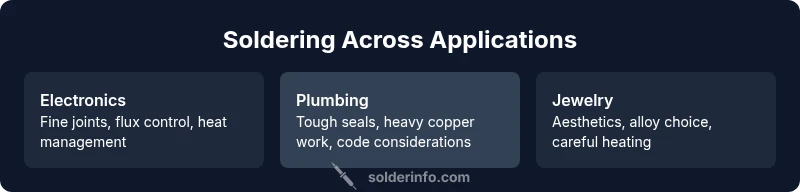
Different fields use soldering in distinct ways, and the context determines what constitutes a “good” joint. Electronics soldering prioritizes minuscule joints, heat control to protect components, and corrosion resistance over time. Plumbing soldering emphasizes robust seals, often with heavier copper work, and tolerance for joint movement. Jewelry soldering focuses on seamless aesthetics, precise alignment, and purity of the metal alloys used. Each domain benefits from different flux chemistries, solder alloys, and temperature profiles, which in turn influence preparation steps, cleaning methods, and inspection criteria. In practice, a DIY electronics project may favor rosin-core, lead-free solder for safety and compliance, while a jewelry setup might demand high-purity alloys and meticulous surface preparation to avoid visible seams. Recognizing these distinctions helps you choose the right tools, materials, and workflow for the task at hand.
Essential materials: solder, flux, and hardware
Choosing the right materials is the backbone of successful soldering. Electronics typically rely on flux cores to prevent oxidation and ensure wetting, along with solder alloys that balance melting temperature and conductivity. For plumbing, lead-free solders or traditional tin-lead blends are common, depending on local codes and corrosion considerations. Jewelry soldering often uses high-purity silver or gold solders with specialized flux and flame attitudes to manage delicate joints and avoid discoloration. Flux acts as a chemical cleaner and barrier against oxidation, while the solder provides the actual bonding metal. The hardware—tip shape, iron wattage, and tip temperature—directly affects heat transfer and joint quality. Always choose materials compatible with the base metals and intended service environment. A deliberate material plan reduces rework and yields cleaner, more reliable joints across crafts.
Temperature, heat control, and joint quality
Heat control is the single most critical variable in soldering success. Too little heat leads to poor wetting and cold joints; too much heat can damage components, degrade insulation, or cause warping in pipes. A well-tuned workflow uses the correct tip size, steady contact, and gradual heating to the optimal bonding temperature for the chosen solder. In electronics, avoiding overheating sensitive components preserves integrity and longevity. In plumbing, ensuring a clean, fully wetted copper surface leads to durable seals that resist leaks. Jewelry work benefits from controlled heating to prevent oxidation and heat-affected zones that mar the metal’s appearance. The key practice across all fields is joint cleanliness, consistent heat application, and timely quenching or cooling to set the bond cleanly.
Safety first: fumes, ventilation, PPE
Soldering safety is non-negotiable. Fume exposure from fluxes and solder can pose health risks, so work in a well-ventilated area and employ fume extraction when possible. Personal protective equipment such as safety glasses, gloves, and a properly rated respirator for certain fluxes can reduce risk. Keep your work area organized to prevent accidental burns and short circuits. Always store flux and solder containers securely to minimize spills, and follow local codes for waste disposal, especially with lead-containing alloys in some jurisdictions. Lastly, invest in a soldering station with temperature control and a comfortable grip to maintain steady hands during precise work. Safety habits compound with improved results, reinforcing safer, higher-quality outcomes across electronics, plumbing, and jewelry projects.
Advantages in electronics and jewelry, and plumbing
Across crafts, soldering offers fast assembly and repair options that are often reusable and reversible. In electronics, solder joints provide low-resistance connections that enable reliable signal transfer and power delivery. In jewelry, soldering enables seamless ring shanks, clasps, and decorative accents with minimal hardware exposure. In plumbing, soldered joints create watertight seals that endure pressure and temperature variation. The best-case scenarios involve clean surfaces, appropriate flux, properly prepared joints, and careful heat management. When executed well, soldering delivers a balance of speed, cost-effectiveness, and mechanical/electrical performance that alternatives like crimping or welding cannot always match, particularly for small, delicate components or compact assemblies.
Common disadvantages and pitfalls
Despite its advantages, soldering introduces several risks and potential imperfections. Heat can damage nearby components, insulation, or delicate jewelry finishes if not controlled. Poor flux choice, insufficient cleaning, or contaminated surfaces lead to weak bonds, corrosion, or solder joint failures such as cold joints. In electronics, flux residues may cause long-term reliability issues if not properly cleaned, and in plumbing, improper wetting can create leaks or cracks over time. Soldering also depends on the operator’s skill; beginners often struggle with flux pooling, solder bridging, or insufficient heat transfer. Finally, soldering requires ventilation and handling of metal alloys, some of which pose health or environmental concerns. Recognizing these pitfalls helps you adopt best practices and avoid common errors.
When to avoid soldering and use alternatives
Soldering is not a universal solution. For high-load electrical connections in harsh environments, crimping or mechanical fasteners may offer superior resilience. For large copper pipe work with heavy flow and vibration, soldering can be impractical or unreliable if joints are not protected against movement and thermal cycling. Jewelry portions that demand high-impact strength or specific metal finishes might benefit from laser welding or mechanical joining in some cases. In such scenarios, alternatives might provide better long-term performance, easier inspection, or safer handling. Understanding the project’s service conditions, required strength, and inspection criteria will guide you toward the most appropriate joining method.
Practical workflow: a beginner's 6-step routine
- Prepare the workspace: ensure clean, dry surfaces and good lighting. 2) Select appropriate materials: solder, flux, and a compatible tip and iron. 3) Clean and pretreat surfaces: remove oxidation and oils using isopropyl alcohol or appropriate cleaners. 4) Apply flux and tin the tip: thin, even coat; this improves wetting. 5) Deliver heat with steady, controlled contact: avoid overheating the surrounding area. 6) Inspect and clean: check for smooth fillets, remove flux residues, and test continuity or pressure as applicable.
Real-world case studies: electronics vs plumbing
In electronics, a small circuit board repair demonstrated how proper flux, a fine-point iron, and lead-free solder produced a reliable joint with minimal risk to adjacent components. The operator practiced gradual heating and careful inspection to prevent bridging and tombstoning. In plumbing, a repair on a copper elbow required cleaning the surface, using appropriate flux, and applying heat evenly to create a watertight seal. The case shows that, while soldering is versatile, the context determines whether a quick fix or a more robust approach is needed, emphasizing joint cleanliness, material compatibility, and method readiness.
Authority sources
- OSHA Safety and Health Topics: Soldering (https://www.osha.gov/html/etools/ev/est/eros/soldering.html)
- National Institute of Standards and Technology (NIST) General Guidelines for Soldering Environments (https://www.nist.gov)
- U.S. Department of Energy Safety for Industrial Soldering Practices (https://www.energy.gov)
Quick decision factors you can apply today
- Choose soldering for small joints and rapid repairs when heat impact is manageable.
- Favor flux-controlled processes and lead-free alloys for electronics and health safety.
- Reserve soldering for joints where mechanical strength and conductivity matter, while considering alternatives for high-load or high-visibility jewelry work.
mainTopicQuery":"soldering"
Feature Comparison
| Feature | Electronics Soldering | Plumbing Soldering | Jewelry Soldering |
|---|---|---|---|
| Typical Join Type | Surface/through-hole electronic joints with fine geometry | Copper pipe joints with beveled surfaces and sealing requirements | Fine jewelry seams with discretion on visibility |
| Common Solders Used | Rosin-core or no-clean lead-free alloys | Lead-free tin-based solders or traditional tin-lead blends (per code) | Gold/silver solders with specialized fluxes |
| Tools Required | Precision iron, flux, desoldering tools | Torches or regulated heat sources, flux, pipe cutters | Fine-tine torches, pick, flux designed for precious metals |
| Safety Considerations | Ventilation, fume control, flux residue cleanup | Lead content regulations, ventilation, flame hazards | Metal fume exposure, careful handling of precious metals |
| Best For | Small-scale, high-precision electronics and repairs | Copper plumbing joints and piping repairs | Delicate jewelry repairs and setting |
Advantages
- Fast turnaround for small joints and repairs
- Lower equipment costs for hobbyists
- Versatile across electronics, plumbing, and jewelry
- Repairability and reversibility in many scenarios
Cons
- Heat can damage components, insulation, or finishes
- Requires ventilation and protective equipment
- Skill-dependent with a noticeable learning curve
- Flux residues or adhesives may require post-cleaning
Soldering is generally advantageous for small, precise joints when proper safety and technique are followed
Across electronics, plumbing, and jewelry, soldering offers speed, cost-effectiveness, and repairability. Its success hinges on material choices, heat control, and ventilation. When those factors are managed, soldering remains a strong option; otherwise, alternatives may yield better durability or aesthetics.
Quick Answers
What are the main advantages of soldering for DIY projects?
Soldering enables fast, low-cost assembly with strong electrical and mechanical bonds for small components. It is versatile across electronics, plumbing, and jewelry, especially when good flux, clean surfaces, and proper heat control are used.
Soldering offers fast, affordable joints and is versatile for many DIY tasks when you control heat and use the right flux.
What are the most common soldering mistakes and how can I avoid them?
Common mistakes include cold joints from insufficient heat, bridging from excessive solder, and flux residues causing corrosion. Avoid them by cleaning surfaces, using the correct heat, applying flux properly, and inspecting joints with a magnifier.
Watch for cold joints and bridges, keep surfaces clean, and heat gradually to avoid defects.
Is soldering safe for electronics involving lithium batteries?
Soldering near lithium batteries requires caution due to heat sensitivity and venting risks. Use low heat proximity, shield batteries, and prefer pre-fabricated connectors when possible to minimize heat exposure.
Be careful around batteries; if unsure, use pre-fabricated connectors to avoid heat damage.
When should I avoid soldering and use an alternative?
If the joint will experience high mechanical stress, vibration, or extreme temperatures, alternatives like crimping or welding may provide longer-term reliability. For large-diameter pipes, brazing or mechanical fittings can be preferable.
If it’s a high-stress or critical joint, consider crimping or welding instead.
How important is flux in soldering quality?
Flux prevents oxidation, improves wetting, and ensures a reliable bond. Using the right flux type for the material and cleaning residues afterward are essential for long-term performance.
Flux is key to a clean, strong bond; pick the right flux and clean up afterward.
Top Takeaways
- Adopt controlled heat management for reliable joints
- Choose materials and flux suited to the application
- Prioritize workspace safety and ventilation
- Evaluate alternatives for high-stress or visibility-sensitive tasks
- Develop a repeatable workflow to reduce defects