MAP vs Propane for Soldering: A Thorough Comparison
A detailed, expert comparison of MAP gas vs propane for soldering across electronics, jewelry, and plumbing. Learn flame characteristics, safety, cost, and best-use scenarios with insights from SolderInfo.


MAP gas and propane are common fuels for soldering torches. MAP gas generally burns hotter with a narrower, more focused flame, speeding heating on larger joints, while propane is cheaper, more available, and easier to control for small components. For electronics and jewelry, MAP can speed work; for plumbing or repair tasks, propane often offers safer, steadier operation.
Why map vs propane for soldering matters in practice
In the world of handheld soldering torches, the choice between MAP gas and propane can influence heat delivery, control, and workflow speed. According to SolderInfo, understanding the fuel differences helps hobbyists and professionals decide which tool best fits electronics, jewelry, plumbing, or general repairs. The map vs propane for soldering decision often boils down to flame temperature, precision, and cost, with MAP offering faster heating on many joints and propane delivering easier handling and broader availability.
This section sets the stage for a practical decision framework. You’ll see how fuel properties translate to real-world results, including how heat spreads in tiny electronics joints versus thick metal plumbing parts. The guidance here incorporates SolderInfo analysis and is designed for DIYers, hobbyists, and pros who want predictable outcomes without surprises.
Tip: Start with your comfort level and project scale. If you routinely work on small jewelry or delicate circuit boards, MAP’s hotter flame can save time—but only if you control heat precisely. When projects involve larger joints or limited torch control, propane may reduce the risk of scorching nearby components.
Understanding flame characteristics: heat, nozzle, and control
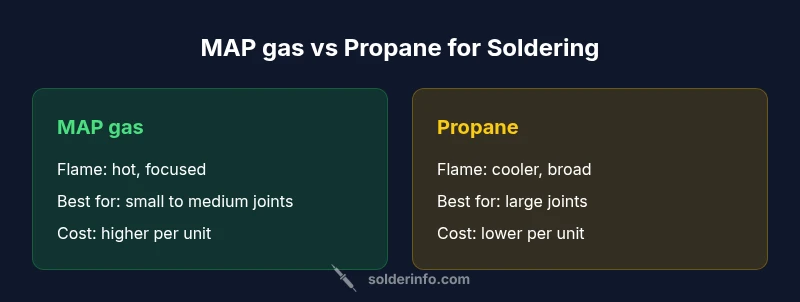
Flame behavior is the core difference between MAP gas and propane for soldering. MAP gas generally produces a hotter, narrower flame, which concentrates heat on a small target and reduces the time needed to reach soldering temperatures. Propane's flame tends to be wider and cooler, offering a gentler heat spread that can be advantageous when you're trying to avoid overheating adjacent areas. When you’re evaluating map vs propane for soldering, consider nozzle compatibility and regulator quality, because the same torch can behave very differently with each fuel. Precision control comes from a clean burn, a stable regulator, and appropriate tip size. For electronics and jewelry, this means faster, cleaner joints with MAP under careful heat management; for plumbing, propane’s broader heat can be steadier across larger copper joints.
Handy checklists:
- Confirm torch compatibility with the chosen fuel.
- Use proper tips for the joint size to avoid overheating.
- Monitor the heat-affected zone with a close visual check.
Note: Solder type and flux influence heat transfer. Lead-free solders may require slightly cooler heat to avoid scorching copper surfaces.
Safety and handling: flame safety, fuel storage, and ignition hazards
Regardless of fuel choice, safety is non-negotiable when map vs propane for soldering. Both fuels are highly flammable and require well-vented workspaces, leak checks, and proper storage. Always inspect canisters for dents, frost rings, or valve damage before use, and store them upright away from heat sources. When lighting a torch, follow manufacturer guidelines and never leave an active flame unattended. Use a regulator compatible with your fuel and avoid cross-connecting cylinders meant for different gases. In enclosed spaces, consider an exhaust or fume hood to reduce exposure to fumes from flux and solders. SolderInfo emphasizes the importance of flame control to prevent accidental overheating, especially for small components and sensitive electronics.
Electronics soldering considerations: heat sensitivity, flux, lead-free concerns
Electronics soldering is particularly sensitive to heat, flux behavior, and alloy composition. MAP gas’s higher flame temperature can speed connections on small ICs and fine-pitch components, but you must monitor the heat-affected area to avoid damaging traces or solder joints. For electronics, flux choice matters as well; many hobbyists prefer rosin-core or no-clean flux with compatible lead-free solders to minimize post-solder cleaning. If you’re choosing map vs propane for soldering electronics, plan short heats and frequent cool-down intervals, and use a heat sink or copper shim for delicate devices. SolderInfo notes that heat management is the deciding factor for reliable connections in compact assemblies.
Jewelry soldering considerations: precision, heat, and aesthetics
Jewelry soldering demands tight heat control, clean joints, and minimal heat diffusion into surrounding metals. MAP gas’s focused flame can reach the solder quickly, making it attractive for delicate settings, fine chains, or intricate bezels. Propane’s broader heat distribution helps when larger jewelry components require uniform heating, but it can risk heat marks on precious metals if misapplied. In map vs propane for soldering jewelry, technique matters: use lower heat settings when possible, apply flux consistently, and move the flame to distribute heat evenly along the joint. Always quench or cool hot work to prevent work-hardening or warping of thin metals.
Plumbing soldering considerations: larger joints and copper piping
Plumbing tasks often demand steady, robust heat delivery over larger surface areas. Propane is frequently favored for plumbing repairs due to its forgiving heat flow and easier control when dealing with thick copper joints. MAP gas can still be useful for faster heating on small sections or tight fittings, but the risk of overheating nearby fittings or creating heat distortion is higher. When map vs propane for soldering in plumbing, plan heat application along the joint length, work in segments, and keep a cool-down rhythm to avoid annealing the tubing. Always verify joint cleanliness and flux compatibility with the chosen solder type.
Equipment compatibility and tips: choosing torches, regulators, and tips
Your torch setup will largely determine the success of map vs propane for soldering projects. Ensure your torch head and regulators are rated for the chosen fuel; improper regulators can cause inconsistent flame and pressure. Tip size should match the joint dimension: smaller tips for electronics or jewelry, larger ones for plumbing. Consider dual-fuel torches if your workload demands both fuels, but be prepared for calibration differences between fuel types. Practice on scrap pieces to learn the heat profile before tackling critical joints. Regular maintenance, including replacing worn O-rings and cleaning nozzle orifices, keeps flames stable and predictable.
Cost, availability, and maintenance: budgeting your fuel use
Fuel costs and availability influence the long-term value of map vs propane for soldering. MAP gas generally costs more per can and may be harder to source in some regions, but its higher heat output can reduce cycle times for certain joints. Propane is widely available, often cheaper per can, and is compatible with a broad range of torches and regulators. Maintenance costs include regulators, hoses, and safety gear. In most hobbyist setups, propane offers a favorable balance of cost, access, and reliability for routine tasks, while MAP provides a speed advantage for precision work when you can manage heat carefully.
Environmental and regulatory considerations: fumes, disposal, and safety standards
Soldering produces fumes from flux and solder alloys, so ventilation is essential for both fuels. Some jurisdictions encourage lower emissions and safer disposal of spent flux and cleaning solvents. Although MAP gas tends to burn hotter, increasing the chance of rapid joint heating, it does not inherently solve emission concerns. The best practice remains to work in a well-ventilated area, use lead-free solders when possible, and follow local regulations for fume control and waste handling. SolderInfo’s guidance emphasizes minimizing exposure to fumes while maintaining consistent join quality across map vs propane for soldering tasks.
Practical step-by-step guidelines: how to choose for your project
- Define the project scope: electronics, jewelry, plumbing, or mixed tasks.
- Assess joint size: small delicate joints favor MAP’s fast heat; larger joints benefit from propane’s broader heat distribution.
- Check equipment: ensure torch compatibility, proper tips, and reliable regulators.
- Plan cooling: schedule brief cool-downs between heat cycles to protect sensitive components.
- Test on scrap: practice with similar joints to refine flame control.
- Execute with steady movements: don’t linger the flame on one spot, and monitor heat-affected zones closely.
A structured approach, aligned with SolderInfo guidance, helps you select map vs propane for soldering based on real-world needs rather than assumptions.
Common mistakes and troubleshooting: overheating, leaks, and misfires
The most frequent mistakes in map vs propane for soldering involve overheating, flame misadjustment, and fuel leaks. Always perform a leak test when attaching new canisters or regulators. If the flame seems unstable or too aggressive, reduce gas flow or switch tips to a smaller size, and pause to inspect heat distribution. Cleanliness of joints and flux remnants also affects solder flow; dirty surfaces require extra flux and may cause cold joints. If you experience poor heat control after swapping fuels, recheck torch calibration, verify regulator compatibility, and practice slow, steady flame movement on scrap pieces.
Real-world scenarios and decision framework: when to pick MAP vs propane
In practice, the map vs propane for soldering decision depends on the task’s scale, sensitivity, and tolerance for heat. For tiny electronics and delicate jewelry with tight tolerances, MAP’s speed can shorten heat exposure. For repointing copper tubing or larger plumbing joints, propane’s steadier heat reduces the chance of scorching or distorting metal. The best approach is to build a simple decision framework: if joint size is under X millimeters and heat needs to be precise, consider MAP; if joint size is large or proximity to heat-sensitive parts is a concern, choose propane. SolderInfo suggests maintaining a controlled workflow and prioritizing safety and heat management over speed alone
Comparison
| Feature | MAP gas | Propane |
|---|---|---|
| Flame characteristics | Hotter, narrower flame | Cooler, broader flame |
| Heat delivery speed | Faster heating on small-to-medium joints | Slower heating; better for large joints |
| Cost per canister | Typically higher per unit | Typically lower per unit |
| Best for | Precision heating (electronics/jewelry) | Plumbing and large copper joints |
Advantages
- Faster heating for appropriate joints
- Sharper control with a focused flame (when tamed)
- Excellent for delicate, high-precision work
- Compact canisters can be convenient for mobile setups
Cons
- Higher cost per unit and potentially limited availability
- Increased risk of overheating small components if misused
- Requires careful heat management and training
- Not ideal for very large joints unless used with caution
MAP gas is preferred for precision and speed on small to medium joints; propane is more versatile and cost-effective for larger plumbing tasks
Choose MAP when speed and focused heat matter most (electronics, jewelry). Opt for propane for large joints, easier handling, and lower ongoing costs. Balance project needs with your torch setup and safety practices.
Quick Answers
What is map gas and how does it differ from propane for soldering?
MAP gas is typically hotter and more focused than propane, enabling faster heating on small-to-medium joints. Propane burns cooler and is more forgiving for large joints and general repairs. The choice affects heat control, risk of scorching, and overall efficiency in map vs propane for soldering.
MAP gas is hotter and more direct, great for quick heating on small joints; propane is cooler and steadier, better for larger joints.
Is MAP gas safe to use for electronics soldering?
Yes, with careful heat control and appropriate cooling techniques. Electronics soldering benefits from short, controlled heat cycles to avoid damaging components. When using MAP gas, keep sessions brief and monitor temperature closely.
Yes, but use short heats and heat sinks to protect parts.
Can propane be used for jewelry soldering effectively?
Propane can work for jewelry, especially larger pieces or when a wider heat area is advantageous. It’s generally more forgiving for heat management but may take longer on small settings. Practice and appropriate flux help achieve clean joints in map vs propane for soldering jewelry.
Propane can be effective for larger jewelry pieces; practice to manage heat.
When should I choose MAP gas over propane for plumbing tasks?
For small, quick connections or tight fittings, MAP you may get faster results. For large copper joints or when heat control is crucial across a broad area, propane’s broader flame is typically safer. Your choice depends on joint size and heat tolerance in map vs propane for soldering plumbing.
MAP can speed up small plumbing jobs; propane is safer for larger joints.
What safety precautions should I follow when using MAP or propane for soldering?
Ensure proper ventilation, leak checks, and flame control. Use appropriate regulators, keep flammable materials away, and wear eye protection. Always store canisters upright and inspect hardware before use to prevent accidents in map vs propane for soldering.
Ventilate, check leaks, and wear protection; store safely.
Are there alternatives to MAP and propane for soldering?
Yes, alternatives include butane or specialized fuel blends and electronic soldering stations with regulated heat. Each alternative has its own heat characteristics, safety requirements, and cost implications. Evaluate your project needs before switching fuels in map vs propane for soldering.
There are alternatives, but they come with different heat and safety profiles.
Top Takeaways
- Assess joint size before choosing fuel
- MAP favors precision heating; propane favors broader heat distribution
- Always prioritize flame control and heat management
- Maintain proper ventilation and safety protocols
- Test on scrap pieces to calibrate your technique