Heat Gun for Solder Seal Connectors: Step-by-Step Guide
Learn how to safely use a heat gun for solder seal connectors with step-by-step instructions, safety tips, and pro techniques from SolderInfo. Improve seal integrity and reliability in electronics, plumbing, and jewelry projects.


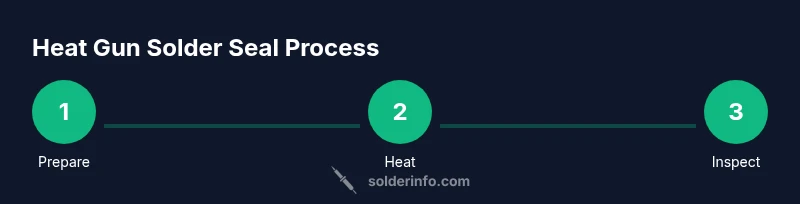
You’ll learn to use a heat gun to seal solder connectors with controlled heat, proper distancing, and careful timing. This guide covers essential safety, suitable nozzle choices, and a clear 7-step workflow to ensure a reliable seal without damaging components. Follow the steps for repeatable results.
Why heat guns are used for solder seal connectors
According to SolderInfo, a heat gun offers precise, localized heat that can shrink sleeves and activate adhesive layers around solder seal connectors without requiring open flames. When used correctly, a heat gun helps form a protective, watertight or airtight seal around joints, improving insulation, strain relief, and mechanical stability. The key is to match the heat profile to the connector material and insulation, avoiding scorch marks or deformation. In electronics, plumbing, and jewelry applications, heat-assisted sealing can reduce joint variability and extend service life when paired with the right sleeve size and adhesive type. This approach is especially effective for heat-shrinkable connectors that rely on controlled shrinkage rather than molten solder alone. Throughout this article, we’ll reference general best practices for safe, reliable heat-application workflows that minimize thermal stress on delicate components.
Safety and preparation considerations
Before you touch a hot tool, set up a dedicated workspace with good ventilation and a nonflammable surface. Wear safety goggles and heat-resistant gloves, and keep flammable materials well away from the work zone. Inspect the heat gun for any damage and test it briefly on scrap material to confirm your chosen nozzle and temperature setting behave predictably. If you’re sealing connectors near electronics, power down and disconnect power supplies to prevent shorts. Plan your work so you can maintain a steady motion and a consistent distance from the sleeve to the joint. By preparing properly, you reduce the risk of overheating insulation, melting housing, or creating air pockets under the sleeve.
Tools, materials, and heat gun settings
Select a heat gun with adjustable temperature and a narrow or reflector nozzle to focus heat on the sleeve rather than the entire connector. Use heat-shrink sleeves that match the connector diameter and insulation length. A nonstick mat, needle-nose pliers, and magnification aids help you position parts precisely. Start with a moderate temperature and test on scrap samples to dial in the heat profile: enough to shrink the sleeve and activate any adhesive, but not so hot that you discolor or deform the housing. If your sleeve contains adhesive, apply heat gently to activate the adhesive evenly without creating gaps or air bubbles. Keep the gun moving to avoid a single hot spot.
Selecting the right heat-shrink connector and adhesive
Not all heat-shrink connectors are created equal. Some rely on a dry fit with a shrinkable jacket, while others use an adhesive-lined sleeve that requires heat to seal and bond. Choose a sleeve that matches the connector’s outer diameter and the insulation thickness. For plumbing and jewelry workflows, you may encounter different polymer families (e.g., polyolefin, fluorinated polymers) with distinct shrink rates and heat tolerances. When in doubt, test a few samples to see how the sleeve constricts and whether the adhesive layer is fully activated. Remember that a proper seal also depends on clean, dry surfaces and minimal contamination from oils or flux residues.
Step-by-step usage overview and planning
A well-planned approach reduces guesswork. Determine the connector type, sleeve size, and whether an adhesive-lined sleeve is required. Arrange parts so you can apply heat in a straight, steady sweep, with the nozzle at a consistent distance. If you’re sealing multiple connections, plan a sequence to avoid overheating already sealed joints. Use scrap pieces to validate heat settings and revise your technique as needed. This overview sets the stage for the detailed steps that follow, including safety checks, alignment, and cooling strategies.
Quality checks, cooling, and reliability
After sealing, allow the joint to cool undisturbed on a non-conductive surface. Inspect for uniform shrinkage, no visible gaps, and a smooth seam around the connector body. A good seal should resist light compression without wrinkling or cracking. For critical applications, perform a basic leak or insulation test (where feasible) and visually confirm that the sleeve has fully contracted with no air pockets. Document your settings and outcomes to support repeatability in future projects. This quality discipline helps ensure long-term reliability in electronics, plumbing, and jewelry solder seal work.
Common mistakes and how to avoid them
Common pitfalls include overheating the sleeve or connector, which can melt insulation or damage delicate parts. Avoid holding the nozzle in one spot; instead, maintain a steady back-and-forth motion to promote even shrinkage. Don’t skip surface cleaning, as oils can hinder adhesion. Always verify the fit before applying heat and keep your workspace uncluttered to prevent accidental contact with hot surfaces. For complex assemblies, consider practicing on spare sleeves to refine your technique before working on the final build.
Practical project examples and best practices
In electronics, you might seal a multi-pin connector using a shrink sleeve that tightens around the wire bundle while an adhesive layer locks in moisture resistance. In plumbing, heat guns can help seal small plastic connectors where heat-shrink sleeves provide a snug barrier against leaks. Jewelry assembly may use translucent sleeves for aesthetic purposes, with careful heat application to avoid discoloration. Across all domains, consistent technique, proper PPE, and mindful heat management are the pillars of success. SolderInfo’s guidance emphasizes practicing on tested samples, labeling tools for reuse, and documenting temperature ranges that work best for your materials.
Tools & Materials
- Heat gun with adjustable temperature(Prefer a model with a stable temperature control and a narrower focusing nozzle)
- Heat-shrink sleeves or connectors(Match diameter and insulation thickness to the joint)
- Heat-resistant mat or silicone barrier(Protects bench surface from heat and melt mess)
- Safety goggles(Protect eyes from hot debris and reflections)
- Heat-resistant gloves(Reduce risk of burns during handling)
- Fine-tipped tweezers(Position small components accurately)
- Magnifying loupe or headset(Assist in inspecting seal integrity)
- Isopropyl alcohol and lint-free wipes(Clean surfaces before sealing)
Steps
Estimated time: 30-50 minutes
- 1
Prepare workspace and materials
Set up a clean, ventilated area with a heat-resistant mat. Gather all sleeves, connectors, PPE, and tools. Inspect equipment for damage and verify that the heat gun is functioning. Have scrap pieces ready for test runs.
Tip: Test a scrap sleeve on a spare connector to confirm fit and heat response before working on the actual assembly. - 2
Set heat gun and choose nozzle
Attach a narrow or reflector nozzle and set a moderate temperature. For delicate plastics, start at the lower end of your range and increase only if the sleeve does not shrink fully. Keep the gun moving in a slow, steady motion.
Tip: Avoid overheating; the goal is uniform shrinkage, not a molten or bubbly surface. - 3
Position connector and sleeve
Place the sleeve over the connector so the seam aligns with the joint interface. Hold components steady with tweezers, keeping your hands away from the direct heat path. Ensure the sleeve is fully seated before applying heat.
Tip: If you can, use a jig or clamp to maintain alignment during heating. - 4
Apply heat gradually to shrink and seal
Sweep the nozzle across the sleeve to initiate shrinkage evenly. Pause briefly to inspect progress, then continue until the sleeve contracts and any adhesive is activated. Do not linger in one spot for too long.
Tip: Keep a constant distance (roughly a few millimeters) from the sleeve to avoid scorching. - 5
Inspect seal integrity and adjust if needed
Look for uniform shrinkage and a continuous seam without gaps. If a portion didn’t seal, reapply heat to that area with careful attention to avoid overheating nearby components.
Tip: Use a magnifier to verify the seam and confirm no air pockets remain. - 6
Cool, test, and finalize
Allow the joint to cool completely before handling. Perform a basic functional check or insulation test if applicable. Document settings and observations for future projects.
Tip: Label the completed assembly with the sleeve size and heat profile used. - 7
Cleanup and storage
Turn off and unplug the heat gun, then allow it to cool away from flammable materials. Store sleeves, connectors, and PPE in a dry, cool area. Clean your work surface and return tools to their designated spots.
Tip: Keep a spare kit of components for quick future repairs.
Quick Answers
What is the primary purpose of using a heat gun with solder seal connectors?
A heat gun provides controlled heat to shrink sleeves and activate adhesive layers, creating a tight, protective seal around the connector.
A heat gun shrinks the sleeve evenly and activates any adhesive to form a secure seal around the connector.
Can I use any heat gun for this task?
Use a model with adjustable temperature and a suitable nozzle. Cheaper tools without control can overheat and damage components.
Use a heat gun with adjustable heat and a proper nozzle to avoid damaging parts.
What safety precautions are essential?
Work in a ventilated area, wear eye protection and gloves, and keep flammables away from the hot workspace. Disconnect power when testing near electronics.
Wear PPE, keep the area clear of hazards, and power down before testing near electronics.
Is flux necessary for solder seal connectors?
Some connectors are pre-fluxed or adhesive-based; flux can improve solder flow where appropriate, but avoid contact with heat-sensitive devices.
Flux helps with solder flow when needed, but follow the connector’s instructions.
What are signs of a bad seal?
Wrinkled, bubbly, or cracked sleeves indicate a poor seal. A loose sleeve or visible gaps can allow moisture ingress.
Look for wrinkles or gaps; a poor seal can let moisture in.
How long should I wait before testing after sealing?
Allow the joint to cool completely before handling or testing. Rushing can compromise the seal.
Let it cool fully, then test for integrity.
Watch Video
Top Takeaways
- Match sleeve size to connector for a solid seal.
- Control heat to avoid damage and ensure uniform shrinkage.
- Inspect and test seals after cooling for reliability.
- Practice on scraps to build repeatable results.