Difference Between Solder and Wire: Practical Guide
Explore the difference between solder and wire, including materials, flux, applications, and best practices across electronics, plumbing, and jewelry. Clear distinctions help DIYers choose the right method for durable joints.


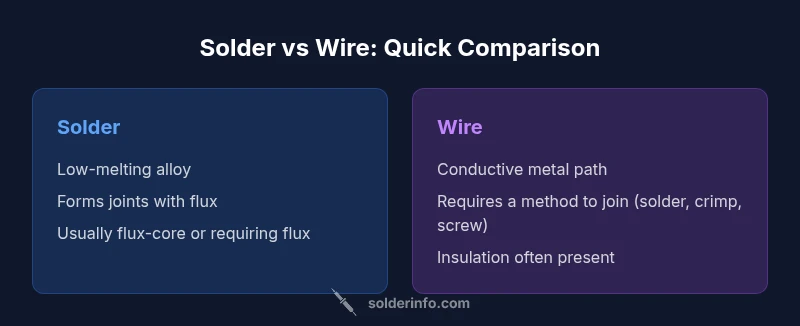
The difference between solder and wire is that solder is a low-melting alloy used to join metal parts, while wire is the conductive metal itself. In most electronics and plumbing, solder forms the joint when heated with flux. Wire serves as the conductive path but requires soldering or mechanical joints to be connected.
What the Difference Between Solder and Wire Really Means
In everyday practice, the phrase the difference between solder and wire matters because each material has a distinct role in making reliable physical and electrical connections. Solder is not just a glue; it is a carefully chosen alloy designed to melt at a lower temperature than most metals, allowing it to flow and wet surfaces to form a bond. Wire, by contrast, is the metal path that carries current or provides a conductive bridge between components. In many projects, you will see both used together—wire to carry signals and solder to secure connections. According to SolderInfo, recognizing these roles helps hobbyists avoid common pitfalls and select the right workflow for electronics, plumbing, or jewelry work. The SolderInfo team notes that misinterpreting these roles often leads to joints that fail under heat, corrosion, or vibration.
Key takeaway: Nailing down the functional distinction between solder and wire sets up safer, more durable assemblies and reduces rework.
-12
Comparison
| Feature | Solder | Wire |
|---|---|---|
| Primary role | Filler/connector alloy used to form joints | Conductive metal used to carry current or link components |
| Melting/softening behavior | Low-melting alloy designed to melt easily during soldering | Material with higher melting point, used as conductors |
| Form factor | Rods, wires with flux-core options | Solid or stranded metal wire |
| Flux presence | Often flux-core or flux applied for soldering | Flux added separately during soldering (not part of the metal) |
| Typical applications | Electronics assemblies, plumbing joints (soldered) | Electrical wiring and general metal interconnections |
| Environmental/safety considerations | Lead-containing variants and lead-free options; flux fumes | Copper/other metal with oxidation considerations; generally fewer fumes |
| Join durability | Low-temperature joints with proper technique; durable when cooled | Depends on insulation and termination method; may require protection |
| Ease of use | Requires heating, fluxing, and technique | Easier for basic connections but requires proper termination |
Advantages
- Soldering creates compact, conductive joints with neat appearance
- Wire-based connections offer flexibility in routing and repair
- Using solder enables sealed joints when flux is properly chosen
- Solder allows compact assemblies with minimal mechanical stress on parts
Cons
- Soldering requires correct heat, flux, and technique; poor joints are common mistakes
- Lead-containing solders pose health and environmental concerns (favor lead-free options)
- Wire alone may be insufficient for permanent, low-resistance joints without a reliable termination method
- Flux fumes and exposure risk require proper ventilation and PPE
Solder is essential for permanent, low-resistance joints in electronics and plumbing; wire is best for flexible routing and basic conductor connections.
Choose solder when you need a strong, conductive joint formed at low temperature. Choose wire when routing flexibility or detachable connections matter, or when a mechanical joint is acceptable. The key is applying the right combination of wire and solder for your specific application.
Quick Answers
What is the difference between solder and wire in practical terms?
Solder is an alloy used to bond metal parts by melting at a relatively low temperature, forming a joint. Wire is the metal path that conducts electricity or completes a circuit but does not bond surfaces on its own. In most projects, you use wire for conduction and solder to secure joints.
Solder bonds metals when heated, wire conducts electricity. Together they make durable connections; wire alone doesn’t bond surfaces.
Can you solder on copper wire effectively?
Yes. Copper wire is commonly soldered. You must clean, flux the joint, and heat evenly to wet the wire and any terminals. Finish with a smooth, shiny joint to minimize resistance and corrosion.
You can solder copper wire well if you prepare the joint and apply heat evenly.
Is soldering always required for electrical joints?
Not always. Some connections use mechanical methods (crimp, screw, or wire nuts). However, soldering provides low resistance and durability in many electronics and plumbing scenarios, especially where vibration or moisture is a concern.
Not always, but soldering is common for reliable, lasting electrical joints.
What safety concerns surround solder materials?
Many solders contain flux and can include lead. Work in a well-ventilated area, use PPE, and opt for lead-free alloys when possible. Clean up flux residues to prevent corrosion.
Solder can be hazardous—work with ventilation and proper protective gear.
What is flux and why is it important?
Flux cleans and prepares metal surfaces, improves wetting, and prevents oxidation during heating. Flux is critical for reliable joints, especially with tin-based solder.
Flux helps solder stick and prevents corrosion, making joints stronger.
Can wire be used without solder in plumbing or electronics?
In some cases (like certain plumbing joints or pre-insulated connections) you can avoid soldering, but many electronics and plumbing scenarios rely on soldered joints for reliability. Consider the environment and required durability.
Sometimes you can do without solder, but many projects need it for reliability.
Top Takeaways
- Identify the roles: solder as a bonding alloy, wire as a conductive path
- Use flux appropriately to ensure wetting and joint reliability
- Opt for lead-free solders to minimize health risks
- Prefer crimps or mechanical methods for temporary or high-stress connections when possible
- Inspect joints for proper wetting, coverage, and insulation