Crimp and Solder Connectors: A Practical How-To
A comprehensive guide to crimp and solder connectors, covering when to use each method, essential tools, a step-by-step workflow, safety practices, and real-world tips for electronics, plumbing, and jewelry projects.


Crimping provides fast, solid terminations, while soldering improves conductivity at flexible joints. Use both where appropriate, and verify reliability with pull tests and continuity checks. See our detailed step-by-step guide for best results. According to SolderInfo, choosing the method starts with wire gauge, insulation, and environment.
What are crimp and solder connectors?
Crimp connectors are terminal ends that are physically pressed onto a stripped wire using a crimping tool with a matching die. They form a mechanical and electrical connection without heat or solder, relying on the conductor material and the compression to hold the wire in place. Crimping is fast, repeatable, and ideal for mass production or field repair where heat-sensitive insulation must be preserved. Solder connectors, by contrast, rely on molten metal to create a conductive joint. Because solder creates a fillet that wets the conductor and terminal, solder joints can be more forgiving in some situations, especially with odd angles or cramped spaces. However, heat exposure can damage insulation, and improper soldering can produce weak joints (cold joints) or wick solder into strands, reducing flexibility. For many projects, craftsmen use a combination approach—crimp the connector and then apply a careful solder fillet to the connection area (often called a solder-sealed crimp). The SolderInfo team notes that the best practice starts with choosing the method based on the application, wire gauge, conductor material (bare copper, tinned copper), insulation type, and the environment (moisture, vibration, temperature). In electronics, you’ll often see crimp-to-wireterminals paired with a separate soldered pad or contact; in jewelry or small-diameter wires, direct soldering can yield compact, reliable joints. The key is to avoid overheating insulation, to use connectors rated for the wire size, and to inspect the joint with a magnifier. According to SolderInfo, successful terminations begin with clean wire surfaces, a compatible connector family, and a dependable toolset. Make sure you work in a well-lit area, wear eye protection when soldering near energized circuits, and keep your workspace free of flux spills. Follow the manufacturer’s datasheet for recommended stripping length and seating depth to ensure a gas-tight seal at insulated terminals.
Pros and Cons: When to Use Crimp, Solder, or Both
Crimping shines in speed, consistency, and vibration resistance when done with the right tools and dies. It excels for mass production, field repairs, and situations where heat could damage insulation. Soldering offers superior electrical conductivity and a more forgiving joint geometry, which can be beneficial in cramped spaces or where joints must flex slightly. Many technicians favor a hybrid approach—crimp first to secure the wire, then apply a small amount of solder to the joint to improve wetting and reduce the risk of loosening under vibration. The SolderInfo analysis notes that reliability often hinges on matching the method to the environment, conductor type, and connector family. In plumbing scenarios, lead-free solders are common, but you’ll still want durable crimps for hose clamps and fittings. Jewelry applications may lean toward soldered connections for compact aesthetics, while electronics commonly use crimped terminals on connectors rated for the wire gauge. Always consult the connector datasheet and use proper flux and cleaning practices after soldering to prevent corrosion. Proper training and practice reduce the risk of weak joints, strand breakage, or damaged insulation, especially when working with fine wires or sensitive components.
Tools, materials, and workspace setup
Setting up a dedicated workspace with good lighting, a stable surface, and a protective mat helps prevent lost parts and accidents. The principal tools for crimping and soldering connectors include a quality crimp tool with interchangeable dies, a well-tuted soldering iron (ideally temperature-controlled), lead-free rosin-core solder, flux for improved wetting, heat shrink tubing, and precision wire strippers. A magnifying loupe or stereo microscope aids in inspecting compression quality and solder wettability. For testing, keep a multimeter or continuity tester handy and, if possible, a pull force gauge to quantify joint strength. Stock up on spare terminals and heat-shrink sleeves in multiple sizes, plus tape and cleaner to remove oxidation before termination. Safety gear—safety glasses, gloves with heat resistance, and a well-ventilated area—reduces the risk of burns or fumes. Always work with the correct die for the connector size and the wire gauge; mismatches are a common cause of failed joints. Finally, keep a small waste bin and a brush nearby to manage flux residues and tiny metal fragments. The goal of your setup is to enable clean, repeatable terminations with minimal rework and maximum longevity.
Step-by-step workflow: preparing, crimping, soldering, and finishing
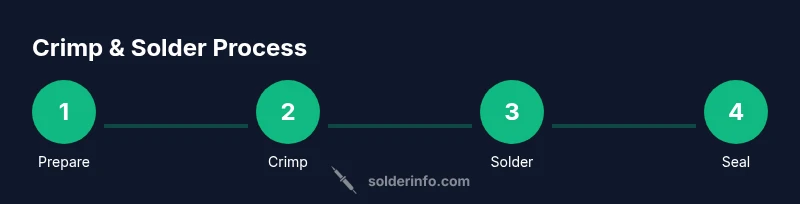
Follow a methodical sequence to ensure quality terminations. First, identify the correct connector series and die for your wire gauge. Then, prepare the wire by cutting to length and inspecting the insulation. Next, strip the insulation to expose the conductor without nicking strands. Place the bare wire into the connector barrel and choose the appropriate crimp tool setting. Crimp firmly in a single smooth stroke and verify that the barrel is fully seated and the conductor is visible through the contact area. If a soldered joint is required, pre-tin the conductor or apply a small amount of flux and allow solder to flow into the joint as you apply heat. When using heat-shrink insulation, slide the sleeve over the termination before crimping or soldering, then heat it uniformly to form a tight seal. Finally, inspect the joint for uniform compression, clean wetting, and adequate insulation coverage. Perform a basic test by gently tugging on the wire and checking continuity with a multimeter. Document the results for future maintenance and ensure the assembly meets its current and voltage ratings.
Quality checks and troubleshooting
Quality assurance begins with visual inspection: confirm a clean crimp, no stray strands, and no insulation damage. Use a magnifier to check the seam and seating depth, ensuring the conductor is fully captured by the contact. Perform a pull test to verify mechanical integrity, and run a continuity test to confirm electrical performance. If a joint fails, review the tool settings, terminal size, and stripping length. Common issues include over-crimping that damages strands, insufficient stripping that results in poor contact, or heat damage to insulation during soldering. In such cases, re-terminate with the correct tool, consider replacing the connector, and clean the area of flux residue to prevent corrosion. For joints in high-vibration environments, consider strain relief measures such as heat-shrink or adhesive-lined sleeves. Periodically inspect installed terminations and rehearse your process using scrap samples to preserve a reliable, repeatable approach. Soldering should be done quickly and evenly to avoid heat buildup, and always disconnect power before any work on energized lines.
Industry applications and case examples
Crimp and solder connectors are found across electronics, automotive, plumbing, and jewelry work. In electronics, crimped terminals form reliable wire-to-terminal connections on PCBs and harnesses, while solder is common on small signal joints or where additional conduction paths are needed. Automotive systems frequently employ sealed crimp connectors with heat-shrink insulation to resist moisture and vibration. Plumbing often uses soldered joints in copper piping, with crimps used for pipe fittings in some contexts; the choice depends on pressure, temperature, and accessibility. Jewelry makers typically solder small jumpers and ring-to-wire connections for durability and a clean appearance. Each industry emphasizes cleanliness, proper stripping length, and correct orientation of connectors to avoid short circuits or mechanical failure. In practice, successful terminations emerge from a disciplined workflow, well-maintained tooling, and a willingness to adapt methods to the specific service environment.
Safety, maintenance, and best practices
Always disconnect power before terminating wires and wear eye protection when working with hot joints or when cutting metal. Work in a well-ventilated area and follow flux disposal guidelines to minimize fumes. Store connectors in labeled containers to prevent mixing sizes, and keep dies and tools organized to reduce mis-terminations. Regularly inspect crimp barrels and solder joints for corrosion, oxidation, or hairline cracks, and re-terminate as needed. Documenting the process with photos or notes helps maintain consistency across projects. The goal is to achieve reliable electrical connections that withstand the intended service life without excessive heat, mechanical wear, or environmental damage.
Tools & Materials
- Crimping tool with interchangeable dies(Ensure you have the correct jaw size for the connector series and wire gauge)
- Wire strippers(Self-adjusting or adjustable; set to the target conductor diameter)
- Connector terminals (crimp-type)(Match to wire gauge and insulation type)
- Soldering iron (temperature-controlled)(Fine-point tip works well for precision joints)
- Rosin-core solder(Lead-free is common in many applications)
- Flux(Use rosin flux for better wetting; clean residues after soldering)
- Heat shrink tubing(Choose the correct inside diameter for the connector)
- Heat gun or lighter(Used to shrink tubing evenly)
- Magnifying loupe or microscope(Assists in inspection of compression and solder wetting)
- Safety gear (glasses, gloves)(Protection against burns and debris)
- Wire cutter(Cuts cleanly without crushing the conductor)
- Multimeter or continuity tester(To verify electrical performance and safety)
Steps
Estimated time: 45-60 minutes
- 1
Identify connector type and die
Select the appropriate connector family and the matching crimp die for your wire gauge. This ensures proper compression and seating depth, which are critical for a reliable joint.
Tip: Always confirm compatibility with the manufacturer datasheet before starting. - 2
Prepare the wire and plan termination
Cut the wire to the desired length and plan where the termination will sit relative to insulation. A consistent plan reduces mis-termination and simplifies inspection later.
Tip: Keep a scrap bin to practice calibrations with the chosen tool. - 3
Strip insulation and expose conductor
Use the stripping tool to remove only the needed insulation, exposing the conductor without nicking strands. A clean cut improves contact area and reduces failure risk.
Tip: Twist any stray strands back into the wire bundle before inserting into the terminal. - 4
Crimp the connector onto the wire
Place the stripped wire into the connector and operate the crimp tool with a single, smooth action. The goal is a uniform compression without damaging insulation or cutting strands.
Tip: Inspect for even compression and ensure the conductor is captured by the contact. - 5
Inspect the crimp and prepare for optional solder
Visually inspect the crimp for uniformity and seating depth. If soldering is required, pre-tin the conductor or apply flux and plan the solder joint layout to avoid overheating insulation.
Tip: If the crimp fails visual checks, rework or replace the terminal. - 6
Apply solder (if required) and insulate
Apply heat to the joint and feed solder so it wets the conductor and the terminal surface. Once finished, slide heat shrink over the termination and shrink evenly to seal.
Tip: Keep heat away from insulation; work in short, controlled bursts. - 7
Test the termination
Gently pull on the conductor to verify mechanical integrity and use a multimeter to confirm electrical continuity. Document results and proceed to the next joint if tests pass.
Tip: If testing fails, review dimensions, tool settings, and connection geometry.
Quick Answers
What is the primary difference between crimp and solder connectors?
Crimp connectors rely on mechanical compression to hold the wire, while solder joints use molten metal to create a conductive bond. Both methods have their place depending on the application and environment.
Crimp relies on compression; solder uses molten metal for conduction. Choose based on joint requirements and environment.
Can you crimp and solder in the same joint?
Yes. A hybrid approach—crimping for mechanical strength followed by a controlled solder fillet—can improve reliability in vibration-heavy or high-met resistance applications.
You can crimp first for strength, then solder to improve conduction and stability.
What tools do I need to start?
A quality crimp tool with the correct dies, a soldering iron, rosin-core solder, flux, heat-shrink tubing, wire strippers, and a multimeter for testing.
You’ll need a crimp tool, soldering iron, solder, flux, heat shrink, strippers, and a tester.
How can I test a crimp joint for reliability?
Perform a gentle pull test to check mechanical grip and use a continuity test to confirm electrical conduction. Re-terminate if either test fails.
Gently pull the wire and check continuity to verify reliability.
Is it safe to solder near energized circuits?
No. Always disconnect power and work in a ventilated area with PPE. Soldering near live circuits poses shock and fume hazards.
Never solder near powered circuits; disconnect power and wear PPE.
What about lead-free solder and flux safety?
Lead-free solders are common and safer for general use, but ensure proper ventilation and wash hands after handling flux. Use rosin flux and clean residues after soldering.
Lead-free solder is common; ventilate and clean flux after use.
Watch Video
Top Takeaways
- Choose crimp or solder based on environment and wire type.
- Always use the right tool and compatible connector.
- Inspect joints visually and with testing before deployment.
- Follow safety guidelines and manufacturer datasheets.
- Document results for future maintenance.