Why Won't My Solder Melt? A Quick Troubleshooting Guide
Urgent, practical troubleshooting for solder that won't melt across electronics, jewelry, and plumbing. Learn heat management, flux choices, alloy selection, and safe workflow to fix cold joints fast.


Most likely the iron isn’t delivering enough heat or the tip is oxidized, which prevents effective heat transfer. Quick fixes: verify iron temperature within the recommended range (roughly 315–350°C for leaded solder, 350–370°C for lead-free), clean and tin the tip, apply fresh flux, and reflow the joint promptly. If the problem persists, check tip condition and joint cleanliness before replacing components.
Common causes of solder not melting
If you’re asking why won't my solder melt, the most frequent culprits are heat delivery and surface condition rather than a fault with the solder itself. The SolderInfo team analyzed dozens of failed joints and found that the majority come from (a) an iron that isn’t reaching a stable temperature, (b) a dirty or oxidized tip that can’t transfer heat, and (c) using the wrong flux or alloy for the task. Other contributors include leaving flux unused or drying on the joint, contamination on the workpiece, and attempting to solder large metal areas with a small tip. By understanding these stages, you can triage quickly: confirm your heat source, inspect the tip, and verify you’re using compatible solder and flux. In electronics, jewelry, and plumbing alike, proper heat management is the difference between a dull joint and a strong solder bond. Early evaluation saves parts and hours of frustration, especially when you’re on a time-sensitive project.
Temperature and iron tips: getting heat into the joint
Getting heat into the joint requires a steady, appropriate temperature and a clean tip. If the iron never maintains heat, the solder won’t melt and will simply bead or smear. Start by confirming the iron’s temperature setting for the solder you’re using: leaded solder typically melts near 183°C, but the tip should be hotter than the liquid metal to promote wetting. For lead-free alloys, target roughly 350–370°C, acknowledging the higher melting point. Keep the tip clean and always tin it before starting a connection; re-tin after finishing helps maintain heat transfer. If the tip is oxidized or worn, replace it or re-tin it with fresh solder. Avoid pressing hard or staying too long on one spot, which can overheat parts or damage the board. A stable, clean tip makes the difference between a quick, shiny joint and a cold, brittle one.
Flux, solder alloys, and wetting: choosing the right combination
Flux is the enabler of proper wetting and flow. Rosin-based fluxes are common for electronics, while plumbing applications may use different flux chemistries. Using the wrong flux or an inactive flux can prevent the solder from flowing, causing dull, non-wetting joints. Also consider solder alloy: Sn-Pb (lead-based) solder melts at a lower temperature than many lead-free formulations like Sn-Ag-Cu. When wetting fails, switch to an active flux and confirm compatibility with your solder and metal. Apply a thin layer to both surfaces and the joint; too much flux can burn and leave residues. Store flux correctly to preserve its activity. A quick test on scrap copper can help you gauge wetting before you commit to a delicate joint.
Surface prep and cleanliness: make the joint wettable
A clean surface is non-negotiable for a strong solder joint. Oil, fingerprints, oxidation, and corrosion create barriers to heat transfer and wetting. Wipe parts with isopropyl alcohol and, if needed, lightly abrade oxide with a soft pad or brass brush, then re-clean. Inspect pads and metal surfaces for visible oxide layers; remove them carefully to expose fresh metal. After cleaning, reapply flux and re-tin the tip and any wires. Secure components firmly so they don’t shift during heating. A clean, dry surface reduces the risk of cold joints and ensures predictable flow and bonding. Remember to work in a well-ventilated area to manage flux fumes. Safety first.
Quick checks and safe fixes you can try now
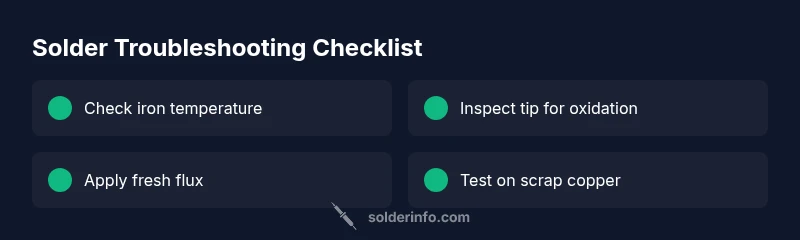
Before you blame the solder, run through these checks:
- Confirm the iron tip is clean and properly tinned, and set to the correct temperature for the solder type.
- Apply a thin layer of fresh flux to the joint and reflow with a steady, controlled motion.
- Test on scrap copper with a tiny amount of fresh solder to confirm heat transfer.
- If the surface remains dull, scrub the tip to remove oxidation; replace the tip if necessary.
- Re-test the final joint on a spare pad or wire to ensure wetting and bonding.
Steps
Estimated time: 25-40 minutes
- 1
Prepare workspace and supplies
Set up a clean, ventilated area with your soldering iron, flux, solder, and protective equipment. Have scrap copper handy for testing heat transfer. Align components and secure them so they won’t move during heating.
Tip: Keep a damp sponge or brass wool nearby to clean the tip during the session. - 2
Clean and tin the tip
Wipe the tip on the sponge while hot, then apply a thin layer of solder to re-tin the tip. A tinned tip transfers heat more efficiently and improves wettability.
Tip: If the tip is heavily oxidized, replace it rather than trying to salvage it. - 3
Set correct temperature
Dial in the recommended temperature for your solder type. Leaded solder uses lower temperatures than lead-free. Allow the iron to reach the target temperature before touching the joint.
Tip: Avoid exceeding the maximum recommended temperature to prevent component damage. - 4
Apply flux and contact the joint
Apply a thin layer of flux to the surfaces. Place the heated iron tip and bring solder into contact with the joint, not directly on the tip. Let the molten solder flow and form a shiny fillet.
Tip: Use a gentle, consistent motion; avoid wiggling the joint. - 5
Inspect and reflow if needed
If the joint looks dull or grainy, re-heat with a small amount of flux and reapply solder. Ensure the joint cools evenly without movement.
Tip: Don’t apply extra force while the joint is molten. - 6
Clean up and test
Wipe away flux residues once cooled and inspect for a smooth, shiny joint. Test the circuit or mechanical integrity to verify a proper connection.
Tip: Document any unusual behavior for future reference.
Diagnosis: Solder won't melt
Possible Causes
- highIron not hot enough or temperature unstable
- highOxidized or dirty tip preventing heat transfer
- mediumUsing the wrong solder alloy for the task
- mediumFlux is inactive or not applied properly
- lowOxidation or contamination on the workpiece
Fixes
- easyIncrease and stabilize iron temperature to match solder type; avoid overheating
- easyClean or replace the tip and re-tin it; ensure good heat transfer
- easyChoose the correct solder alloy for the material; use fresh flux
- easyApply fresh flux and reflow; test on scrap to confirm wetting before final work
- mediumPrepare and clean the workpiece; remove oxide/contamination before attempting again
Quick Answers
Why won't my solder melt even though the iron seems hot?
Common reasons include an oxidized tip, insufficient heat transfer, wrong flux, or using an incompatible solder. Start by cleaning and tinning the tip, verifying temperature, and applying fresh flux. If issues persist, test on scrap copper and try a fresh tip.
Common causes are oxidized tips, poor heat transfer, wrong flux, or incompatible solder. Clean and tin the tip, check temperature, apply fresh flux, and test on scrap first.
What temperature should I set for lead-free solder?
Lead-free solder typically requires higher temperatures than leaded solder. Aim for roughly 350–370°C, ensuring the tip maintains contact without overheating the components. Always consult the solder manufacturer’s guidelines for your specific alloy.
Lead-free solder usually needs about 350 to 370 degrees Celsius; keep the tip in contact and don’t overheat components.
How can I tell if my flux is still active or dry?
Active flux creates a shiny, flow-enhancing surface. If flux appears dry, sticky, or burnt with no flow, it's likely expired or degraded. Use fresh flux and reapply a thin layer before reflow.
If flux looks dry or burnt and doesn’t help solder flow, it’s likely expired—use fresh flux and try again.
Is it safe to use a propane torch instead of a soldering iron?
A propane torch is generally not recommended for delicate electronics or small components due to heat control challenges. It’s more appropriate for plumbing work with larger joints. For electronics or jewelry items, use a controlled soldering iron or hot air rework station.
Avoid using a torch for electronics; use a controlled soldering iron or hot air rework station instead.
Why is my joint dull or cracked after cooling?
Dull or cracked joints usually indicate poor wetting or oxidation on the surfaces. Reflow with fresh flux and ensure a clean, oxide-free surface. If needed, re-tin the tip and re-solder with a proper temperature profile.
A dull joint means poor wetting or oxidation; reflow with flux and ensure clean surfaces, then re-solder.
What safety steps should I follow when soldering?
Always work in a well-ventilated area, wear eye protection, and avoid inhaling flux fumes. Keep flammables away, unplug the iron before changing tips, and handle hot equipment with protective gear. Follow the manufacturer’s safety guidelines for your materials.
Work in a ventilated area, wear eye protection, and keep flammables away. Unplug the iron before changing tips.
Watch Video
Top Takeaways
- Ensure proper heat delivery and tip condition
- Use fresh flux and the correct solder alloy
- Prepare surfaces to maximize wetting
- Follow a safe, methodical workflow