Why Won't My Silver Solder Melt? A Practical Troubleshooting Guide
A practical, urgent troubleshooting guide to diagnose why your silver solder won’t melt, with a clear flow, safe tips, and step-by-step fixes to get joints flowing again.


The silver solder not melting is usually caused by insufficient heat or oxidation from improper flux, which prevents flow. Quick fix: clean the joint, reapply fresh flux, and heat evenly with a torch until the solder flows. If the workpiece is large or oxidized, re-clean and re-try with proper flux and controlled heat.
Common reasons why won't my silver solder melt
In many workshops, the blunt truth is that silver solder often won’t melt because heat isn’t being applied properly or the joint is oxidized. According to SolderInfo, the two most frequent culprits are inadequate heat transfer to the joint and degraded flux that can form a barrier to melting. You’ll also encounter failures if the joint isn’t clean or if the alloy type is mismatched to the base metals. Before you blame the metal, verify you have clean surfaces, the right flux, and a heat source capable of maintaining a steady, even temperature. This is especially important for electronics work where silver solder joints demand precise control to prevent damage.
Tools, materials, and workspace readiness
Preparation is half the job. Ensure you have the correct silver solder alloy for your base metals, a suitable flux, a clean work surface, and good ventilation. Use a torch or iron with a stable flame, and keep the pieces clamped to minimize movement while heating. If flux has turned dark or dried out, replace it; expired flux can hinder flow and leave oxides. Keep your tweezers, polishing cloth, and brass brush ready for immediate cleaning between steps. A tidy workspace reduces slip-ups that cause heat sinks, bridging, or wasted joints. Investigate whether any residues from previous work are interfering with the melt; clean thoroughly before attempting another pass.
Flux and cleaning: the invisible blockers
Flux is the invisible enabler of silver soldering. It protects the joint from oxidation and assists the solder to flow. When flux is degraded, expired, or improperly applied, flux residues can prevent the solder from wetting the surface. Cleanliness is non-negotiable: degrease with appropriate solvent, scrub with a stiff brush, and ensure the surfaces are dry before fluxing. If you’re using rosin or water-soluble flux, choose the correct flux type for your alloy and base metal. After cleaning, reapply flux and gently reheat to reinitiate wetting. Such attention to flux integrity is often the difference between a failed joint and a solder that flows smoothly.
Heat management: getting the temperature right
Silver solder typically requires more heat than lead-based solders, and heat must be applied evenly to the joint. Using an undersized or underpowered heat source creates a cold joint where the solder never melts. Move the flame in small, steady motions to warm the joint and avoid concentrating heat in one spot, which can cause base metal damage. Watch the solder bead—when the flux is ready, it should flow across the joint quickly. If the surface hums with dull oxidation or a visible oxide layer forms, stop, clean, re-flux, and reheat. Patience with temperature control prevents overheating that could warp delicate parts.
Surface prep, fit, and joint geometry
A proper joint fit is essential. Gaps, misalignment, or rough edges hinder solder flow and create cold joints. Lightly fit, clamp, and pre-tack if needed, then apply flux and heat evenly. If you notice bleeding or wicking only at the edges, it may indicate too little solder or heat bleeding through the joint. In such cases, clean again, reapply flux, and consider pre-tinning one side to improve wetting. Always ensure both surfaces are clean and dry before reassembly. A well-prepared surface is half the fix.
Alloys, compatibility, and flux choices
Choose the correct silver solder alloy for the metals you’re joining. The wrong alloy can have a melting range that’s too high or too low for your workpiece, making it seem like the solder won’t melt. Verify flux compatibility with the alloy and base metal; some alloys require specific flux types or temperature profiles. If you’re soldering electronics, use flux that’s safe for delicate components and practice on a scrap piece first. Compatibility issues are common when mixing copper, silver, or stainless steel; always double-check datasheets or datasheet-like guidelines for the alloy you’re using.
Final checks and prevention of future issues
After a successful solder, inspect the joint for dullness, voids, or gaps and rework as needed. Clean the joint to remove flux residues, then test the strength with a gentle pull. To prevent recurrence, document your alloy type, flux, heat source, and joint geometry for future reference. Store flux properly in a cool, dry place and replace it when it becomes discolored or tacky. Regular maintenance—keeping tips clean, inspecting for oxidation, and practicing controlled heating—reduces recurring failures and improves reliability. Proactive prep and methodical heating are your best defenses against “why won’t my silver solder melt.”
Quick diagnostic steps you can perform now
If you’re unsure where the issue lies, you can perform a quick diagnostic by re-cleaning the joint, re-fluxing, and gradually applying heat with continuous observation of flow behavior. If the solder refuses to flow after a proper cleaning and fluxing cycle, reassess the alloy choice for the metals involved and consider contacting a pro for advanced troubleshooting. This approach keeps you safe and reduces the risk of destroying the parts.
Steps
Estimated time: 60-90 minutes
- 1
Prepare the work area and materials
Set up in a well-ventilated area. Gather the silver solder, flux, cleaning solvents, soldering iron/torch, clamps, and a dry, lint-free cloth. Confirm you are using the correct solder alloy for the metals you are joining and inspect all components for damage before starting.
Tip: Keep a dedicated workspace to avoid cross-contaminating alloys. - 2
Clean and fit the joint
Degrease and scrub the surfaces until they are free of oils, oxides, and residues. Dry thoroughly, then fit the joint tightly. Any gap will hinder capillary action and prevent flow.
Tip: Use a brass brush for oxide removal and a lint-free cloth for final cleaning. - 3
Apply flux and pre-tin if needed
Apply a thin, even layer of flux to both surfaces. If the metals are particularly oxidized, consider pre-tinning one side with a small amount of solder to improve wetting.
Tip: Don’t overload the joint with flux; excess flux can bubble and contaminate the melt. - 4
Heat the joint evenly
Apply heat using a steady, uniform motion. Move the torch around the joint to avoid hot spots. Heat until the joint approaches the solder’s melting range, then prepare to feed solder.
Tip: Watch for flux to sizzle as an indicator of proper heating rather than direct flame contact. - 5
Apply solder and watch for flow
Feed solder to the joint only after you observe wetting on both surfaces. The solder should flow and fill the joint smoothly without leaving voids.
Tip: Add solder in small increments to avoid lumping and bridging. - 6
Cool, inspect, and clean
Allow the joint to cool naturally, then inspect for coverage and uniformity. Clean any flux residue and perform a gentle test on the joint’s strength.
Tip: Wipe away flux to prevent corrosion and ensure long-term reliability.
Diagnosis: Silver solder won’t melt or flow when attempting to join parts.
Possible Causes
- highInsufficient or uneven heat transfer to the joint
- highOxidation layer on surfaces or flux degraded/expired
- mediumIncompatible solder alloy for base metals or insufficient flux
- lowExcessive heat causing oxidation or damage to base metals
Fixes
- easyEnsure joint is clean, dry, and properly tacked; reapply flux and reheat with even distribution
- easyIncrease heat gradually with a steady flame and avoid heat sinks; verify flux is fresh
- easyReplace flux with a fresh batch and consider pre-tinning surfaces before applying solder
- mediumCheck alloy compatibility and use the correct silver solder grade for the metals involved
Quick Answers
What is silver solder and how does it differ from regular solder?
Silver solder is an alloy that contains silver and melts at a higher temperature than common tin-based solders. It creates strong joints suitable for delicate or high-temperature applications. Unlike lead-based solders, many silver solders are lead-free and require careful fluxing and heat control.
Silver solder is a high-temperature alloy used for strong joints; it requires good heat control and fluxing to flow properly.
Why isn’t the solder flowing even after heating the joint?
Likely causes include insufficient heat, oxidation on the joint, or degraded flux. Re-clean surfaces, re-apply flux, and increase heat gradually while watching for wetting. If the joint still won’t flow, verify alloy compatibility with the metals and ensure proper joint fit.
If solder won’t flow, clean and flux again, then heat more evenly and check material compatibility.
Do I always need flux for silver soldering?
Flux is essential to prevent oxidation and to improve wetting. Some pre-fluxed silver solders exist, but even then a clean joint with final flux typically yields the best results. If flux seems insufficient, switch to a higher-quality flux designed for the alloy and metals involved.
Flux helps the solder flow and prevents oxidation, so use it every time if you want reliable joints.
Can I reuse a joint that didn’t melt initially?
Yes, with the right steps: clean, re-flux, re-tin if needed, and re-heat with a steady, even heat. Do not force solder into a cold joint; instead improve surface preparation and heat control before trying again.
You can retry after cleaning and re-fluxing, with careful heat control.
Is it safe to use lead-based silver solder on electronics?
Lead-based solders are generally discouraged for electronics due to potential contamination and reliability concerns. Prefer lead-free silver solders that are compatible with your electronic components and follow manufacturer guidelines.
For electronics, it’s best to use lead-free solders to avoid contamination and safety issues.
What safety precautions should I follow when soldering?
Work in a well-ventilated area, wear eye protection, and avoid inhaling fumes from flux. Keep flammable materials away, and handle the torch with care to prevent burns. After finishing, clean surfaces and wash hands before touching your face or eyes.
Ventilate, protect your eyes, and keep flammable stuff away; be careful with hot tools.
Watch Video
Top Takeaways
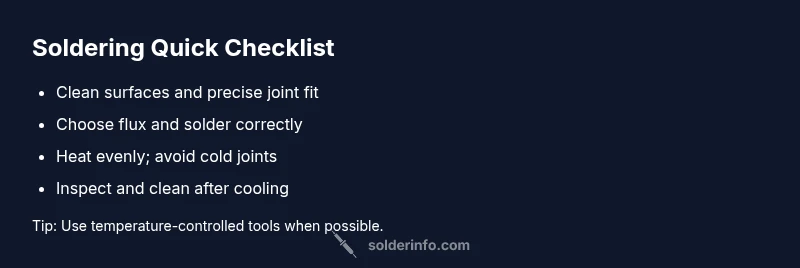
- Clean joints before soldering for reliable flow
- Use fresh flux and apply heat evenly
- Choose the correct silver solder alloy for the base metals
- Inspect and rework joints if oxidation or voids appear
- Practice controlled heating to prevent damage