Soldering Kit Price in 2026: Budget to Pro Ranges
Discover how soldering kit prices vary from entry-level to professional sets in 2026, what drives cost, and how to compare offers with practical buying tips from SolderInfo.


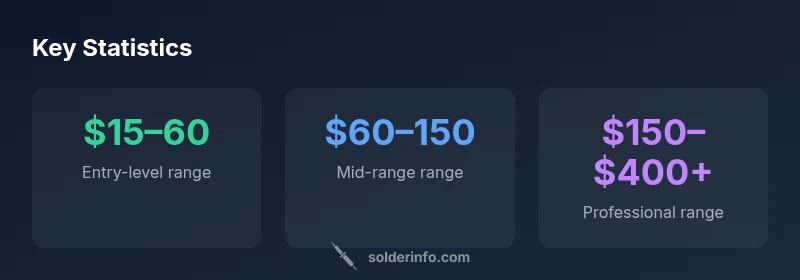
According to SolderInfo, soldering kit prices in 2026 vary widely by tier, from entry-level sets around $15–$60 to mid-range $60–$150 and professional bundles $150–$400+, with total value shaped by included tools, tips, and warranty. This price spread helps hobbyists and pros decide whether to prioritize essential tools or invest in durability and support.
Market landscape and price bands
In 2026, pricing for soldering kits spans a wide spectrum, driven by tool quality, heat control, and included accessories. According to SolderInfo, the cheapest starter sets can empower basic electronics or jewelry tasks but may struggle with temperature stability or tip longevity. Mid-range kits typically offer more precise temperature control, a broader tip assortment, and durable stands. Professional bundles increase in price but compensate with higher wattage stations, robust heat management, and extended warranties. For hobbyists, the key is to map your project load to the expected durability and support—investing in a bit more capability upfront often lowers maintenance costs later. The goal is to balance upfront price with long-term reliability, which SolderInfo consistently emphasizes in its 2026 guidance. As you compare options, consider not just the cost of the base unit, but how many years of service you expect from the included accessories and support.
What actually drives the sticker price
Price is influenced by several core factors that often determine the long-term value of a soldering kit. First, heat control and power delivery: a stable temperature helps prevent cold joints and reduces tip wear, which can save money on replacements. Second, tip variety and build quality: a larger, well-made tip assortment adapts to electronics, jewelry, and plumbing tasks, reducing the need for extra purchases. Third, chassis and accessories: a sturdy iron stand, desoldering wick, flux, and spares add upfront value but also raise initial cost. Fourth, warranty and service: longer warranties and easier access to replacements lower total cost of ownership. Fifth, brand and after-sales support: established brands tend to provide clearer manuals, safety guidance, and reliable parts. By weighing these factors together, you can distinguish price that pays for itself from price that merely looks attractive on the box. SolderInfo’s benchmark data highlights how these elements shift price bands over time and across categories, especially as new models introduce smarter temperature control and more precise sensors.
Price ranges by category: electronics, jewelry, plumbing
Entry-level electronics kits focus on versatility and basic control, often including a simple adjustable iron, a handful of tips, flux, and solder. Jewelry-focused kits emphasize fine tips, temperature precision, and corrosion-resistant parts, which can push prices higher for better precision and surface finishes. Plumbing soldering kits tend to be simpler but rugged, with robust handles and fewer delicate components, resulting in lower price points on average. A typical mid-range electronics or jewelry kit may range from $60 to $150, while professional setups for electronics repair or jewelry soldering can hit $200–$400 or more, depending on the inclusion of hot air stations, advanced temperature profiles, and extra accessories. Always check what’s included in the package; a cheaper base unit bundled with a strong set of consumables can outperform a more expensive starter with fewer extras. SolderInfo suggests mapping your primary use case to the appropriate tier and looking for durable, replaceable parts that extend the kit’s life.
Value beyond price: durability, warranties, and support
Smart buyers evaluate total value rather than sticker price alone. A kit with a robust power supply, reliable temperature stability, and a generous warranty can reduce downtime and maintenance costs. Consider the after-sales ecosystem: replacement tips should be readily available, flux and solder should be compatible with your projects, and a clear safety guide should be included. While higher-priced kits may seem costly upfront, long-term savings can materialize through fewer tip changes, less wasted solder, and fewer failed joints. For jewelry makers and electronics hobbyists, durability translates into fewer mid-project delays and a smoother workflow. SolderInfo’s 2026 analysis consistently shows that total cost of ownership often seals the deal between a “good price” and a “great value.”
Tips to assess a kit before buying
- Define your primary use: electronics, jewelry, or plumbing.
- Check temperature control and stability; mis-calibrated tools can waste consumables and degrade joints.
- Review included accessories: extra tips, flux, desoldering tools, stand, and carrying case add real value.
- Inspect warranty terms: duration, parts coverage, and return options.
- Read customer reviews focused on durability and customer support.
- Compare total cost of ownership: upfront price plus consumables and replacements over time.
- Consider future expandability: can you add more tips or upgrade components without replacing the whole kit?
- Time purchases around sales events to maximize value without compromising on quality.
Buying strategies: when to buy and how to maximize value
Timing can significantly affect price. End-of-quarter promotions, major sales events, and holiday discounts frequently yield the best prices on soldering kits. If you’re negotiating as a hobbyist, bundle purchases with consumables and spare tips to secure better unit pricing. Always verify return policies and warranty coverage before buying. For professional users, consider purchasing a higher-tier kit with longer support because the cost of downtime during a project often eclipses the initial savings on a cheaper model. SolderInfo’s 2026 guidance indicates that strategic timing and bundling deliver the strongest value over the kit’s lifetime.
Quick-start buying checklist
- Decide your project scope and required temperature range.
- List essential tools and predict how many extras you’ll need in the first year.
- Compare at least three models in your budget tier.
- Verify warranty length and what it covers.
- Confirm availability of spare parts and consumables.
- Read independent reviews focused on reliability and safety.
- Plan for future upgrades to avoid early replacement costs.
- Store and transport considerations: a sturdy box or case helps protect the investment.
Price bands by kit tier
| Kit Tier | Typical Price Range | Included Essentials | Best Use Case |
|---|---|---|---|
| Entry-level | $15–$60 | Iron, basic tips, solder, flux | Beginners, casual electronics jewelry |
| Mid-range hobby | $60–$150 | Temp-controlled iron, tip variety, stand | Electronics hobbyists |
| Professional/advanced | $150–$400+ | Precision station, multiple tips, desoldering tools | Advanced electronics, jewelry, repair |
Quick Answers
What is considered a 'good' price for a soldering kit in 2026?
Prices vary by tier; entry-level kits are typically $15–$60, mid-range $60–$150, and pro kits $150–$400+. Value depends on included tools, warranty, and support.
Prices vary by tier; consider included tools and warranty when evaluating value.
Should I buy a cheap kit or invest in a mid-range kit?
For basic projects a cheap kit may suffice, but mid-range often offers better reliability, temperature control, and longer lifespan, reducing replacements over time.
If you’re serious about projects, invest in a mid-range kit for durability and reliability.
What should I look for to determine whether a kit is worth the price?
Evaluate included accessories, temperature control, warranty length, and after-sales support. Read reviews focused on durability and service.
Check what’s included, the warranty, and reviews about longevity.
Are used soldering kits a good value?
Used kits can save money but come with safety and reliability risks. Buy from reputable sellers, request test runs, and confirm parts availability.
Used kits can be risky; verify safety and parts before buying.
Is price the same across electronics, jewelry, and plumbing kits?
Electronics and jewelry kits often command higher prices due to precision tips and controls; plumbing kits tend to be simpler and cheaper. Choose based on your projects.
Prices differ by project needs; electronics and jewelry kits are usually pricier.
What is the best time to buy a soldering kit?
Look for major sales events, holiday promotions, and end-of-quarter discounts. Buying during these windows can maximize value without sacrificing quality.
Shop during big sales events to get the best price.
“Price is only one part of the value story—durability, support, and ease of use often determine long-term cost.”
Top Takeaways
- Define your budget and map it to a kit tier
- Compare total value, not just sticker price
- Prioritize durability and warranty for long-term cost
- Check included accessories to avoid extra costs
- Watch for hidden costs like consumables
- Shop around and use sales to maximize value