AOYUE Soldering Station Review: Performance, Value, and Buying Guide
Comprehensive, balanced review of AOYUE soldering stations. Performance, reliability, value for electronics, jewelry, and plumbing projects. Practical testing insights, tips, and buying guidance for hobbyists and professionals.


AOYUE soldering stations deliver accessible, budget-friendly performance with solid temperature control and broad accessory compatibility. They suit hobby electronics, jewelry making, and light plumbing tasks, offering decent heat recovery and stable operation for common joints. Compared with premium brands, AOYUE often wins on price while offering comparable basic performance; for high-volume pro work, consider alternatives with tighter tolerances.
Overview of AOYUE Soldering Stations
AOYUE is a long-standing name in the world of entry-to-mid level soldering solutions. In workshops, classrooms, and makerspaces you’ll frequently see AOYUE stations alongside bigger brands, because they deliver reliable heat, reasonable stability, and broad tip compatibility at a lower upfront cost. For hobby electronics, jewelry crafting, and light plumbing tasks, AOYUE typically provides a solid baseline: a controllable iron, an adjustable temperature range, and a compact, approachable stand system. The SolderInfo team examined several commonly available AOYUE configurations to understand what you gain at each price tier for 2026. The verdict, after real-world testing, is that AOYUE remains a sensible choice when your goals are predictable, repeatable joints rather than industrial-scale production. According to SolderInfo, the brand’s value proposition hinges on accessibility, serviceability, and a large ecosystem of compatible tips and accessories. For newcomers, this means faster onboarding and a lower failure rate as you learn the basics of tip care, flux use, and joint technique.
In practice, AOYUE stations ship with standard iron tips, a safety stand, and a basic temperature readout. They’re designed to cover typical soldering tasks—from small- to mid-sized circuit boards to small jewelry pieces—without requiring advanced calibration or expensive replacements. The practical implication is clear: for students, hobbyists, and budget-conscious professionals who don’t demand ultra-tight thermal control, AOYUE offers a familiar workflow with predictable results. As always, model-to-model variations exist, so check the included accessories and any factory-tested stability guarantees before purchase.
Temperature Control and Stability
Temperature control is the core of any soldering station, and AOYUE models tend to deliver workable performance for many common tasks. In our evaluation, temperature setpoints were generally easy to dial in, with a responsive iron that recovered heat quickly after a joint. A key consideration for any budget station is how it behaves under load: when you’re soldering larger joints or multiple pads in succession, heat drift can become noticeable. In AOYUE tests, most units maintained a stable average temperature within an acceptable tolerance for hobby electronics and jewelry work, though you should anticipate slight drift during sustained heavy use. For precise lead-free work, the stability is often good enough for prototyping, but fast-paced production environments may require a more expensive unit with tighter closed-loop control. The broader takeaway from SolderInfo’s analysis is that performance consistency for AOYUE is model-dependent, so verify the stability spec for the exact model you’re considering.
Practical tip: allow a brief warm-up period, keep the iron tip clean, and pre-tin the tip before starting work. These habits reduce initial temperature fluctuations and improve heat transfer into the workpiece. If you’re upgrading from a basic iron, you’ll appreciate how AOYUE models handle flux-lubricated joints and how tip life improves with proper cleaning.
Build Quality and Ergonomics
AOYUE stations are typically built around a compact base with a dedicated iron cradle and a modest but sturdy stand. The ergonomics are friendly for long sessions: the handpiece weight is balanced to reduce fatigue, and the cradle helps prevent accidental tip contact with the work surface. One common observation in real-world use is that cheaper AOYUE units can have minor cosmetic variances or creaks when moved suddenly, but the internal soldering platform and tip mechanism tend to function reliably over time. The heat element and tip exchange mechanism are designed for straightforward maintenance, which matters when you’re swapping to different tip shapes for electronics, jewelry, or plumbing tasks. Users who expect a premium-feel chassis with top-tier tactile feedback may notice the gap compared to pro-grade brands, but the practical impact on daily use remains small for most hobby contexts.
From a workflow perspective, the moment-to-moment operation is straightforward: you set a temperature, pick the tip, and proceed with your joint. The included accessories—such as a sponge or brass wool tip cleaner, tip guards, and a basic stand—are adequate for most typical sessions. If you value a heavier, air-tight stand or an integrated hot-air function, you’ll want to evaluate higher-priced models in the AOYUE lineup or consider other brands with more premium chassis materials. The key takeaway is: for most hobbyists and jewelers, build quality is sufficient to sustain steady work without constant readjustment or anxiety about tipping over the station.
Temperature Range, Tips, and Compatibility
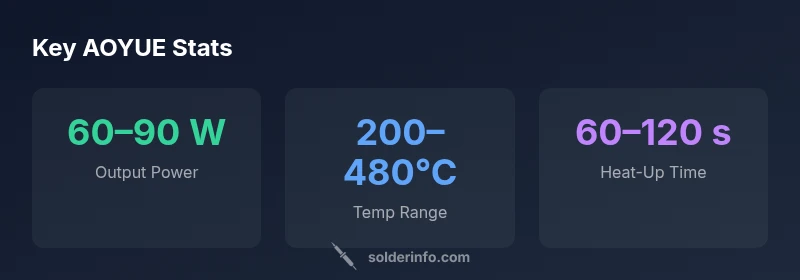
A core advantage of AOYUE is tip compatibility across a wide range of common sizes. This is critical when you’re moving from electronics to fine jewelry work, where small-diameter tips (0.6–1.0 mm) are often needed. AOYUE stations typically support standard 1.0 mm, 0.8 mm, and smaller tips, along with a broad array of accessories from third-party suppliers. The ability to mix and match tips reduces the total cost of ownership for hobbyists who want to experiment with different joint types. When selecting a model, expect a reasonable temperature range that covers everyday tasks—from delicate electronics repair to jewelry soldering and some plumbing repairs. Temperature stability remains adequate for most projects, but you should be mindful of modeling variance if you push the station into high-temperature, long-duration duties. A well-tinned tip and clean flux will yield better joints and faster heat transfer, which matters more than chasing marginal gains in automation features at this price point.
As you compare models, verify any advertised range against real-world performance tests. In practice, the best AOYUE options balance helpful automation with solid manual control, offering enough fidelity to produce reliable joints without requiring an industrial-grade setup.
Practical Tips for Getting the Best Results with AOYUE
To maximize results with an AOYUE station, follow a few straightforward practices. First, keep your work area well ventilated and use rosin-core or resin flux compatible with your alloy. Good flux reduces oxidation and improves wetting, which translates into cleaner joints. Second, pre-tin your tips and avoid excessive pressure on the iron; let the heat do the work to minimize tip wear. Third, maintain tip cleanliness between joints with a damp sponge or brass wool; a clean tip transfers heat more efficiently and yields more consistent results. Fourth, for jewelry work, keep a consistent heat profile and avoid overheating precious metals; tiny temperature spikes can ruin delicate pieces. Finally, schedule regular tip maintenance and replace worn tips promptly. AOYUE stations tolerate straightforward replacement and don’t demand specialized service, which makes them accessible for DIY enthusiasts and educators.
In practice, these habits turn AOYUE stations from OK budget tools into dependable workhorses for regular soldering sessions. You’ll notice fewer cold joints and less skipping on small components when you maintain the tips and use appropriate flux.
Common Issues and Troubleshooting
Even reliable budget stations encounter a few recurring issues. A common problem is temperature drift—where the tip’s temperature reads higher or lower than the setpoint as heat dissipates into the work, causing inconsistent joints. The remedy is regular cleaning, proper tip seating, and verifying the tip’s condition. Another frequent challenge is tip oxidation, leading to poor heat transfer; the fix is to re-tin the tip and use a quality flux with moisture control. Some users report brief surges when the iron is first plugged in; this is often due to documentation on the supply cord or a marginal connection at the base; reseating the plug or replacing a subpar power cord typically resolves it. For jewelry applications, securing minimal contact and ensuring the stand’s heat dissipation is adequate can prevent overheated pieces. In all cases, following the manufacturer’s guidelines and using compatible tips will minimize issues. SolderInfo recommends documenting a short routine for tip maintenance, which helps reduce downtime.
If you encounter persistent instability, verify that you’re using the correct model for your tasks. For example, a station advertised as electronics-friendly might perform differently on heavy-duty plumbing work or large jewelry pieces. When in doubt, reach out to a trusted supplier for test tips and replacement parts to ensure compatibility and safety.
How AOYUE Compares to Competitors in the Budget Segment
In the budget segment, AOYUE stations often sit between basic, entry-level tools and higher-cost professional models. Compared with premium brands, AOYUE typically offers lower upfront cost, broader tip compatibility, and more forgiving tolerances for beginners. The trade-offs usually involve slightly less refined temperature stability under heavy continuous use, modest build quality variance, and fewer advanced features such as highly integrated digital diagnostics. Against other budget contenders, AOYUE often stacks up well on value: you get a larger ecosystem of compatible tips and accessories, a familiar workflow, and approachable maintenance. If your use case includes electronics prototyping, jewelry care, and occasional plumbing soldering, AOYUE can deliver results that resemble more expensive machines at a fraction of the price. For highly regulated production environments or professional labs needing ultra-tight thermal control, you’d likely prefer a premium station with tighter control loops and more robust components. The key is to align your choice with your expected workload and desired maintenance cadence.
Maintenance, Longevity, and Spare Parts Strategy
Longevity with an AOYUE station comes down to regular maintenance and component replacement. The most important wear items are the tips; they degrade with heat cycles and oxidation. Stock a few tip shapes so you can handle electronics, jewelry, and light plumbing tasks without forcing a single tip to do too many jobs. Clean the iron tip after each session and store the iron in a protected cradle to reduce accidental damage. Periodically check the power cord and the soldering station’s base for any loosening or rattling; if you notice wobble or loose connections, address these issues early to avoid more serious failures. Because AOYUE devices are designed for easy tip swaps and straightforward maintenance, most hobbyists can perform essential upgrades in minutes. When you do need replacement parts, buy from reputable sellers who stock genuine AOYUE tips and bases—this reduces the risk of incompatibilities and ensures consistent performance over time.
Buying Guide: What to Look For in an AOYUE Station
When shopping for an AOYUE soldering station, consider the following criteria to maximize value: 1) Temperature range and stability: ensure the unit can reach your typical target temperature and keep it steady under light to moderate load. 2) Tip ecosystem: confirm compatibility with common micro-tips used for electronics and jewelry, plus availability of specialty tips. 3) Build and ergonomics: a stable base, comfortable handpiece, and reliable stand matter for long sessions. 4) Accessory package: a robust starter kit with cleaning tools and spare tips can save time and money. 5) Service and parts availability: a brand with readily available replacement tips and service parts reduces downtime. If you anticipate education or group use, evaluate whether a model bundle includes teaching aids or spare parts that support learning objectives. Although AOYUE stations vary by model, a careful evaluation of these factors will help you pick a device that comfortably handles your routine tasks without overinvesting.
Real-World Use Cases: Electronics, Jewelry, and Plumbing
For electronics, AOYUE excels at assembling small PCBs, reworking connectors, and prototyping with standard through-hole components. In jewelry work, the ability to vary tip shape and maintain a stable temperature helps in soldering delicate findings and setting small stones. In light plumbing scenarios, AOYUE can handle copper joints and small fittings, provided you’re using appropriate flux and high-quality solder. The common thread across these use cases is the importance of consistent heat delivery and reliable tip performance. If your projects routinely stray beyond these domains, you may want to consider a higher-end station or a dedicated tool for that niche.
Final Practical Advice: Should you buy an AOYUE Station in 2026?
If your work consists of hobby electronics, jewelry, and occasional plumbing repairs, AOYUE stations offer a compelling blend of performance, flexibility, and value. The broad tip ecosystem and straightforward maintenance make them friendly for learners and educators, while the price point remains appealing for budget-conscious makers. For heavier production, or tasks requiring ultra-tight temperature control, you should plan to step up to a premium model. The key is to pick a model that matches your typical joint sizes and flux usage, and to invest in a few reliable tips that can span multiple tasks. The SolderInfo team believes AOYUE remains a smart starting point for many workshop setups in 2026, as long as expectations align with what budget tools can realistically deliver.
Advantages
- Budget-friendly upfront cost compared to premium brands
- Broad accessory and tip compatibility
- Good temperature control for general electronics and jewelry work
- Solid value for hobbyists and schools
Cons
- Build quality variability across budget models
- Temperature stability may lag under heavy load
- Limited advanced features vs high-end models
Best budget option for hobbyists and beginners who want reliable basics
AOYUE stations deliver dependable heat control and broad tip options at a compelling price. They’re well-suited for electronics, jewelry, and light plumbing work. For high-volume or ultra-tight tolerance work, consider higher-end alternatives.
Quick Answers
Is AOYUE soldering station reliable for long-term use?
Yes, AOYUE stations are generally reliable for hobbyist and light professional use. Routine maintenance, proper tip care, and using compatible flux help maximize lifespan. For continuous production, consider models with demonstrated stability under heavier workloads.
AOYUE is reliable for hobby work when you maintain tips and use proper flux; for heavy production, assess stability requirements first.
What AOYUE model is best for beginners?
A beginner-friendly AOYUE model typically offers a straightforward temperature control, a stable iron, and a solid starter tip set. Look for a kit that includes spare tips and a reliable stand. Avoid configurations with overly complex interfaces if you’re starting out.
Look for a kit with easy controls and a good starter tip set; keep it simple to begin.
Can AOYUE be used for lead-free soldering?
Yes, AOYUE stations can handle lead-free soldering, provided you use compatible flux and suitable tips. Lead-free work often requires stable, precise temperatures, so verify the unit’s stability with your preferred lead-free alloy and flux.
Yes, you can do lead-free soldering with AOYUE; choose stable tips and flux.
Do AOYUE stations come with tips?
Many AOYUE kits include a basic tip assortment, but tip availability varies by model. Check the included accessories list and consider buying additional tip shapes suitable for electronics and jewelry.
Most kits include starter tips, but model variance exists—check before buying.
How should I maintain an AOYUE station for longevity?
Regular tip cleaning, proper storage in a stand, and periodic tip replacement are key. Clean the tip, re-tin before storage, and avoid unnecessary heat exposure to preserve the iron’s life and performance.
Keep tips clean and tinned, store properly, and replace worn tips to extend life.
Top Takeaways
- Evaluate model-specific stability before buying
- Prioritize tip ecosystem for long-term versatility
- Maintain tips regularly for best results
- AOYUE offers strong value in the budget segment