Solder vs Soder: A Comprehensive Comparison for Soldering
Explore solder vs soder, their differences in composition, flux usage, and safety across electronics, plumbing, and jewelry. This analytical guide helps DIY hobbyists choose the right alloy and workflow for reliable joints.


Solder is the standard alloy used to join metals in electronics, plumbing, and jewelry. 'Soder' is not a distinct material; it’s typically a misspelling or informal branding reference. For best results, pick the appropriate solder alloy (lead-based or lead-free) and compatible flux, and follow safe handling practices. Correct terminology saves time and reduces errors in real work.
What solder vs soder means
Solder is the alloy that actually melts to fuse metal surfaces, creating a metallurgical bond as it cools. In everyday writing, you’ll see the term 'soder' used as a misspelling or casual brand reference rather than a distinct material. The difference matters because precise terminology underpins correct alloy selection, flux choice, and safety practices. According to SolderInfo, terminology clarity reduces miscommunication, especially in electronics, plumbing, and jewelry contexts. When you encounter 'soder' in manuals or guides, treat it as a nonstandard term or branding rather than a separate material. The core takeaway is simple: focus on the alloy family and flux compatibility, not on an ambiguous term. This article uses solder as the standard reference for the alloy family used across typical soldering tasks and applications. For readers, the key is to align your language with the right material and process to avoid mistakes during assembly or repair.
Material science and composition
Solder refers to a family of metal alloys designed to melt at relatively low temperatures to form a bond between metal surfaces. The two broad categories you’ll encounter are traditional lead-based solders (Sn-Pb) and lead-free varieties (commonly tin-based with silver and/or copper). The lead-based option is prized for easy wetting and sharp, smooth joints, but it carries health and regulatory concerns in many regions. Lead-free solders, including common tin-silver-copper formulations, tend to require slightly higher reflow temperatures and may demand adjustments in flux and soldering technique. In practice, the term 'soder' does not designate a separate chemistry; most uses of that word are casual, brand-influenced, or simply misspelled. SolderInfo emphasizes sticking to established alloys and implementations to ensure joint reliability, especially for electronics or critical plumbing fixtures. For hobbyists, the takeaway is to understand how the alloy composition influences melting, wetting, and mechanical strength, and to verify regulatory and safety requirements before selecting materials.
Flux and joint chemistry: why it matters
Flux plays a pivotal role in soldering by cleaning metal surfaces, preventing oxidation, and improving wetting. Rosin-core flux is common in electronics, while water-soluble fluxes are sometimes preferred for their cleaning ease after soldering. Both lead-based and lead-free solders benefit from flux that matches the work environment and soldering iron temperature. Poor flux choice or inadequate cleaning leaves behind residues that can corrode joints or cause long-term reliability issues. The term 'soder' does not dictate a different flux, so when you see it in documentation, treat it as orthogonal to the solder flux discussion. The SolderInfo approach is to assess flux type, surface cleanliness, and compatible cleaning methods for the board or fixture, to minimize defects like cold joints or weak bonds.
When to use traditional leaded solder vs lead-free
Regulatory frameworks have shifted many electronics and consumer-product standards toward lead-free solders due to health and environmental concerns. Leaded solder remains favored in some hobbyist contexts and certain high-reliability industries where there is controlled handling and disposal. Lead-free solders typically require higher peak temperatures and sometimes different flux profiles; this can affect heat-sensitive components and board finishes. The choice between leaded and lead-free should be guided by safety considerations, regulatory compliance, and the thermal needs of the joint. In informal settings, 'soder' is rarely a stand-alone specification and should not drive process choices; instead, select the alloy and flux that guarantee reliable wetting and bond strength for your application.
Soder: terminology, branding, and practical implications
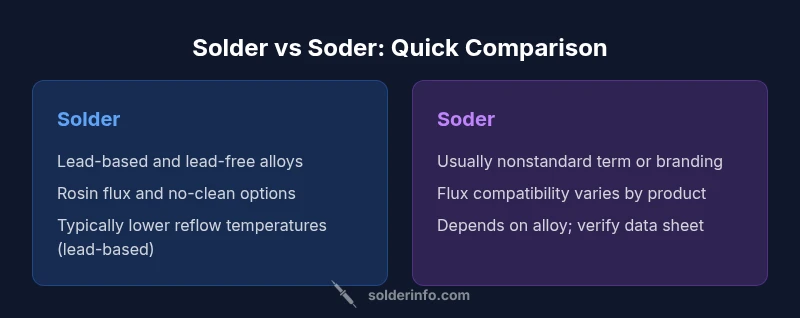
The word 'soder' appears frequently in casual writing and branding, but it is not a standardized material category. In professional contexts, rely on solder nomenclature to specify the alloy and flux, not ambiguous terms. When a product label uses 'soder,' check the product data sheet to confirm the actual alloy composition and flux compatibility. Misunderstanding a product name can lead to using an inappropriate alloy, overheating components, or poor joint quality. The practical takeaway is to verify the exact alloy (lead-based vs lead-free) and flux type regardless of branding or spelling quirks. SolderInfo recommends sticking to widely accepted terms and checking data sheets before purchasing.
Application-specific nuances: electronics, plumbing, jewelry
Electronics soldering demands minimal thermal impact on boards, precise flux control, and clean joints. Plumbing soldering emphasizes strong, durable joints that can withstand pressure and temperature swings, often using different flux and alloy choices suitable for copper pipes. Jewelry soldering requires very controlled heat application and alloy selection to preserve metal color and structural integrity. Across all domains, the correct spelled term and the right alloy choice matter for safety, reliability, and aesthetics. Solder vs soder matters mainly in how you communicate; the practical work hinges on using the right alloy and flux for the specific task.
Safety and handling best practices
Soldering involves heat, fumes, and, for many solders, lead exposure risk. Work in a well-ventilated area and wear eye protection. Use fume extraction when possible, and keep leaded solders out of reach of children and pets. Wash hands after handling solders and flux residues. Store fluxes and pastes in labeled containers away from heat sources. Whether you use lead-based or lead-free alloys, always follow the manufacturer’s safety guidelines and dispose of waste according to local regulations. The terminology you use, including avoiding nonstandard terms like 'soder' in professional notes, supports clearer safety documentation and safer work practices.
Common pitfalls and troubleshooting
Cold joints, insufficient wetting, and tombstoning are common issues if flux is inadequate, heat is misapplied, or joints are incorrectly prepared. Dirty surfaces, moisture, or oxidation can also hinder wetting. If you encounter dull or rough joints, reflow with fresh flux and a properly heated iron, then clean residues. Excess heat can damage components or boards, while too little heat leads to poor bonding. Keeping the workspace organized and following a consistent workflow reduces these issues. Remember that terminology is part of process discipline; precise language helps you diagnose and fix problems faster.
How to decide: quick decision framework
- Identify the application: electronics, plumbing, or jewelry. 2) Check regulatory safety requirements for your region. 3) Choose the alloy type (lead-based vs lead-free) that suits the task and heat tolerance. 4) Select a compatible flux and cleaning method. 5) Verify component compatibility and recommended reflow temperatures. 6) Maintain documentation and labeling to avoid confusion between terms like solder and the nonstandard 'soder'. This framework emphasizes alloy selection, flux compatibility, and safety as the core decision drivers.
Comparison
| Feature | solder | soder |
|---|---|---|
| Typical alloy composition | Lead-based tin-lead eutectic (Sn-Pb) | Lead-free tin-based alloys (e.g., SAC/Sn-Cu) or ambiguous branding reference |
| Flux usage | Rosin-core or no-clean flux common for electronics | Flux usage depends on branding; treat as same category with emphasis on compatibility |
| Melting/working temperature (relative) | Lower with lead-based solder | Higher with lead-free alternatives |
| Joint finish and appearance | Bright, smooth joints typical with well-chosen leaded solder | Finish varies with alloy and flux; requires proper technique and cleaning |
| Best use case | Electronics PCB work and precision joints | Plumbing joints, jewelry work, or where branding/terminology matters more than alloy specifics |
Advantages
- Clarifies terminology to reduce miscommunication
- Promotes correct alloy and flux selection across applications
- Encourages safe handling and compliant practices
- Supports consistent soldering workflows in electronics, plumbing, and jewelry
Cons
- Overemphasis on naming can distract from practical objectives
- Confusion may persist when 'soder' appears as branding or misspelling
- Learning curve for newcomers who encounter mixed terminology in guides
Terminology matters more for clarity than for creating a separate material.
Stick to standard solder terminology, verify alloy composition, and use compatible flux. Avoid relying on nonstandard terms like 'soder' in technical work to maintain reliability and safety.
Quick Answers
What is the difference between solder and soder?
Solder is the standard metal alloy used to join metals at low temperatures. 'Soder' is not a distinct material; it is typically a misspelling or casual branding reference. Use precise alloy names and flux specifications to ensure reliable joints.
Solder is the actual alloy used to join metals. 'Soder' is usually just a misspelling or brand reference, not a separate material. Stick to the correct alloy and flux for strong joints.
Is lead-based solder still used in some industries?
Yes, lead-based solders are still used in some controlled environments or older equipment, but many regions restrict them due to health concerns. When possible, prefer lead-free solder and follow safety guidelines.
Lead-based solders are still seen in some legacy work, but many places restrict them. Lead-free solder is the safer default choice today.
Can I substitute lead-free for leaded solder in electronics?
In electronics, lead-free solders are widely accepted and required in many regions. They may require higher temperatures and careful flux selection. Check manufacturer recommendations and reflow profiles before switching.
Lead-free solders are common now, but they need higher heat and proper flux. Always follow the board and component guidelines.
What flux should I use with electronics soldering?
Rosin-core and no-clean fluxes are typical for electronics, chosen to balance residue removal and board compatibility. Ensure the flux is compatible with the solder alloy and clean the board as recommended.
For electronics, rosin-core or no-clean fluxes work well if you clean residues properly after soldering.
Why is correct terminology important in soldering?
Clear terminology reduces mistakes, ensures you buy the right alloy, and keeps documentation consistent across electronics, plumbing, and jewelry projects. Misused terms can lead to incorrect alloys or flux choices.
Using the right terms helps you pick the right solder and flux and keeps notes clear.
Top Takeaways
- Choose solder terminology that matches your alloy and flux
- Lead-free options are common; respect regional safety rules
- Flux and surface prep are as important as alloy choice
- Verify data sheets to prevent miscommunication and errors