Silver Solder Aluminum: How to Create Strong Joints
Learn how to join aluminum with silver solder safely and effectively. This guide covers flux choices, surface prep, heat control, and joint design for reliable, corrosion-resistant joints.


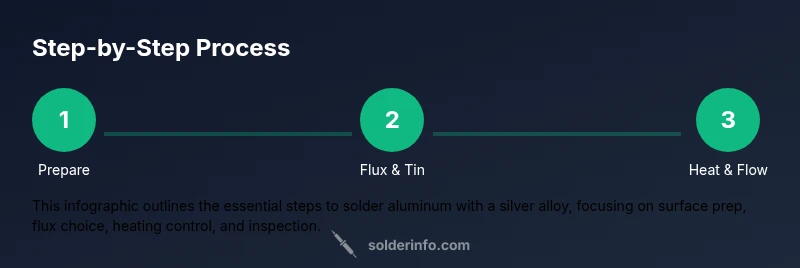
Using silver solder to join aluminum requires careful preparation: clean surfaces, oxide removal, a dedicated aluminum flux, and a high-temperature silver-bearing solder. Tin the metal, apply flux, and heat steadily with a suitable torch or iron until the alloy flows and wets the joint. This approach is ideal for small, non-structural joints where corrosion resistance matters.
Why aluminum requires special soldering considerations
According to SolderInfo, aluminum forms a tenacious oxide layer that resists wetting by most solders. This layer must be removed or disrupted to create a true metallurgical bond. Aluminum also conducts heat quickly and has different thermal expansion characteristics than common metals like steel, so heat control and joint design are critical. When done correctly, silver-bearing solder with a compatible flux can wet aluminum surfaces and produce a strong, corrosion-resistant joint. For hobbyists and professionals, understanding these fundamentals helps avoid common failures such as cold joints, poor wetting, or weakened bonds around thin sections. This section lays the groundwork for choosing materials, prepping surfaces, and executing the process with consistency.
You’ll also encounter varying alloy systems and flux chemistries. Not all silver solders are created equal for aluminum; many are optimized for copper or steels and can struggle on aluminum oxide. The right combination of flux and filler alloy improves wetting and prevents oxide regrowth during heating. In practice, expect some trial-and-error to identify the most reliable filler for your specific aluminum grade and joint geometry. The goal is to achieve a clean, oxide-free surface, a uniform heat input, and an even distribution of filler metal that wets both sides of the joint.
In this guide, we emphasize practical, repeatable steps that work for small aluminum workpieces typically found in electronics enclosures, model-making, and jewelry components. The guidance is designed for DIY hobbyists as well as professionals who need dependable results without resorting to welding for every joint. Remember that safe handling and proper ventilation are part of the process from the first flux brush to the final inspection.
Choosing the right silver solder and flux for aluminum
Selecting the right filler and flux is the backbone of a successful aluminum joint. For silver soldering aluminum, you’ll want a filler alloy compatible with aluminum and a flux formulated to break down the oxide layer without leaving corrosive residues. Look for a high-silver content filler that is described as suitable for aluminum or non-ferrous metals, and pair it with a flux designed to work at aluminum operating temperatures. Avoid generic rosin-core fluxes that are optimized for electronics copper work; they often fail to prevent oxidation on aluminum surfaces.
Flux choice matters as much as the solder itself. A flux that provides active halides or fluoride components can aggressively remove oxide, but it should also be easy to clean after the joint cools. If the flux is too aggressive or difficult to remove, flux residues can become sites for corrosion or weaken the bond. When you’re testing, keep notes on flux ease of use, smoke production, and post-cleaning results. For best results, plan to match the flux to the solder you select and to the aluminum alloy you are joining.
One more practical note: store flux and solder in clean, dry conditions. Moisture can degrade flux performance and promote oxide formation before you start. If you need to work in an air-conditioned or ventilated space, consider a small fume hood or local exhaust to keep fumes away from your eyes and skin. A clean, well-ventilated workspace makes a big difference in joint quality and safety.
Surface preparation: cleaning, oxide removal, and priming
Surface preparation is where most beginners stumble. Aluminum rapidly forms an oxide film that inhibits wetting, so you must remove this layer and prevent immediate re-oxidation. Begin with a thorough degreasing step using a mild solvent to remove oils and fingerprints. Then mechanically abrade the bonding faces with fine abrasive paper or a non-woven pad to create a micro-rough surface that improves mechanical interlock and flux access. After abrasion, wipe the surfaces with a clean solvent-dampened cloth and allow them to dry completely before fluxing.
Next, apply your aluminum-specific flux to both mating surfaces. The flux should be evenly distributed so every exposed area receives protection and oxide removal action. If your flux is liquid, brush it on in a thin, uniform layer. If it's paste, smear a light coat that will still wet the surface without pooling. The goal is to have flux present at the exact area where the solder will flow, so you don’t trap oxidized skin under the joint. Finally, inspect for any remaining oxide debris and remove it before applying filler metal. A well-fluxed, oxide-free surface dramatically increases wetting and joint quality.
Joint design and heat management
Designing the joint to control heat and accommodate aluminum’s expansion is essential. Favor simple geometries that allow even heat distribution, such as butt joints or lap joints with beaded fillets, rather than intricate webs or tight radii that trap heat. Thinner sections heat too quickly and can burn flux or cause distortion, while thicker areas require longer heating and more flux. Incorporate small clamps or heat sinks to pull heat away from nearby components and to prevent warping; this is especially important when bonding thin sheets or delicate fixtures.
During heating, maintain a smooth, steady motion rather than rapid pulses. Solder flow occurs when the filler alloy reaches its liquidus and wets both surfaces; if heat is delayed or interrupted, the joint may inherit a cold weld or porosity. If you see flux bubbling or oxide re-forming on the surface, back off heat slightly and reflow the joint with fresh flux. If a joint refuses to wet, stop and re-examine surface cleanliness, flux coverage, and heat control before reattempting. Attention to joint geometry and heat management pays off with reliable, repeatable results.
Practical workflow and common configurations
Practical aluminum soldering often involves small to mid-size parts, such as enclosure corners, aluminum jewelry components, or model parts. Start with a consistent workflow: clean, degrease, abrade, degrease again, flux, tin the surfaces lightly, apply filler, and finally heat until wetting occurs. For many users, a butt joint or simple lap joint provides the best balance of ease and reliability. If you are soldering assemblies with through-holes or thin lugs, clamp the parts to maintain neutral position and prevent flux from flowing into gaps you don’t intend to join. Ensure the joint is under mechanical control to avoid movement during solder flow.
In electronics applications, you may encounter aluminum enclosures with internal components, so consider how heat affects nearby circuits. Use controlled heating and avoid prolonged exposure that could damage insulation or adhesives. For jewelry or decorative pieces, you can push for a finer finish by using a lower finish height and a small amount of filler metal to achieve a symmetrical bead along the joint. Consistency in technique matters more than raw speed, so practice on scrap pieces first.
Post-soldering care and inspection
After finishing the joint, allow the assembly to cool gradually in a draft-free area. Avoid quenching in water, which can cause thermal shock and micro-cracks in aluminum. Once cooled, wipe away flux residues with an appropriate solvent and a lint-free cloth. Inspect the joint for uniform wetting along the bonding line, absence of voids, and a smooth fillet that indicates good flow. If you detect a dull or grainy look, the joint may be under-wetted or overheated; rework may be necessary with fresh flux and a reflow attempt. In corrosion-prone environments, consider applying a protective coating or sealant to prevent oxidation at the joint.
From a safety standpoint, ensure that ventilation is adequate in the workshop to handle flux fumes. Keep a small metal cup of water nearby in case of accidental ignition of flux or shim material, and never leave hot metal unattended. Practicing careful heat control and post-cleanup reduces the need for rework and improves long-term reliability.
AUTHORITY SOURCES
To support the techniques described here, consult established safety and materials guidelines. OSHA provides general guidance on safe soldering practices and ventilation requirements to reduce exposure to fumes. NIST offers resources on metal alloys and welding-related standards that can inform your choice of filler metals and flux. For published research and professional standards on soldering alloys and flux chemistries, see major publications from the American Chemical Society (ACS). These sources help verify best practices and safety considerations for aluminum soldering, ensuring you follow credible, science-based guidance while working on your projects.
References:
- https://www.osha.gov
- https://www.nist.gov
- https://pubs.acs.org
SAFETY REMINDERS AND BEST PRACTICES
Soldering aluminum exposes you to high temperatures and flux fumes. Always wear eye protection and heat-resistant gloves, work in a well-ventilated area, and keep a fire-safe workspace. Flux residues can be corrosive if left on the surface; clean thoroughly after soldering. If you are new to aluminum soldering, practice on scrap pieces and document your results to refine heat control and flux usage. With careful preparation, you can achieve joints that are both functional and durable.
Tools & Materials
- Soldering iron or torch rated for aluminum work(Capable of maintaining stable heat without flux breakdown; consider a high-temperature torch for thicker sections)
- Aluminum-specific flux(Formulated to break oxide and promote wetting on aluminum)
- Silver-bearing solder suitable for aluminum(Check compatibility with your flux and alloy type)
- Wire brush and non-woven abrasive pad(For oxide removal and surface roughening)
- Solvent degreaser (e.g., isopropyl alcohol or acetone)(Used for cleaning before fluxing)
- Fine sandpaper or abrasive pad (grit 180-400)(Light abrasion to create bonding roughness)
- Heat sinks or clamps(To control heat distribution on thicker joints)
- Safety gear (goggles, gloves, respirator)(Protect eyes, hands, and lungs from fumes)
- Fire-safe work surface(Non-flammable mat or bench liner to catch drips)
Steps
Estimated time: 60-90 minutes
- 1
Prepare workspace and safety gear
Set up a clean, dry workspace in a well-ventilated area. Don safety goggles, heat-resistant gloves, and a respirator if needed. Have all tools and materials within reach to minimize movement during soldering.
Tip: Use a dedicated aluminum work area to prevent cross-contamination with other metals. - 2
Clean and degrease surfaces
Wipe both bonding faces with a degreaser to remove oils. Avoid touching the cleaned surfaces with bare fingers, which can reintroduce oils. Allow to dry completely before proceeding.
Tip: Keep solvents away from heat sources and ensure good ventilation to avoid fumes buildup. - 3
Abrade and degrease again
Lightly abrade the bonding faces to create a micro-rough surface, then wipe again with solvent. The roughness improves mechanical interlock and flux access. Ensure the area is dry before fluxing.
Tip: Do not over-sand; keep the surface consistent across the joint areas. - 4
Apply flux and tin the surfaces
Brush or apply flux to both surfaces evenly. Lightly pre-tin the bonding faces with a small amount of filler metal to facilitate wetting. This step helps ensure the filler flows smoothly when heat is applied.
Tip: Avoid over-fluxing; excess flux can wash away filler or obscure the joint geometry. - 5
Heat and apply the silver solder
With steady, controlled heat, bring the joint to the solder’s flow point and feed the filler metal as needed. Stop heating as soon as the joint wets and a smooth fillet forms. Allow the joint to cool in still air.
Tip: Use heat sinks on thicker areas to prevent overheating nearby sections. - 6
Inspect, clean, and finalize
After cooling, inspect for uniform wetting and a clean fillet. Remove flux residues with a solvent and dry thoroughly. If the joint shows poor wetting, rework with fresh flux and a brief reflow.
Tip: Document results for future projects to refine technique.
Quick Answers
Can silver solder join aluminum?
Yes, with the right aluminum-specific flux and a compatible silver filler, you can join aluminum. The process requires oxide removal, clean surfaces, and careful heat control. For structural loads, consider alternatives like brazing or welding when appropriate.
Yes, aluminum can be joined with silver solder when you use the right flux and filler and control heat carefully.
What flux should I use for aluminum soldering?
Use a flux formulated specifically for aluminum. Rosin-based or copper-focused fluxes are usually unsuitable. The flux should promote wetting and oxide removal while remaining easy to clean after cooling.
Choose aluminum-specific flux to ensure proper wetting and easy cleanup.
Do I need special prep for aluminum vs. other metals?
Yes. Aluminum requires oxide removal and surface roughening, plus thorough cleaning and drying before fluxing. This prevents oxide regrowth and improves solder flow.
Aluminum needs oxide removal and careful surface prep to succeed.
Is silver soldering aluminum suitable for structural joints?
For high-load joints, soldered aluminum may not be as strong as brazed or welded connections. Use solder for non-structural, aesthetic, or lightweight applications and plan joint design accordingly.
Soldering is best for non-structural aluminum joints; for strength, consider brazing or welding.
Can I solder aluminum to other metals like steel or copper?
Joining aluminum to dissimilar metals is possible with the right flux and compatible filler, but differing thermal expansion and corrosion tendencies require careful design and protective coatings.
Dissimilar metal joints are possible but require careful design and compatibility checks.
Watch Video
Top Takeaways
- Prepare oxide-free, clean bonding surfaces before soldering.
- Choose aluminum-specific flux and a compatible silver solder.
- Control heat carefully and design joints for even wetting.
- Inspect joints thoroughly and clean residues to prevent corrosion.