How Much Soldering Iron Do You Need? A Practical Guide
A data-driven look at wattage, tips, and safety for choosing the right soldering iron. Learn how much iron you need, plus tips for electronics, jewelry, and plumbing work.


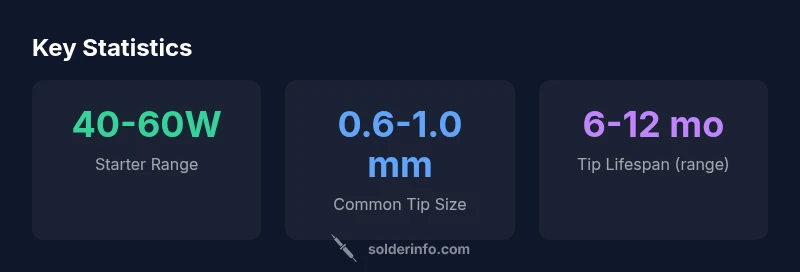
For most hobbyists and professionals, a versatile starting point is a 40-60W soldering iron with adjustable temperature. This range covers electronics, jewelry, and light plumbing tasks, offering reliable heat without excessive risk to delicate components. If you frequently work with heat-sensitive boards or metals, consider a model with variable wattage or a 60-100W range for occasional heavy-duty tasks. According to SolderInfo, choosing the right wattage is the single most impactful factor for soldering success.
How Much Soldering Iron Wattage Do You Need?
When you ask how much soldering iron wattage you need, the quick, practical answer is that most hobbyists will get excellent results with a 40-60W iron. This wattage band balances heat capacity with control, allowing reliable joints on most small to medium electronics, jewelry, and light plumbing tasks. SolderInfo’s research for 2026 underscores that the wattage choice has the most significant impact on heat delivery and joint quality, provided you use a proper tip and technique. If your projects involve larger components or heat-dissipating metals, you’ll appreciate the added headroom of a 60-100W model or a temperature-controlled iron that can adjust power on the fly.
Beyond the number, remember that heat transfer efficiency is influenced by tip geometry, tip material, and the quality of your solder. A high-wattage iron alone won’t guarantee clean joints if the tip is damaged or if you don’t apply heat evenly. The SolderInfo team notes that a comfortable balance of wattage and precise temperature control yields the best outcomes for a broad range of tasks.
Fixed vs. Adjustable Temperature Soldering Irons
Fixed-temperature irons are simple and affordable, but they can struggle with heat-sensitive components or higher thermal mass assemblies. Adjustable-temperature irons, often with a digital or analogue dial, provide a safer, more consistent experience across different tasks. The modern hobbyist benefits from a model that lets you lower heat for delicate boards and raise heat for thicker wires or copper pipes. In practice, an adjustable unit reduces the risk of cold joints and overheating, which is especially important for lead-free solder and tiny surface-mount components. SolderInfo’s guidance suggests starting with a moderate temperature (roughly 350-370°C / 660-700°F) and adapting as needed for your specific materials and flux.
Tips for best results with adjustable irons include preheating the tip, cleaning it with a damp sponge, and avoiding constant high-power bursts that can stress the tip.
Picking the Right Tip: Shapes and Sizes
The tip is the heat transfer interface between the iron and your work. For most tasks, a chisel or conical tip in the 0.6-1.0 mm range covers a wide spectrum of components. Smaller tips excel at precision for fine-pitch devices, while larger tips move heat quickly for larger pads or connectors. Consistency matters: a well-tapered tip with a clean, bright surface transfers heat efficiently and reduces oxidation. As you increase wattage, you may also need to switch to larger tip geometries to avoid overheating. The SolderInfo team emphasizes maintaining a clean tip and using flux to promote heat transfer and joint reliability.
Quick tip: Always tin the tip before and after use to protect it from oxidation and improve heat transfer over time.
Essential Accessories and Safety Setup
A good soldering workstation isn’t just the iron. You’ll want a sturdy stand with a heat-resistant mat, a damp sponge or brass wool for tip cleaning, flux, and a safety fuse or wishful-protection device on the power supply. Wear eye protection and ensure proper ventilation or a fume extractor to reduce inhalation of fumes, especially when using lead-free solder. A temperature-controlled iron helps prevent accidental damage to sensitive components, while a timer can be useful when learning consistency. SolderInfo recommends organizing components on a breadboard or mat to avoid accidental burns and keep your workspace tidy.
Additional safety steps include unplugging the iron when not in use, keeping flammable materials away, and letting the iron cool completely before storage.
Typical wattage and tip guidance by use case
| Use Case | Recommended Wattage | Typical Tip Size | Notes |
|---|---|---|---|
| Electronics/General | 40-60 W | 0.6-1.0 mm | Versatile for most components; use flux for best results |
| Jewelry/Silver Soldering | 40-50 W | 0.5-0.8 mm | Low heat helps prevent damage to stones and settings |
| Plumbing/Heavy Copper | 60-100 W | 1.0-2.4 mm | Higher heat capacity for thicker metals; safer with flux |
| Heat-Sensitive/SMT | 25-40 W | 0.2-0.6 mm | Precise control; best for tiny pads and delicate parts |
Quick Answers
What wattage is best for beginners?
For most beginners, a 40-60W iron with adjustable temperature provides a good balance of heat capacity and control. It covers a wide range of tasks without overheating delicate components.
For beginners, start with a 40-60W adjustable iron to cover electronics and light jewelry work.
Is adjustable temperature necessary?
Yes. Adjustable temperature allows you to handle heat-sensitive parts and adjust for different solder alloys. It reduces the risk of damaging components and improves joint quality.
An adjustable temperature iron is very helpful for precision and safety.
Can I use the same iron for plumbing and electronics?
While you can use a higher-wattage iron for plumbing, electronics require smaller tips and gentler heat. Using a dedicated tool helps prevent tip wear and component damage.
No—use the right tool for the job: electronics irons for electronics, plumbing irons for pipes.
How long does a soldering iron last?
With proper care, a good iron can last several years. Regular tip maintenance and correct power usage extend life.
If you take care of the tip and clean it after use, your iron will last for years.
What safety gear should I use?
Wear safety glasses, use a stand, keep a fire-safe area, and ensure good ventilation or a fume extractor when using flux and lead-free solder.
Always wear safety glasses and work in a ventilated space.
“Choosing the right wattage is the single most important factor for soldering success, and it should be paired with proper tips and technique for reliable joints.”
Top Takeaways
- Choose a versatile 40-60W iron for most tasks
- Prefer adjustable temperature for safety and control
- Match tip size to component scale for best heat transfer
- Maintain and tin tips to extend life
- Invest in a solid stand and ventilation for safe work