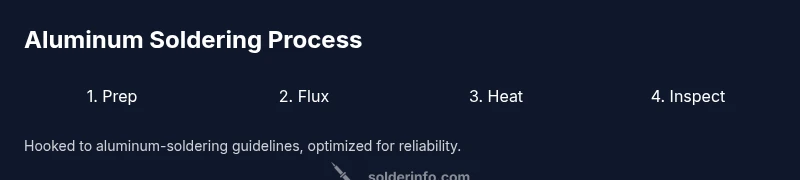
Can You Solder Aluminum with a Soldering Iron? A Practical Guide
Discover whether a standard soldering iron can join aluminum, learn surface prep, flux and solder options, and safer alternatives like brazing or welding. SolderInfo offers practical, tested guidance for DIYers and professionals.


Generally, a conventional soldering iron cannot reliably join aluminum due to its oxide layer and high thermal conductivity. Aluminum joints require specialized flux and higher heat, or alternative methods like brazing or welding. For small, non-structural fixes, you can attempt aluminum-specific solders under controlled temps, but results may be brittle. When in doubt, prefer mechanical joints or adhesives.
Aluminum's oxide layer and thermal behavior
Aluminum surfaces form a thin oxide layer within minutes of exposure to air. This oxide is non-wetting to most solders and fluxes, and it rapidly reforms if you wipe the surface with bare metal. For soldering aluminum with a traditional soldering iron, the oxide must be broken and kept broken during the joint, or else the solder will bead away instead of adhering. Aluminum also conducts heat very efficiently, which means the joint heats and cools quickly, demanding careful temperature control to avoid overheating nearby components or injuring the base metal. In practice, you may find better success with materials that can interact chemically with aluminum oxide, such as specialized fluxes and alloys designed for aluminum. In this article, we’ll explore practical methods, limits, and safer alternatives, so you can decide whether a soldering iron is appropriate for your project.
When aluminum soldering makes sense (and when it doesn't)
Soldering aluminum with a hand-held iron is generally reserved for cosmetic repairs or very light-duty joints on non-structural parts. If the joint experiences vibration, load, or temperature fluctuations, soldered aluminum is often unreliable unless you use an aluminum-specific solder system and robust surface preparation. For hobby projects like decorative metalwork or sensor housings, a carefully executed aluminum solder joint can be acceptable, provided expectations are adjusted and testing is performed. For anything bearing weight, sealing, or mechanical stress, prefer brazing, welding, or mechanical fasteners. This nuanced decision is one reason SolderInfo emphasizes testing on scrap pieces before committing to a finish product.
Tools and materials you'll need
Before you start, assemble essential tools and materials tailored to aluminum work: a high-temperature soldering iron capable of maintaining steady heat, aluminum-specific flux and solder alloy, a metal brush or scouring pad, fine-grit sandpaper, acetone or isopropyl alcohol for degreasing, lint-free cloths, clamps or helping hands, heat sink clips or springs, safety gear (gloves, eye protection, respirator or mask), and optional solder wick for cleanup. Having a dedicated workspace reduces airborne flux exposure and cross-contamination. Keep a scrap piece nearby to gauge wetting and joint quality before attempting your real part.
Surface preparation: cleaning and oxide removal
Effective aluminum soldering starts with meticulous surface prep. Begin by degreasing with acetone or isopropyl alcohol to remove oils, fingerprints, and lubricants. Lightly abrade the joint areas with fine-grit sandpaper or a scouring pad to disrupt the oxide layer and create micro-roughness for better bonding. After abrasion, wipe again with solvent to remove dust and debris. Do not touch the cleaned surface with bare hands; oils from skin will recontaminate the surface. If you have stubborn oxides, a brief mechanical etch or a chemical activator suitable for aluminum can be used according to the flux instructions. This prep dramatically improves solder wetting and joint integrity.
Flux and solder options for aluminum
Choosing the right flux and solder is critical. Aluminum-specific fluxes are formulated to aggressively break down the oxide layer and keep the surface active during soldering. Pair these fluxes with compatible solders that contain elements like silicon or zinc designed for aluminum. Avoid standard electronics solders on bare aluminum unless you’re using a flux proven to work with the metal. Remember that flux residues can be corrosive if not cleaned, so plan for post-assembly cleaning. Always follow the flux manufacturer’s guidelines and test a small joint on scrap metal first to confirm reliable wetting and bonding.
Joint designs and how to approach them
Aluminum joints can be butt, lap, or fillet configurations, but each design demands a different approach. For thin sheets, lap joints provide more surface area for bonding, while butt joints are flatter but rely on precise alignment and pressure. Fillet-like seams can accommodate slight misfits. In all cases, mechanical alignment and clamping are essential to prevent movement during heating. Consider using a heat sink to protect heat-sensitive areas and minimize warping. For enhanced strength, plan joints so the solder can flow through the interface, creating a more continuous bond rather than a superficial capillary bridge.
Heating strategy and technique with a soldering iron
Temperature control is paramount when working with aluminum. Preheat the area gradually to avoid shocking the part or nearby components, then apply flux to the joint. Use a tip that’s wide enough to deliver heat evenly without overheating a small spot. Maintain a steady motion: melt flux, bring solder to the joint, and let capillary action draw solder into the interface. Do not push the iron directly into the joint as this can cause uneven wetting and potential thermal damage. If the oxide layer reforms during the process, stop, re-apply flux, and re-clean the area before continuing. Expect longer times to reach a proper bond than with copper or brass.
Troubleshooting common failures
Common failures include poor wetting, oxide regrowth, and cold joints. Wetting issues often stem from insufficient surface prep or flux activation; re-clean the surface and apply flux again. If the oxide reappears during heating, pause, re-abrade, and re-apply flux. Cold joints can result from removing heat too soon or using insufficient heat; allow the joint to stay warm long enough for the solder to flow and wet the interface before cooling. Avoid overheating by stepping away briefly to gauge whether the joint has formed a cohesive film of solder. If you observe porosity or cracking, the alloy or flux choice might be wrong for your aluminum grade—reassess both materials and your joint design.
Alternatives to soldering aluminum with a soldering iron
For many structural or water-tight joints, brazing with a torch or welding yields significantly stronger results. Mechanical fasteners, epoxy adhesives designed for metal, or compression fittings may be safer and more reliable options depending on the application. If you must use a soldering iron, limit expectations to cosmetic attachments or non-load-bearing components, and consider applying a protective sealant after the joint cures. Soldering aluminum with heat transfer-only methods rarely matches the durability of brazed or welded joints, so evaluate the service conditions and performance requirements before choosing your method.
Safety considerations and ventilation
Aluminum soldering involves flux fumes and metal heating, so ensure good ventilation. Wear appropriate PPE, including eye protection and a respirator or mask if flux odors are strong. Work on a sturdy, heat-resistant surface and keep flammable materials away from the area. Flux residues can be corrosive; clean thoroughly after soldering and dispose of waste according to local regulations. Never leave a hot joint unattended, and keep a damp cloth ready to cool any accidental drips. Proper safety planning reduces risk and improves success rates on subsequent projects.
Best practices for durable, repeatable results
Document your process and record material types, flux, alloy, and temperatures used. Start with scrap pieces to build a baseline and transfer those parameters to production parts after confirming repeatability. Maintain a consistently clean workspace, dedicated tools, and fresh flux to avoid cross-contamination. Finally, pursue small, incremental trials that test joint load and environmental exposure. A disciplined setup and methodical testing routine is the fastest route to dependable aluminum soldering results.
Tools & Materials
- high-temperature soldering iron(Capable of sustained heat and compatible with aluminum flux/solder systems.)
- aluminum-specific flux(Activator formulated to break aluminum oxide and promote wetting.)
- aluminum solder alloy(Use solder designed for aluminum with suitable alloying elements.)
- wire brush or scouring pad(Clean oxide and debris from joint surfaces.)
- fine-grit sandpaper (400–600 grit)(Create micro-roughness for bonding.)
- solvent degreaser (acetone or isopropyl alcohol)(Degrease surfaces before abrasion.)
- lint-free cloths(Wipe clean after degreasing and abrasion.)
- clamps or helping hands(Hold parts securely during heating.)
- heat sinks or thermal clamps(Protect nearby components from heat.)
- safety gear (gloves, eye protection, respirator)(Protect while handling hot parts and fumes.)
- solder wick (braid)(Cleanup option for excess solder.)
- scrap aluminum pieces(Practice joints before final work.)
Steps
Estimated time: 60-90 minutes
- 1
Prepare the work area and safety gear
Set up a well-ventilated workspace, place a heat-resistant mat, and put on PPE. Ensure you have all tools within reach to minimize movement during heating.
Tip: Ventilation is essential to keep flux fumes away from your face. - 2
Degrease and clean the joint surfaces
Wipe both surfaces with acetone or isopropyl alcohol, then let dry. Residual oils hinder solder wetting and create weak joints.
Tip: Avoid touching cleaned surfaces with bare hands after cleansing. - 3
Abrade the bonding areas
Lightly abrade the contact surfaces with fine sandpaper or a scouring pad to break the oxide and create bonding roughness.
Tip: Do not gouge the metal; keep the surface uniformly brushed. - 4
Apply flux to the surfaces
Brush a thin, even layer of aluminum-compatible flux on all mating areas to promote oxide breakdown during heating.
Tip: Only apply flux to the areas that will be bonded. - 5
Tin the iron tip and prep the joint
Pre-tin the soldering iron tip and reapply flux to the joint. This improves heat transfer and wetting.
Tip: Keep the tip tinned to prevent oxidation during work. - 6
Position parts and secure with clamps
Align the pieces and clamp them so they do not move while heating. Proper alignment boosts joint quality.
Tip: If possible, use heat sinks to minimize heat spread to delicate areas. - 7
Apply heat and feed solder gradually
Place the iron tip at the joint, allow heat to flow and then gently feed solder into the interface until it wets.
Tip: Avoid overheating; if the joint sizzles, back off heat and re-wet area. - 8
Monitor wetting and stop at first stable bond
Watch for a smooth, glossy solder film that fills the seam. Stop heating once wetting is complete.
Tip: Do not move the pieces while solder is still liquid. - 9
Cool and inspect the joint
Let the joint cool undisturbed, then visually inspect for uniform coverage and absence of cracks or oxide pockets.
Tip: Cool slowly to prevent thermal shock. - 10
Clean flux residues and test integrity
Wipe away flux residue and perform a light mechanical or non-load test to verify bond. Rework if needed.
Tip: Flux residue left on aluminum can be corrosive over time. - 11
Document results and plan next steps
Record material types, surface prep steps, and outcomes to guide future projects.
Tip: Use scrap pieces to build a knowledge base. - 12
Consider alternatives for structural joints
If load or sealing is required, plan for brazing or welding instead of relying on soldering iron joints.
Tip: Always evaluate the service conditions before choosing a method.
Quick Answers
Can I reliably solder aluminum with a standard soldering iron?
In most cases, a standard soldering iron cannot reliably join aluminum due to the oxide layer and high thermal conductivity. You may achieve a cosmetic bond with specialized flux and aluminum-compatible solder on non-structural parts, but this approach is not durable for load-bearing joints.
Generally not reliable with a regular iron; for durable joints, consider other methods or aluminum-focused solders with special flux.
What flux and solder should I use for aluminum?
Use flux designed for aluminum oxide removal and a solder alloy formulated for aluminum. Conventional electronics solder typically won’t wet aluminum well without appropriate flux, and you should confirm compatibility with your solder and flux manufacturer guidelines.
Choose aluminum-specific flux and solder designed for aluminum Wetting.
Are there safer alternatives to soldering aluminum for structural joints?
Yes. Brazing or welding often provides much stronger joints for aluminum. Mechanical fasteners and specialized epoxies may also be suitable depending on the application. Evaluate load, environment, and service life before choosing.
For strong joints, brazing or welding is usually better than soldering aluminum.
Can I use solder wick to fix a leak in a thin aluminum tube?
Solder wick can help remove excess solder or flux in small joints, but sealing a leak in aluminum tubing typically requires proper brazing or welding techniques or a metal epoxy designed for aluminum.
Solder wick helps cleanup, but leaks in aluminum tubes usually need brazing or welding repair.
What safety steps are essential when soldering aluminum?
Work in a well-ventilated area, wear PPE, and handle hot parts with care. Flux fumes can irritate eyes and lungs, and overheating aluminum can warp parts. Keep flames and sparks away from flammable materials.
Ventilate, wear protection, and be careful with heat and flux fumes.
If the joint fails, what should I try next?
Re-examine surface prep, flux selection, and joint design. If failures persist, switch to brazing or welding, or redesign the joint to reduce load and improve bonding area.
If it fails, reassess prep, flux, and design; consider brazing or welding for a durable fix.
Watch Video
Top Takeaways
- Assess whether aluminum soldering with a iron is appropriate for your load.
- Use aluminum-specific flux and solder; prep and rinse surfaces thoroughly.
- Clamp and pre-heat; avoid overheating to prevent oxide formation.
- Expect mixed results for structural joints; plan for brazing or welding when needed.
- Document your process for repeatable success.