Can You Solder Aluminum? A Practical DIY Guide for Beginners
Learn how to solder aluminum safely and effectively with practical steps, flux choices, heat control, and troubleshooting tips from SolderInfo.


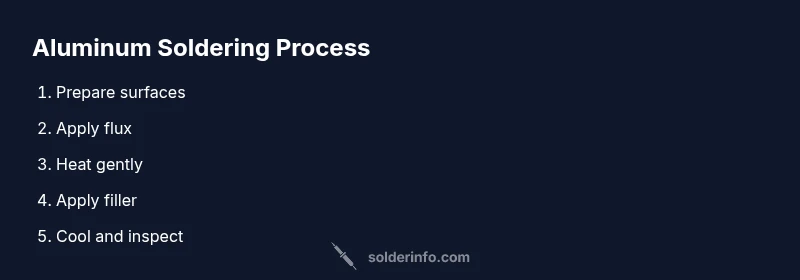
Yes, you can solder aluminum, but it requires aluminum-specific flux and filler, plus careful surface prep and heat control. Aluminum oxide forms quickly, so you must clean, abrade, and flux the joints before applying heat. This guide walks you through the process step by step.
Can you solder aluminum? Understanding the challenge
In many projects, can you solder aluminum? The short answer is yes, but bonding aluminum is more demanding than copper or steel because of the oxide layer that forms on exposed surfaces. Without proper flux and a controlled heating strategy, joints will be weak or fail quickly. According to SolderInfo, success depends on surface preparation, compatible filler alloys, and disciplined heat flow. With the right approach, aluminum joints can be reliable for electronics, plumbing, or jewelry applications.
Surface Preparation: Cleaning and abrading to expose fresh metal
Aluminum oxide aggressively resists bonding, so begin with a clean, reactive surface. Wipe down the area with a degreasing solvent, then lightly abrade with a non-woven pad or fine-grit sandpaper to remove the oxide skin. Rinse and dry completely to prevent flash corrosion. Any oils, fingerprints, or water can ruin the bond, so work in a clean environment and minimize re-oxidation time. SolderInfo analysis shows that proper surface prep significantly lowers failure rates.
Flux, fillers, and joint design for aluminum
Choose flux formulated for aluminum alloys and a solder alloy compatible with aluminum. Apply flux evenly across the joint to promote wetting and deter oxide formation during heating. Plan the joint geometry to maximize surface contact and minimize heat sinks; tack-weld or clamp to hold parts in place while flux activates. Solder joint quality greatly depends on selecting the right filler alloy for the base metals involved.
Heat management and joining technique
Aluminum heats differently than copper, so apply heat gradually and monitor the joint as flux breaks down. Bring the parts to near the flux activation temperature, then introduce the filler alloy with a careful, controlled motion. Avoid overheating, which can burn away flux or warp the metal. Work in small increments and keep the joint clean and fluxed throughout the process.
Tools, materials, and setup you’ll need
A well-stocked setup makes the task easier: an adjustable soldering iron, flux formulated for aluminum, aluminum-specific filler alloy, degreaser, abrasive pad, clamps, tweezers, and safety gear. Have a clean work surface and good ventilation. Keep spare flux and solder on hand, and practice on scrap pieces to dial in your technique before tackling a real joint.
Troubleshooting and common issues you may encounter
If joints look dull, re-prepare the surfaces and re-apply flux. Streaking or poor wetting usually indicates insufficient flux or uneven heat. If the oxide layer reforms too quickly, increase surface cleanliness or shorten handling time between cleaning and soldering. Practice on scrap aluminum to build shooting speed and precision, then move to your actual project.
Safety, best practices, and final checks
Always wear safety glasses and gloves; work in a well-ventilated area or fume hood to avoid inhaling fumes from flux and molten metal. Keep heat sources away from flammable materials and use clamps to secure parts. After cooling, inspect the joint for uniform fill, absence of voids, and mechanical strength before putting the assembly into service. The SolderInfo Team emphasizes safety and proper ventilation as non-negotiable steps.
Tools & Materials
- Aluminum-compatible flux(Rosin-based or aluminum-specific flux; apply evenly)
- Aluminum solder alloy(Filler compatible with base metal; avoid ordinary tin-lead solders)
- Adjustable soldering iron with temperature control(Low-to-medium heat suitable for aluminum)
- Soldering tip cleaner and wire brush(Keep tip clean to maintain heat transfer)
- Degreaser/solvent(Remove oils and greases)
- Non-scratch abrasive pad or fine sandpaper(Lightly abrade oxide layer)
- Clamps or jig for holding parts(Prevents movement during heating)
- Safety gear (goggles, gloves, fume mask)(Protect from fumes and hot metal)
- Solder wick (optional)(For cleaning miscells or bridging)
Steps
Estimated time: 60-120 minutes
- 1
Set up workspace and safety gear
Assemble PPE, ensure ventilation, and clear the area of flammables. Verify you have all tools and materials within reach. Establish a stable, clean surface for the work.
Tip: Wear eye protection and gloves; keep a small brush handy to sweep away flux spills. - 2
Clean and abrade the joint surfaces
Wipe surfaces with solvent, then lightly abrade oxide with a pad or fine sandpaper. The goal is a bright, clean metal surface and roughness for better wetting.
Tip: Avoid deep gouges that create stress concentrations; keep areas uniform. - 3
Apply flux evenly across joints
Spread flux over the mating faces so the entire contact area is active. Flux fluxes you can use include rosin-based, water-soluble, or aluminum-specific types.
Tip: A thin, even layer is better than a thick coat that traps residues. - 4
Position parts and secure with clamps
Align parts precisely and clamp to prevent movement as heat is applied. Use a jig or V-block to maintain square joints.
Tip: Secure the joint before heating to reduce misalignment. - 5
Apply heat and introduce filler alloy
Heat the joint with a steady, controlled motion; when flux has activated, touch the filler to the joint. Let capillary action pull the filler into the joint without forcing it.
Tip: Add filler gradually; overheating can burn flux and ruin the bond. - 6
Cool, inspect, and clean
Allow the joint to cool undisturbed. Inspect for uniform fill and absence of voids, then remove flux residues with solvent.
Tip: Do not bend or stress the joint while hot. - 7
Troubleshoot and practice
If the joint fails, re-clean, re-apply flux, and retry with adjusted heat. Use scrap pieces to practice technique before final work.
Tip: Keep patience; aluminum soldering requires repeatable steps.
Quick Answers
Can aluminum be soldered?
Yes, with the right flux and filler, but bonding aluminum requires careful preparation and heat control.
Yes, you can solder aluminum, but it needs proper flux and controlled heat for a solid bond.
What flux works best with aluminum?
Flux formulated for aluminum alloys helps prevent oxide formation and improves wetting; rosin-based fluxes can work with aluminum when used correctly.
Flux for aluminum alloys helps prevent oxide and improves wetting.
Can I solder aluminum to copper?
It is possible with compatible solder and flux, but ensure joint design accounts for different melting points and oxide behavior.
Aluminum-to-copper joints are possible with the right alloy and surface prep.
Do I need a specialized soldering iron for aluminum?
A standard iron with good heat control can work; focus on consistent heat delivery and corrosion resistance.
You don’t necessarily need a special iron, but you do need good heat control.
Is soldering aluminum safe?
Follow ventilation and PPE guidelines; flux fumes and molten metal can be hazardous if misused.
Soldering aluminum safety requires proper ventilation and PPE.
How can I test the strength of an aluminum joint?
Inspect visually for wetting and fill, then perform a gentle mechanical check; failure often reveals insufficient bonding or oxide intrusion.
Check the bond visually and by gently testing the joint while it’s cool.
Watch Video
Top Takeaways
- Prepare surfaces thoroughly before soldering
- Use aluminum-specific flux and filler
- Control heat for reliable joints
- Inspect joints with care after cooling