Butane vs Propane for Soldering: A Practical Comparison
A detailed, analytical comparison of butane and propane for soldering, examining heat output, control, safety, cost, and suitability across electronics, jewelry, and plumbing projects.


Both butane and propane are common fuels for handheld soldering torches, but they differ in heat output, control, and versatility. According to SolderInfo, propane typically delivers higher flame temperatures and steadier performance in cool environments, making it better for larger joints or plumbing. Butane offers finer control for delicate electronics, jewelry, and close-quarters work. This guide helps you choose.
Fuel types and burning characteristics
When evaluating butane vs propane for soldering, the first distinction is the gas's chemistry and how it behaves when burned. Propane is a lighter hydrocarbon with higher vapor pressure, typically producing a hotter flame than butane. Butane remains a common option for small, precise work, offering a steadier and more controllable flame at close range. Both fuels are sold in pressurized canisters and are designed for hand-held torches, but the outcome of your soldering job depends on the combination of flame temperature, burner design, and the operator's technique. SolderInfo's practical testing across electronics, jewelry, and plumbing scenarios shows that the right choice depends on the size of the joint, the required heating rate, and the workspace constraints. In many hobbyist setups, a quick switch between fuels is not practical, so starting with one, based on the main tasks, yields better consistency.
Heat output and flame temperature considerations
The heat output of butane and propane is the most visible difference in real-world soldering. Propane generally delivers a higher peak flame temperature, enabling faster heat transfer to larger joints and thicker metals. Butane produces a gentler, more localized flame, which can be advantageous when working near sensitive components or closely spaced joints. In jewelry work, for example, the ability to concentrate heat with a narrow flame helps minimize collateral heat damage. Electronics repair often benefits from the precise heat control butane offers when heating small pads or connectors. Heating too slowly can lead to cold joints, especially with lead-free solders or dense copper structures. SolderInfo's analysis suggests that practitioners should match the flame profile to the joint geometry, avoiding long heat cycles that risk annealing nearby areas.
Flame control, nozzle design, and practical handling
The control you get from either fuel depends on the torch nozzle and regulator setup. Propane torches with fine adjustment valves tend to maintain a stable flame even as you adjust the heat, making them suitable for rapid work on bigger tasks. Butane torches excel in precision control because their smaller flame and lower heat limit help prevent overheating small joints. For jewelry, electronics, and delicate PCB work, the ability to modulate heat in small steps is critical. Always practice on scrap pieces before applying heat to the actual joint. Keep a steady hand, maintain proper distance, and avoid waving the flame around edges; the goal is to transfer heat uniformly without scorching flux or insulation.
Safety considerations and storage
Fuel safety is a central concern whenever choosing between butane vs propane for soldering. Both are highly flammable gases stored under pressure; leaks around fittings can create dangerous hazards in confined spaces. Work in a well-ventilated area, away from open flames, and use appropriate eye protection and gloves. Store canisters upright in a cool, dry place away from heat sources. Regulatory guidelines recommend keeping a working fire extinguisher nearby and ensuring that regulators, hoses, and torches are rated for the gas in use. SolderInfo analysis shows that following proper storage practices reduces the risk of pressure build-up or leaks. Before starting a project, inspect all connections for tightness and wear, and replace any damaged components.
Equipment compatibility and regulators
Compatibility matters for a smooth transition between fuels. Propane systems typically rely on a standard regulator and hose assembly designed to handle higher pressures, whereas butane configurations may require specialized adapters or portable, self-contained systems. If you plan to switch fuels, confirm that your torch, regulator, and hoses are rated for the gas and the operating pressure you intend to use. In a workshop setting, having both a propane-approved setup and a dedicated butane setup reduces the risk of cross-contamination or miscalibration. Remember that using the wrong regulator can result in flame instability or insufficient heating, complicating joints and flux management.
Application-specific guidance: electronics, jewelry, and plumbing
For electronics or jewelry soldering, precision matters more than heat. Butane's lower temperature and finer flame help minimize heat diffusion to sensitive components, reducing the likelihood of damage to delicate PCBs or plated surfaces. Jewelry work benefits from a narrow, concentrated flame to heat solder joints without warping metal. Plumbing and larger metal work often demand propane's greater heat output to speed up heating of bigger joints and thicker pipes. In both scenarios, proper flux selection, preheating, and heat sinking techniques should be used to protect surrounding materials.
Weather, temperature, and environmental factors
Ambient temperature and air density can influence flame behavior. Propane generally performs better at cooler ambient temperatures, delivering more consistent heat when the air is cold or damp. Butane can be effective in warmer environments where the flame is easier to control but may not reach the same heating rate for large joints. If you work outdoors or in unheated spaces, plan for longer heating times with butane or ensure that your propane system is equipped to maintain pressure. The choice should account for the workspace environment and the maximum acceptable heating time for the job.
Testing flame quality and heat transfer with scraps
Always test your flame on scrap copper or test coupons before applying heat to the actual joint. Observe the flame shape, stability, and how quickly you see solder flow. Note the disappearance of the flux fog as joint heating begins, and adjust distance and airflow to avoid overheating. Mark the maximum distance at which heat is transferred evenly and heat cycles remain short. This practice reduces the risk of heat damage, ensures joint quality, and helps you calibrate for future projects. It also gives you a practical sense of whether you need a propane or butane setup for the task at hand.
Cost considerations and availability
Fuel cost and availability influence long-term project economics. Propane is widely stocked and widely used in many professional settings, which can translate into convenient refills and a broad range of compatible torches and regulators. Butane can be less expensive per can and is convenient for small jobs or travel work, but you may need to replace canisters more frequently if you have a high heating demand. When evaluating total cost, also consider the price of regulators, hoses, and maintenance, as well as the potential energy efficiency of your torch setup. A pragmatic approach is to select one fuel for most tasks and keep a small backup supply for urgent work.
Maintenance, storage, and safe disposal of canisters
Regular inspection of canisters, hoses, and regulators extends the life of your soldering system. After use, store canisters upright and away from direct sunlight, heat, and sources of ignition. When disposing of empty or damaged canisters, follow local hazardous waste guidelines. For both fuels, check that gaskets and valves are intact and service or replace worn components promptly. Proper maintenance reduces leak risk and helps sustain a reliable heat source for future projects.
Decision framework: choosing the right fuel for your needs
When deciding between butane vs propane for soldering, start by listing your typical tasks, workspace constraints, and performance priorities. If you regularly work with small delicate joints on electronics or jewelry in tight spaces, butane's fine control and lower heat are attractive advantages. If your work involves larger joints, thicker metals, or plumbing projects where speed matters, propane's higher heat and broader flame can shorten heating times and improve consistency. Consider climate and ambient conditions; propane handles cooler environments better due to its higher energy content, while butane may be easier to manage in warm, enclosed spaces. Finally, factor equipment compatibility and maintenance costs; choose a single gas system compatible with your torch and regulators to minimize risk. The result should be a clear rule of thumb: align flame scale with joint geometry, heat flux needs, and workspace safety requirements. As SolderInfo emphasizes, a well-chosen fuel improves both joint quality and workflow efficiency.
Comparison
| Feature | Butane | Propane |
|---|---|---|
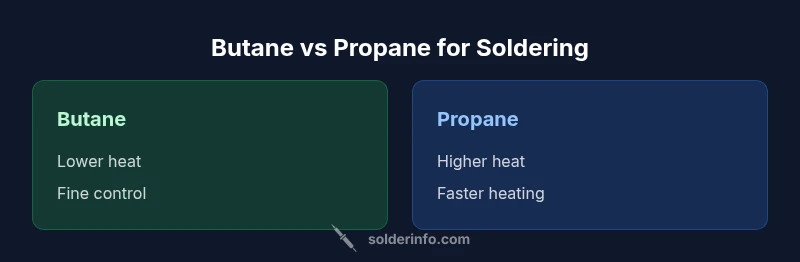
| Heat output / flame temperature | Lower heat; greater control for small joints | Higher heat; faster heating for larger joints |
| Flame stability in cool environments | Lower stability in cool temps | More stable and hotter in cool temps |
| Best for | Delicate electronics, jewelry, close-quarters work | Plumbing, larger joints, faster heating |
| Price range / availability | Often cheaper per can; widely available | Widely available; slightly higher per can in some markets |
| Equipment compatibility | Works with most butane-compatible torches | Works with standard regulators and hoses for propane |
| Safety considerations | Simple storage; needs careful handling of canisters | Requires proper venting and regulator safety practices |
Advantages
- Precise heat control makes butane ideal for delicate joints
- Propane delivers higher heat for fast heating of larger joints
- Fuel sources are widely available and portable
- Self-contained butane options are convenient for travel
- Both fuels support high-quality solder joints with proper technique
Cons
- Butane can struggle with large, heat-intensive joints
- Propane requires regulators and careful venting for safe use
- Wrong regulator or connections can cause flame instability
- Performance can vary with ambient temperature and equipment quality
Propane is generally better for heavy-duty or larger joints; butane is preferable for precision work.
Choose propane when you need high heat and faster heating on larger joints. Choose butane for electronics, jewelry, and tight-space work. In mixed environments, balance heat needs with precision and safety by selecting the fuel that aligns with your primary tasks.
Quick Answers
Which gas runs hotter for soldering tasks?
Propane generally produces a hotter flame than butane, which makes it more effective for large joints and faster heating. Butane’s heat is sufficient for small, precise work where overheating must be avoided.
Propane heats up faster and hotter, which helps with big joints; butane is gentler and safer for tiny joints.
Can I swap fuels mid-project without recalibrating?
Swapping fuels mid-task is not recommended because it changes flame characteristics and often requires different regulators and tips. Plan ahead and pick one fuel for the job if possible.
Switching fuels mid-project isn’t advised because you’ll likely need different regulators and tools.
Is butane safer for jewelry soldering?
Yes, butane’s lower heat and finer control reduce the risk of heat-induced damage to delicate jewelry components. Always use a heat sink and proper flux to protect the piece.
Butane is usually preferred for jewelry due to its gentler heat and control.
How does weather affect performance?
Ambient temperature affects gas pressure and flame behavior. Propane typically performs better in cooler environments, while butane can be sufficient in warmer conditions but may heat joints more slowly.
Cold weather can make propane heat up faster, while butane may cool more slowly in warm weather.
Are there regulatory or storage concerns?
Yes. Store fuels in approved containers away from heat, and follow local disposal guidelines for empty canisters. Ventilated spaces and proper extinguishers are advised during use.
Store fuels safely and follow local disposal rules to stay compliant.
What maintenance is important for reliability?
Regularly inspect hoses, regulators, and gaskets for wear. Replace damaged parts promptly, and test the setup on scrap material before critical work.
Check hoses and regulators often and test before you solder.
Top Takeaways
- Match flame strength to joint size and heat sensitivity
- Butane is ideal for precision work and delicate components
- Propane excels for plumbing, thick metals, and quick heating
- Ensure proper regulators, ventilation, and storage for safety
- Test on scrap before committing to a live joint