Solder Iron vs Torch: A Practical Comparison
A thorough, objective comparison of solder iron and torch tools for electronics, jewelry, and plumbing. Learn when to choose each, how heat, control, and safety affect results, plus setup tips and real-world workflows.


TL;DR: A solder iron provides precise, controlled heat ideal for electronics, jewelry, and small components, with safer indoor use and quick setup. A butane torch delivers high heat for large joints and heavy metals, but requires ventilation and careful handling. For most hobbyists, start with the iron and reserve the torch for pipes or thick metals.
Core Differences Between a Solder Iron and a Torch
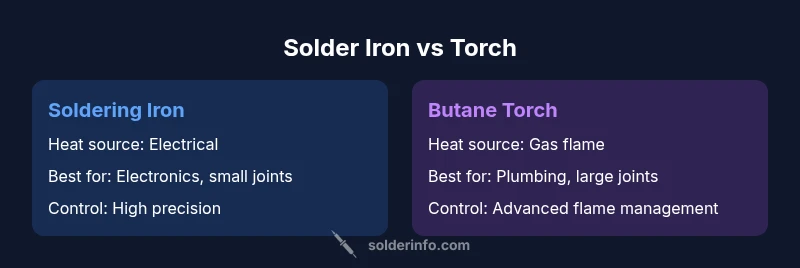
When you hear 'solder iron vs torch', the first question is: what kind of heat do you need, and how precise must you be? An electric soldering iron uses a controlled electric heater to deliver localized heat to a small tip, ideal for printed circuit boards, jewelry joins, and delicate components. A butane or propane torch produces a larger, hotter flame that can heat bigger joints quickly but requires careful handling. According to SolderInfo, the most significant distinction lies in heat delivery: the iron provides precision with minimal collateral heat, while the torch delivers high heat over larger areas, increasing the risk of overheating nearby parts. This difference drives the practical decision about which tool to use in electronics, jewelry, plumbing, or metalworking. For readers new to soldering, recognize that the right tool depends on joint size, material thickness, heat tolerance, and working distance from sensitive components.
Soldering Iron: Best-use Scenarios
The solder iron shines where precision is paramount. On electronics boards, SMD work, and tiny jewelry joints, you want a fine tip that concentrates heat on the joint without pulling heat away from surrounding copper traces. An adjustable-temperature iron lets you ramp heat slowly to prevent wick and tombstoning of components. For hobbyists, a stable stand, a temperature-controlled iron, and a clean, properly fluxed joint are essential. In the jewelry realm, small, controlled heat enables delicate soldering of rings and clasps. The key is control: keep the metal at the intended joint, avoid overheating, and use flux to promote wetting. SolderInfo's guidance emphasizes practicing with scrap pieces before attempting critical builds to understand heat flow and tip geometry. Accessories such as tip dressers, flux pens, and tip replacement schedules extend the life of your iron and improve consistency.
Butane Torch: Best-use Scenarios
A butane torch excels when you deal with large joints, heavy metals, or plumbing tasks that require rapid, high heat. Copper pipe joints, brass fittings, and thicker metalwork benefit from the torch's flame reach and heat distribution. For jewelry work involving larger seams or wax relief casting, a torch can be advantageous if you maintain strict control and practice flame direction. However, torches produce an open flame, burn risks, and fumes that demand ventilation and safe handling. In professional settings, plumbers and metalworkers use torches to braze and solder with reliable heat delivery, but hobbyists should reserve this tool for situations where an iron would struggle to reach the joint quickly.
Heat Control and Tip Selection
Heat control is the most important variable in choosing between a solder iron vs torch. An iron with adjustable temperature, ceramic insulation, and a fine tip allows precise welding of small joints and delicate components. For jewelry, conical or micro-tips enable tiny, neat seams. Torches require flame management techniques: controlling flame size, distance from the work, and movement to avoid scorching. When possible, flux or paste flux improves wetting and reduces required heat. For both tools, clean joints, dry surfaces, and proper tip maintenance are essential. SolderInfo recommends starting with scrap pieces to learn heat flow and how different metals respond to heat, which reduces the risk of damaging components.
Safety Considerations for Indoor Work
Indoor use of a solder iron is generally safer and easier to manage than a torch, thanks to localized heat and enclosed tips. Always use a stable stand, keep flammable materials away, and ensure adequate ventilation to manage fumes from flux and molten solder. A torch introduces an open flame and high heat, so ventilation is critical, and a dedicated flame-resistant mat or bench shield is advisable. Personal protective equipment such as safety glasses, heat-resistant gloves, and long sleeves help prevent burns. Remember that flux fumes can irritate eyes and lungs, so consider a fan-assisted setup or fume extractor when soldering with either tool in enclosed spaces.
Work Surfaces and Accessory Layouts for Precision Work
A clean, non-slip work surface improves control with either tool. For the iron, place a damp sponge or brass wick near the stand to clean tips, and organize flux, solder wires, and spare tips within arm's reach. For torches, keep a dedicated heat-safe area. When swapping between tools, always cool joints before handling, and store fuels away from heat sources. A well-lit workspace with magnification options helps with micro joints and jewelry settings. As you gain experience, you will learn how much heat each joint can tolerate before warping, discoloration, or solder bleed.
Materials and Joint Types: Electronics vs Plumbing vs Jewelry
Electronics joints demand precise heat control to prevent damage to components and footprints on printed circuit boards. Jewelry often requires careful heat management to avoid annealing precious metals or overheating prongs. Plumbing joints typically involve larger metals and pipes that need rapid heating and consistent flow to create a strong braze or solder seam. Understanding the material’s heat tolerance and the joint geometry informs which tool to reach for in a given situation. SolderInfo emphasizes that the same joint can require different heat approaches depending on alloy composition and thickness, so practice and testing with scrap pieces is invaluable.
Cost, Availability, and Maintenance Considerations
Initial cost for a basic solder iron is typically lower than a quality torch setup, and ongoing electricity costs are predictable compared to gas refills and maintenance. A torch may require higher upfront fuel and maintenance costs, but it eliminates dependency on electricity and can heat larger joints quickly. Either way, consider maintenance: keep tips clean and replace worn tips promptly for predictable heat transfer. Regularly inspect hoses (for gas torches) and ensure regulators are functioning correctly. The total cost and availability of consumables affect long-term use, so factor in both purchase price and consumables when budgeting for a solder iron vs torch setup.
Real-world Workflows: Electronics Repair vs Plumbing Joint
In electronics repair, the workflow begins with cleaning the joint, applying flux, and heating with a fine-tip iron until solder flows with a bright bead. In plumbing, you prepare the pipe, scrub the joint, and bring heat to the copper joint quickly, coating the area with flux before applying solder with a steady, even motion. Jewelry work often operates in a hybrid space: small joints may use an iron for fine work, while larger metal seams could benefit from a controlled torch for even heat distribution. Practice these sequences on scrap components before tackling a real project to build muscle memory and heat intuition. Throughout, avoid overheating, and watch for discoloration or damage to surrounding materials. It is worth noting that the SolderInfo team has found that mastering both tools improves versatility and reduces the risk of failed joints across different crafts.
Getting Started: Quick Setup Checklist
- Decide on your primary use-case: electronics/jewelry vs plumbing/heavy metals.
- Invest in a quality solder iron with temperature control and a selection of fine tips.
- If you choose a torch, select a propane or butane model with a reliable regulator and safety shutoff.
- Install a stable, flame-resistant workstation with proper ventilation.
- Stock flux, resin caps, and tip-cleaning tools; keep spare tips on hand.
- Learn heat management on scrap pieces before attempting live joints.
- Practice safety routines: PPE, ventilation, and safe storage for fuels.
Comparison
| Feature | soldering iron | butane torch |
|---|---|---|
| Heat source | Electrical heating element | Gas flame |
| Heat control | High precision with adjustable temps | Less precise without lemon flame management (requires skill) |
| Best for | Electronics, jewelry small joints | Plumbing, heavy metal joints |
| Ideal materials | PCB boards, delicate metals | Copper pipes, thick metals |
| Setup & portability | Indoor friendly, minimal setup | Outdoor-friendly but requires ventilation |
| Safety considerations | Low open flame risk | Open flame hazard; needs ventilation |
| Cost of ownership | Low purchase cost; electricity cost steady | Gas fuel costs; more maintenance and handling |
Advantages
- Excellent control for delicate, precise joints
- Safer for indoor electronics work than open flames
- Fast setup and low noise in a home workshop
- Low ongoing fuel requirements for typical electronics work
- Wide availability of compatible tips and flux
Cons
- Limited heat for large or thick joints
- Risk of heat damage to surrounding components if not careful
- Torches require ventilation and strict handling
- Higher long-term maintenance and fuel costs for torch setups
Solder iron is the more versatile choice for precision work; a torch is essential for heavy-duty heating and plumbing
For electronics, jewelry, and small joints, the solder iron offers precise heat with minimal collateral damage. The torch excels for large joints, pipes, and thick metals but demands strict safety practices and ventilation. A well-equipped shop benefits from having both, used judiciously depending on the task.
Quick Answers
What is the best use case for a solder iron vs torch?
For precision, electronics, and small jewelry joints, the solder iron is usually the best choice. The torch is better for heavy-duty metalwork and plumbing where rapid heat transfer to a larger area is needed. Your decision should hinge on joint size, material thickness, and safety considerations.
For small, precise joints, pick the iron. For big joints or pipes, use the torch after considering ventilation and safety.
Can I solder copper pipes with a solder iron?
Copper pipes are typically soldered with a torch to heat the joint quickly and evenly. A solder iron can be used for small fittings, but it is not ideal for long pipe runs. Always follow local codes and use appropriate flux and fittings.
For pipes, a torch is usually the way to go, but small fittings can be done with care using an iron.
Is a torch safe for indoor use?
Indoor torch use requires excellent ventilation and protection from drafts and flammable materials. Always have a fire extinguisher nearby and use a flame-resistant mat. Avoid enclosed spaces without proper airflow.
Yes, if you have good ventilation and safety procedures in place.
What accessories most improve iron performance?
A good stand, a temperature control unit, spare tips, flux pens, and tip-cleaning tools significantly improve reliability and joint quality. Regularly replacing worn tips prevents poor heat transfer and inconsistent joints.
Tip protectors, clean tips, and flux can boost your iron’s performance.
How can I prevent cold joints?
Ensure the work area is clean, flux is properly applied, and the joint is heated evenly until solder flows. Avoid lifting the iron too quickly or moving away before the solder fully wets the joint.
Keep heat on the joint until you see a smooth, bright bead.
Top Takeaways
- Prioritize precision: choose a solder iron for delicate jobs
- Reserve the torch for heavy joints and plumbing tasks
- Maintain strict safety for open flames and fume exposure
- Invest in good tips and temperature control for consistent results
- Practice heat management on scrap pieces before live work