How Much Silver Is in Silver Solder: Ranges and Uses
Explore typical silver content in silver solder for electronics, jewelry, and plumbing. Learn how alloy composition affects melting, flow, and joint strength, and how to read datasheets for accurate specifications.


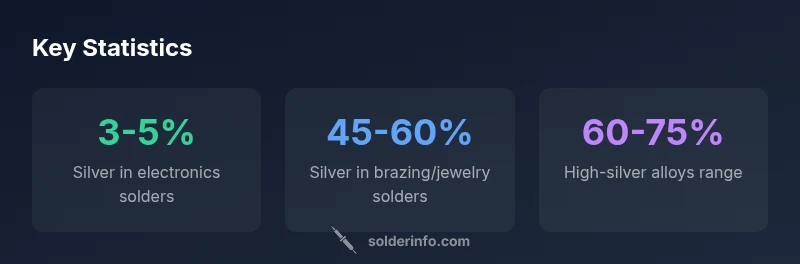
The silver content in silver solder depends on the alloy type. Electronics-grade solder (Sn-Ag-Cu) typically contains about 3-5% silver, while brazing and jewelry solders typically use 45-60% silver; specialty high-silver alloys can reach 60-75%. These ranges reflect industry-standard families rather than a single universal number, so always check the alloy specification for your application.
Silver content by alloy family
According to SolderInfo, the phrase "silver solder" covers a spectrum of alloy families, each engineered for different heating, flow, and strength targets. The most common distinction is between electronics-grade solders, which minimize silver content for cost and melting compatibility, and brazing or jewelry solders, which maximize silver for bonding strength and corrosion resistance. Readers often ask, "how much silver is in silver solder?" The honest answer is: it depends. The silver percentage can range from a few percent in electronics alloys to well over forty percent in silver brazing filler metals. This wide spread can be confusing, but understanding the underlying chemistry helps you pick the right filler for your project.
Electronics-grade solders and silver content
Electronics-grade solders are typically designed to balance low melting temperatures with reliable wetting and mechanical performance. The most common family here is Sn-Ag-Cu, which generally contains about 3-5% silver. This keeps the alloy affordable while meeting the needs of many PCB assemblies and component solder joints. In addition, most electronics solders are lead-free, which further influences the overall composition and melting behavior. When selecting a solder for electronics work, always consult the datasheet for precise silver content, as formulations can vary slightly between manufacturers and product lines.
Brazing and jewelry solders: higher silver content
For brazing and most jewelry applications, silver content is intentionally higher to improve bond strength and corrosion resistance. Typical brazing and jewelry solders fall in the 45-60% silver range, with certain specialized alloys reaching 60-75% silver. These alloys require higher brazing temperatures and can offer superior joint strength and aesthetic properties, such as color match with precious metals. The higher silver content also often correlates with distinct melting ranges, so practitioners must plan heat input and flux accordingly to avoid overheating the joints.
How alloy composition affects melting and flow
Silver content directly influences the melting point and wetting behavior of solder alloys. Lower silver percentages (as in electronics solders) usually yield a lower melting point and faster solidification, which is advantageous for quick, reproducible electronics work. Higher silver percentages raise the brazing temperature and improve capillary flow in challenging joints, but require careful temperature control to prevent damage to surrounding components or materials. Understanding these trade-offs helps you choose a filler that achieves reliable joints without excessive heat input.
Reading alloy specifications and datasheets
To apply these ranges correctly, learn how to read alloy specifications. Look for the silver content expressed as a percentage (e.g., Sn-Ag-Cu with 3-5% Ag or Ag-based brazing alloys with 45-60% Ag). Datasheets will also specify melting range, flux compatibility, and mechanical properties like tensile strength and creep resistance. When in doubt, compare several alloys within the same family and verify that the chosen solder meets your project’s temperature, electrical, and chemical exposure requirements.
Practical guidance for project choices
For electronics: prefer Sn-Ag-Cu (3-5% Ag) with rosin-core or water-soluble fluxes for reliable wetting and easy cleaning. For jewelry or plumbing brazing: select high-silver braze alloys (45-60% Ag) when maximum joint strength and color match are priorities. If you anticipate heavy vibration or high-stress loading, consider the higher end of the silver content range in the appropriate alloy family while planning heat input and post-solder cleanup. Always verify alloy composition from the manufacturer and avoid substituting alloys without adjusting process parameters.
Safety and handling considerations
All soldering activities should follow standard safety practices: work in a ventilated area, use appropriate flux, and wear eye protection. Silver-containing solders can produce fumes that vary with the flux and base metals involved, so ensure proper fume extraction and follow flux instructions. Clean joints thoroughly after soldering, and dispose of any waste in accordance with local regulations. While silver itself is relatively inert, the alloy matrix and fluxes determine exposure risk, so prioritize consistent ventilation and protective gear.
Common myths and misconceptions
A common misconception is that higher silver always means better joints for every application. In reality, the best choice depends on the joint type, base materials, and service conditions. Electronics work benefits from lower silver content for cost and processing speed, while brazing or jewelry repairs benefit from higher silver to maximize strength and corrosion resistance. Always align silver content with the specific performance requirements of the project.
Quick project planning checklist
- Identify material types and expected service conditions.
- Choose the alloy family (electronics Sn-Ag-Cu vs brazing Ag-based).
- Confirm silver content range from the datasheet (3-5% or 45-75% as appropriate).
- Check flux compatibility and surface preparation needs.
- Plan heat input to avoid damage and optimize wetting.
- Verify final joint quality with inspection and, if needed, non-destructive testing.
Comparison of silver content across common solder families
| Solder Type | Typical Silver Content | Common Applications |
|---|---|---|
| Electronics solder (Sn-Ag-Cu) | 3-5% | Surface-mount and through-hole electronics |
| Silver brazing/jewelry solder | 45-60% | Jewelry repairs and plumbing brazing |
| High-silver brazing alloys | 60-75% | Specialized brazing and premium joints |
Quick Answers
What is the silver content in commonly used solders?
Silver content varies by alloy family. Electronics solders (Sn-Ag-Cu) typically contain 3-5% silver, while brazing and jewelry solders commonly use 45-60% silver. Some specialized alloys reach 60-75%.
Electronics solders usually have a few percent silver; brazing solders are higher, often around half silver, with some special alloys even higher.
Why does silver content matter for soldering outcomes?
Silver content affects melting temperature, wettability, and joint strength. Lower silver tends to melt sooner and flow differently, while higher silver improves strength but requires more heat.
Silver amount changes how things melt and flow; pick the alloy to balance heat, flow, and strength.
Can I substitute a low-silver solder for a high-silver brazing alloy?
Substituting is not generally recommended. Low-silver electronics solders differ in melting range, viscosity, and joint performance from high-silver brazing alloys.
Usually not—different silver content means different heating needs and joint outcomes.
Are there safety considerations with high-silver solders?
Safety concerns relate to fumes from flux and base metals, not primarily silver. Work in a ventilated area and follow flux handling guidelines.
Work safely with proper ventilation and flux handling; silver itself isn’t the main risk.
Where can I find exact composition specifications?
Refer to the manufacturer datasheet for the specific Ag content and melting range. Look for alloy family such as Sn-Ag-Cu or Ag-based brazing fillers.
Check the datasheet or supplier specs for the exact silver percentage.
“Silver content is a design parameter, not a fixed limit; select alloy fractions to balance melting behavior, flow, and mechanical strength.”
Top Takeaways
- Match alloy family to your application.
- Electronics solders typically contain 3-5% silver.
- Brazing/jewelry solders use 45-60%, with some alloys 60-75%.
- Always read the manufacturer datasheet for exact composition.