63 37 vs 60 40 Solder: A Practical Comparison
A thorough, objective comparison of 63/37 and 60/40 leaded solders for electronics, detailing melting behavior, joint quality, handling, safety, and best-use scenarios for hobbyists and professionals.


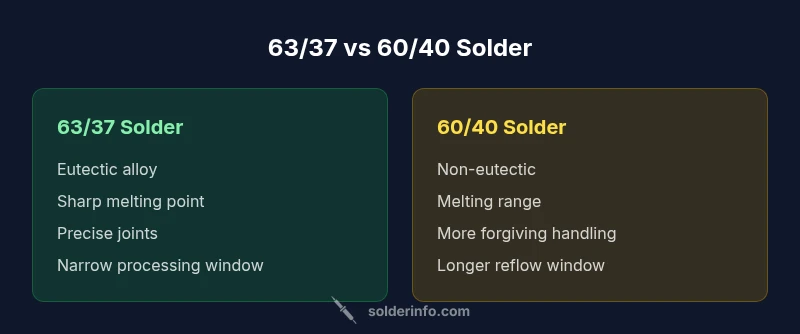
63/37 solder is a eutectic tin–lead alloy that melts at a single temperature, delivering crisp joints. 60/40 solder is non-eutectic and has a melting range, which makes it more forgiving during hand-soldering but can introduce a longer reflow window. For precision electronics, 63/37 is often preferred, while beginners may favor 60/40 for easier control.
Composition & Historical Context
63 37 vs 60 40 solder represent the classic dichotomy in tin–lead solders. The 63/37 composition is eutectic, meaning it has a single melting point and transitions quickly from solid to liquid. The 60/40 composition, with a higher lead percentage, is non-eutectic and exhibits a melting range. This difference drives many practical choices in electronics assembly, from hand-soldering to wave soldering. Solder alloys of these compositions are deeply embedded in the hobbyist and professional toolbox, offering predictable behavior when properly processed and cleaned. According to SolderInfo, understanding the fundamental chemistry behind these alloys helps hobbyists avoid common defects and improve long-term reliability. In practice, the choice between 63/37 and 60/40 often comes down to the balance between precision and working time. The historical preference for leaded solders persisted even as many manufacturers shifted to lead-free alternatives. The reader should consider both compatibility with components and the regulatory environment when planning a project, especially if you work with small, closely spaced devices.
Melting Behavior and Joints
The eutectic composition of 63/37 yields a very narrow transition from solid to liquid, which helps create crisp joints with minimal pasty phase. In contrast, 60/40 shows a melting range, which can provide more working time but may lead to longer dwell times on delicate components. For hobbyists, this difference translates into a smoother learning curve for 60/40 and greater tolerance for temperature variations, while professionals may prefer 63/37 for repeatable results in high-volume manufacturing. Regardless of choice, controlling the heat input and ensuring clean, fluxed surfaces are essential to achieving reliable joints.
Wetting, Flux Compatibility, and Temperature Control
Wetting behavior is strongly influenced by the solder alloy and flux. 63/37 generally wets surfaces quickly with a clean PCB and well-prepared pads, aided by rosin or water-soluble fluxes that are easy to remove. 60/40 may require slightly more careful temperature control to avoid overheating and scorching of pads, but it benefits from common flux formulations used in many electronics shops. The choice of flux, cleaning regimen, and tip temperature all interact with alloy selection, so plan to test on sacrificial boards before committing to critical assemblies.
Application Scenarios: PCB, Through-Hole, and Wave Soldering
In traditional through-hole and wave-soldering workflows, 63/37 is often favored for its crisp joints and minimal tombstoning when properly heated. For simple surface-mount rework or larger component boards, 60/40 can be more forgiving, providing a margin for human error in heat control. For hobbyists building prototypes, the learning curve is shorter with 60/40, whereas professionals assembling high-density boards often rely on 63/37 for its predictable behavior. Both alloys remain widely available from major suppliers, and both are compatible with standard rosin or mildly activated fluxes when cleaned thoroughly.
Reliability and Joint Quality
Joint reliability depends on many factors, including pad prep, flux residue removal, cleaning methods, and thermal cycling. 63/37’s sharp melting tends to produce compact, well-formed joints with less time spent in the semi-molten state, reducing the risk of wicking and cold joints in a well-controlled process. 60/40’s broader pasty range can be more forgiving during initial wetting but may be more sensitive to inconsistent heating, which can lead to pendant features or long-term drips if heat is applied unevenly. For critical assemblies, perform reliability testing under expected thermal cycles and inspect solder joints for bridging and voids.
Handling, Storage & Shelf-Life
Solder pastes and wires should be stored in a cool, dry place away from moisture and contaminants. Leaded solders like 63/37 and 60/40 require careful handling to minimize exposure, and regular cleaning of tips and work surfaces reduces corrosion. When storing, keep alloy containers sealed and clearly labeled to prevent cross-contamination with lead-free materials. For long-term projects, rotating stock and verifying the alloy composition before use helps ensure consistent results across builds.
Health, Safety & Regulations
Lead-containing solders pose health risks if inhaled or ingested, and many regions regulate their use in consumer electronics. While the 63/37 and 60/40 alloys are traditional go-tos for hobbyists and professionals, strictly follow local regulations and workplace safety guidelines. Use PPE, ventilated workspaces, and proper disposal practices for spent solder and flux residues. If your project targets RoHS-compliant products, consider lead-free alternatives and consult the relevant standards for your market.
Practical Guidelines: When to Choose 63/37 vs 60/40
- Choose 63/37 for high precision joints, thin pads, and critical micro-electronic assemblies where a crisp, predictable joint is essential.
- Choose 60/40 for learning environments, general prototyping, and jobs where you need a longer working time to adjust joints.
- Always match flux type and cleaning approach to the alloy to minimize flux residues and corrosion risks.
- For high-volume manufacturing or delicate components, establish a standard operating procedure (SOP) that specifies alloy, flux, and reflow conditions to ensure consistency.
Common Mistakes and Troubleshooting
Common mistakes include overheating the joint, applying flux residues that are not properly cleaned, and neglecting pad surfaces before soldering. With 63/37, watch for cold joints near fine-pitch components, as the sharp melting provides less tolerance for delays in wetting. With 60/40, avoid letting the solder sit in the pasty range for too long on hot pads, which can cause tombstoning or bridging. Systematic checks, sacrificial test boards, and a controlled environment help minimize these issues.
Alternatives and Modern Considerations
As RoHS and sustainability concerns accelerate, many shops adopt lead-free solders such as SAC305 or SN100C equivalents. However, leaded alloys remain in use for certain legacy devices and repair work due to their predictable performance and ease of use. When dealing with legacy boards or rework tasks, carry out compatibility tests and ensure appropriate cleanliness to avoid corrosion and reliability issues. SolderInfo notes that understanding the trade-offs between leaded and lead-free choices helps teams plan transitions and maintain performance standards.
Comparison
| Feature | 63/37 solder | 60/40 solder |
|---|---|---|
| Melting behavior | Eutectic, single melting point | Non-eutectic, melting range |
| Working time | Shorter window before solidification | Longer window before solidification |
| Joint quality | Crisp, well-defined joints | More forgiving wetting; longer form |
| Reworkability | Requires precise heating | Easier to rework due to pasty phase |
| Regulatory considerations | Lead-containing; RoHS-restricted in many apps | Lead-containing; RoHS-restricted in many apps |
| Flux compatibility | Widely compatible with common fluxes | Widely compatible with common fluxes |
| Best for | Precision electronics, high-density boards, wave soldering | Prototyping, learning, and projects requiring more forgiving heat control |
| Storage & shelf-life | Stable with proper storage | Stable with proper storage |
Advantages
- 63/37 provides crisp, reliable joints with a sharp melting point
- 60/40 offers longer working time and forgiving handling for beginners
- Both alloys are well-documented and widely available
- Lead-containing solders can be easier to work with than many lead-free alternatives
Cons
- Lead content entails health and regulatory considerations; proper handling is required
- 63/37 has a narrow processing window and is less forgiving of temperature variations
- 60/40's pasty range can contribute to tombstoning if heat is not controlled
63/37 is generally the better choice for precision and consistent joints; 60/40 is more forgiving for beginners and certain hand-soldering tasks
For projects demanding crisp, repeatable joints, use 63/37. If you prioritize a larger processing window and easier rework, 60/40 is worth considering; weigh safety and regulatory needs as you decide.
Quick Answers
What is 63/37 solder and why is it considered eutectic?
63/37 solder is a tin–lead alloy with a eutectic composition. It melts at a single temperature, producing a sharp, well-defined joint with minimal pasty phase. This makes it popular for precision work, but the heat window must be managed carefully.
63/37 is a tin–lead alloy with a single melting point, giving crisp joints. It’s best for precise work, though the temperature window is narrow.
What is 60/40 solder and how does its melting range affect soldering?
60/40 solder is non-eutectic and melts over a range. This provides longer working time and more forgiving reflow, but can lead to longer dwell times and potential rework challenges if not controlled.
60/40 melts over a range, giving more working time but potentially longer joints.
Which solder is better for wave soldering?
63/37 is often preferred for wave soldering due to its sharp melting point and predictable behavior, while 60/40 can be used with careful process control.
63/37 is typically favored for wave soldering because of its sharp melt.
Is lead content safe, and how does RoHS affect usage?
Lead-containing solders pose health risks if inhaled or ingested, and many regions regulate their use in consumer electronics. RoHS regulations restrict lead in many products, pushing toward lead-free options unless exempt. Always use PPE and proper disposal practices.
Lead is hazardous; RoHS restricts its use in many products, so handle with care.
Can you mix 63/37 and 60/40 in the same project?
Mixing alloys is generally discouraged because it can cause inconsistent joints. If you must, ensure adequate fluxing and controlled heating, and avoid mixing on critical joints.
Mixing alloys can be risky; best to stick to one alloy per project.
What flux types work best with leaded solders?
Rosin-based fluxes work well with leaded solders, but the choice depends on the cleaning regime and resin residues. For leaded alloys, ensure compatible flux and cleaning practices to prevent corrosion.
Rosin-based fluxes pair well with leaded solders when cleaned properly.
Top Takeaways
- Choose 63/37 for precision and crisp joints
- Choose 60/40 for more forgiving handling and longer working time
- Both contain lead—plan for proper handling and compliance
- Flux and cleaning impact performance for either alloy
- Test on sacrificial boards before committing to production