Induction Soldering Copper Pipe: A Practical Guide
Learn to join copper pipes with induction soldering using precise heat control, safety practices, and a step-by-step workflow designed for DIYers and professionals.


You will learn how to join copper pipes using induction soldering, a fast, controlled method that reduces heat spread and ensures reliable joints. This guide covers essential equipment (induction heater, copper fittings, flux, solder), preparation steps, step-by-step procedure, safety precautions, and troubleshooting tips. By following the process, you’ll achieve clean, repeatable joints with minimal waste.
What is induction soldering copper pipe and why it matters
Induction soldering copper pipe uses an induction coil to create heat directly at the joint, heating the copper wall and fluxed area without relying on an open flame. The technique emphasizes precise heat control, which minimizes heat-affected zones and helps preserve insulation, nearby fittings, and color-free joints. For plumbers, DIY enthusiasts, and electronics hobbyists alike, induction soldering copper pipe offers a faster, cleaner, and more repeatable method than traditional torch soldering when you choose the right coil size, flux, and solder. A well-executed induction joint provides a smooth bead and reliable seal, especially in tight spaces where a torch would be difficult to manage. The method shines in scenarios where heat management is critical, such as behind finished walls or in cramped crawl spaces. The key is to optimize coil placement, flux choice, and solder type to ensure a good capillary bond. According to SolderInfo, induction soldering copper pipe yields repeatable joints when the heat is controlled and the joint is kept within the target temperature window. Proper technique keeps the exterior cool, reduces scorching, and produces a bright, uniform bead that wicks into the joint.
Safety foundations for induction heating in plumbing
Safety comes first when using an induction heater on copper piping. Always wear eye protection and heat-resistant gloves, and ensure adequate ventilation in case flux fumes build up. Keep flammable materials away from the work area and verify that the power supply is rated for your heater. Induction heating can heat metal quickly, so avoid touching the coil or joint until it has cooled. Grounding and electrical safety should be checked, especially if you’re working in a damp environment or near water lines. Planning breaks and using a timer helps prevent overheating and keeps your joints consistent. The SolderInfo team emphasizes that following manufacturer instructions and wearing PPE ensures a safer, more predictable process.
Required equipment and workspace setup
A clean, organized workspace is essential. You’ll need a dedicated power source for the induction unit, appropriate copper pipe and fittings, flux, and a suitable lead-free solder alloy. A sturdy workbench, clamps, and a heat-insulated mat reduce vibration and protect surfaces. Lay out a flux brush, a small wire brush, and sandpaper for surface preparation. Prepare a drainage plan and keep rags, waste bins, and cleaning solvents handy. The coil should be sized to the pipe diameter, and a clear line of sight to the joint helps maintain consistent heat delivery. Small, adjustable stands allow you to position the joint under the coil without interrupting the flow of flux and solder. In short, equipment selection and a tidy setup directly influence joint quality and repeatability.
Flux, solder, and joint preparation for copper piping
Choose flux appropriate for copper soldering; most plumbers use rosin-based flux designed for copper. Apply a thin, even layer around the exterior of the pipe end and the fitting’s inside surface to encourage capillary action. Deburr and clean the pipe ends to remove copper burrs and oxidation, then dry the joint. Cut lengths carefully and align fittings prior to heating; misalignment leads to stress and leaks. Solder choice is typically lead-free alloys designed for plumbing, with the flux helping the solder flow smoothly into the joint. Keep a damp rag nearby to quickly remove excess flux and prevent corrosion. Good preparation underpins reliable joints and helps you achieve a clean, uniform bead.
Induction heater parameters: power, frequency, and control
Set the heater for the pipe size you’re joining. Begin with a conservative power setting and short heating cycles, then monitor the bead’s progression as flux colors change and capillary action begins. Frequency selection affects penetration depth; copper typically heats effectively at medium frequencies. Use a timer or a heat-control feature to avoid overshooting the joint temperature, which can cause scorching or oxidation. Fine-tuning parameters comes with practice, but the goal is a bright, smooth solder bead that flows evenly into the joint without overheating the exterior.
Step-by-step workflow overview
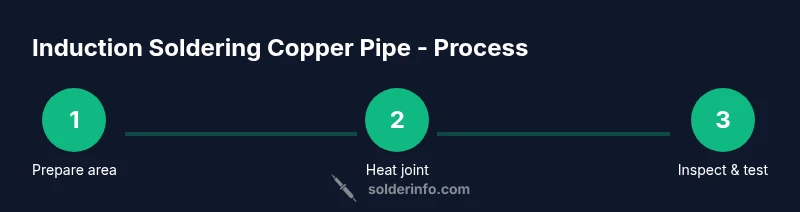
The following overview outlines the core sequence for induction soldering copper pipe: prepare and clean the pipe ends, apply flux, assemble the joint, configure heat settings, apply induction heat until the solder flows, feed solder to the joint while maintaining heat, cool the joint, and inspect for leaks. Each step should be performed with steady control rather than rapid bursts. This overview is designed to be built upon in the more detailed STEP-BY-STEP instructions that follow.
Common issues and troubleshooting
Common problems include cold joints, excessive flux causing corrosion, misalignment, and insufficient heat causing incomplete flow. If a joint looks dull or glassy, reheat gently and apply additional flux and solder. Misalignment should be corrected before heating to prevent leaks. If surfaces scorch or discolor, remove the joint, clean again, and reheat with lower power. Leaks are most often due to poor prep or insufficient solder coverage; ensure a full bead around the joint. Regular inspection and practice help you identify patterns and prevent recurring issues.
Maintenance, calibration, and safety checks
Periodic maintenance of the induction setup ensures consistent performance. Inspect coils for wear or fraying, verify electrical connections, and confirm that cooling vents remain clear. Calibrate the heater if your model supports it, and replace any worn flux brushes or worn abrasives. Document coil sizes, pipe diameters, and recommended power ranges for common joints to speed up future projects. Ongoing safety checks—eye protection, gloves, ventilation—keep the workflow safe and efficient.
Quick project example: from cut to leak test
In a typical project, you’ll cut a short copper run, deburr, clean, and flux the ends. Assemble the joint, place it under the induction coil, and begin heating with a conservative power setting. As the flux beads become glossy and the solder begins to flow, feed solder steadily until a full bead forms around the joint. Remove heat, let the joint cool, and then perform a leak test with soapy water on the joint and neighboring connections. If any bubbles appear, reheat and inspect for gaps. This example illustrates the control and precision offered by induction soldering copper pipe.
Tools & Materials
- Induction heater suitable for soldering copper pipe(Adjust power and frequency for pipe diameter; ensure cooling and safety features.)
- Copper pipe and fittings(Include the lengths and matching fittings for the project.)
- Lead-free solder compatible with copper plumbing(Choose solder with appropriate flux compatibility.)
- Flux for copper soldering (rosin-based)(Apply a thin, even layer on pipe ends and fittings.)
- Flux brush, wire brush, and abrasive pad(For surface prep and flux application.)
- Pipe cutter and deburring tool(Ensure clean, square cuts.)
- Safety gear (goggles, heat-resistant gloves, ventilation)(Protect eyes and skin; ensure good airflow.)
- Clamps or stands and heat-resistant mat(Stabilize workpiece and protect surfaces.)
- Leak testing supplies (soap solution or pressure gauge)(Verify joint integrity after cooling.)
Steps
Estimated time: 60-90 minutes
- 1
Inspect workspace and safety gear
Check that the work area is dry and well-ventilated. Put on PPE and ensure the induction unit is correctly grounded. This initial check helps prevent accidents and ensures proper heat control later.
Tip: Verify power rating and safety interlocks before starting. - 2
Cut and deburr copper pipe
Make clean, square cuts and remove burrs with a deburring tool. Deburring prevents burrs that can trap flux or prevent proper bead formation.
Tip: Use a fresh blade and rotate the pipe while cutting for a true 90-degree cut. - 3
Clean ends and fittings
Brush the pipe ends and the inside of fittings to remove oxidation. Dry the surfaces thoroughly before fluxing to ensure good wetting and capillary action.
Tip: Avoid touching cleaned surfaces with bare fingers to minimize oils. - 4
Apply flux evenly
Coat the exterior of pipe ends and the interior of fittings with a thin layer of flux. Flux promotes solder flow and shields copper from oxidation during heating.
Tip: Keep flux only on the joint area; excess flux can create corrosion later. - 5
Assemble joint and align
Insert pipe into fittings and align to prevent gaps. A misaligned joint will leak even if heated adequately, so secure it before heating.
Tip: Temporarily clamp joint to prevent movement during heating. - 6
Set heater parameters
Choose a conservative power level and a heating duration suitable for the pipe size. The goal is to reach a flow of solder without overheating the exterior.
Tip: Start lower and increase gradually, watching flux bloom. - 7
Heat joint and apply solder
Apply induction heat to the joint until flux beads and solder begins to flow. Feed solder steadily as the joint reaches the right temperature to avoid cold joints.
Tip: Keep heat focused on the joint to prevent scorching. - 8
Cool, inspect, and leak test
Allow the joint to cool naturally, then inspect for an even bead and proper wetting. Perform a leak test with soapy water or a pressure tester to confirm integrity.
Tip: If leaks appear, reheat and resolder the joint after re-prepping. - 9
Clean up and document
Wipe away flux residue and store tools properly. Document the joint details for future maintenance.
Tip: Record the pipe size, fittings, and parameters used for reproducibility.
Quick Answers
What is induction soldering copper pipe?
Induction soldering copper pipe uses an induction coil to heat the joint, delivering energy directly to the metal for fast, controlled soldering. It minimizes heat spread and improves repeatability compared with open-flame methods.
Induction soldering uses a coil to heat the joint precisely, giving you fast, controlled results.
Is induction soldering safe for residential use?
Yes, with proper PPE, ventilation, and electrical safety practices. Follow manufacturer instructions and avoid heating near flammable materials.
Yes, with proper PPE and ventilation, induction soldering is safe for residential use.
Can induction soldering replace torches for all copper pipes?
Induction soldering works well for many joints, especially in tight spaces, but some complex configurations or large-diameter runs may still benefit from traditional methods or hybrid approaches.
It covers many cases, but some configurations may still need traditional methods.
What parameters matter most in induction soldering copper pipe?
Power, frequency, coil size, and heating time control the heat input and bead formation. Proper flux and clean joints also affect flow and durability.
Power, frequency, coil size, and heating time control the heat.
Do I need training to use induction soldering equipment?
Basic training is recommended to learn heat control, safety, and setup. Practice on scrap pieces before working on live plumbing.
Training helps you handle heat safely and get consistent joints.
What are common issues and how can I fix them?
Common problems include cold joints, misalignment, and insufficient flux. Re-prep surfaces, re-align, and reheat with proper flux for a better bead.
Common issues include cold joints or misalignment; fix by re-prepping and reflowing solder.
Watch Video
Top Takeaways
- Plan coil placement and pipe diameter before heating.
- Prepare copper surfaces thoroughly for reliable joints.
- Control heat with induction parameters for consistent results.
- Inspect joints with a leak test and fix any defects.
- Document settings for repeatable future projects.