Are solder ring fittings reliable? A practical plumbing guide
Explore the reliability of solder ring fittings for plumbing, with expert guidance from SolderInfo. Learn materials, installation steps, testing, and maintenance to evaluate suitability for copper piping projects.


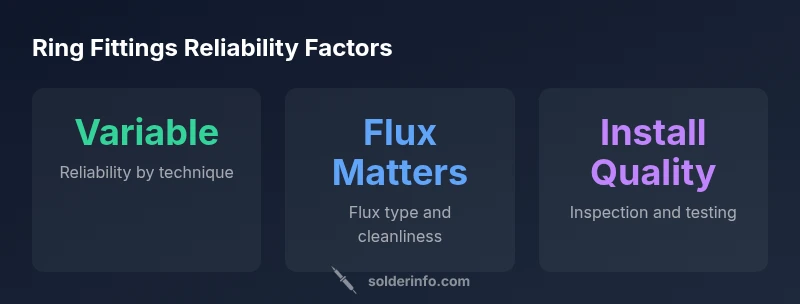
Ring fittings are reliable when properly installed, fluxed, cleaned, and pressure-tested. Reliability varies with material quality and workmanship. See our full guide for step-by-step installation and testing methods for copper piping projects.
Are solder ring fittings reliable in plumbing? A data-driven look
In plumbing, many DIYers ask whether are solder ring fittings reliable for connections on copper pipes. The short answer is: reliability depends on material quality, flux choice, proper cleaning, and thorough testing. According to SolderInfo, the overall reliability of ring fittings improves dramatically when joints are prepared and inspected with discipline. This article dives into the core factors that influence performance and lays out installation steps, common failure modes, and testing methods. By understanding these elements, you can evaluate suitability for your project and avoid pitfalls that lead to leaks or joint failures.
Material science: rings, solder, and flux
Solder ring fittings rely on a metal ring that anchors the solder into a copper pipe joint. The alloy quality of both the ring and the solder, as well as the flux used to promote wetting, determine how well the joint will hold under pressure and temperature cycling. In practice, lead-free solders and rosin- or water-soluble fluxes are common in modern plumbing. The SolderInfo team emphasizes selecting a compatible solder alloy and a flux type that matches local codes and operating conditions. Material choice influences reliability, but technique and cleanliness often drive results more than any single product label.
Ring fittings vs. alternatives: pros and cons
- Pros: Compact footprint in tight spaces; fewer connectors than threaded assemblies; once heat is correctly applied, joints can be strong and leak-resistant.
- Cons: Ring fittings demand clean surfaces and precise heating; misalignment or overheating can produce weak joints or brittle rings; not ideal for frequent movement or vibration.
- Alternatives: Compression fittings and traditional solder-joint methods each have different reliability profiles, requiring distinct preparation and testing regimes. The choice depends on pipe material, pressure, exposure, and access. Weighing these factors helps decide whether solder ring fittings are right for your project.
Step-by-step installation best practices
- Inspect materials for damage and confirm compatibility with copper piping.
- Cut and deburr the pipe ends to create clean, square surfaces.
- Clean the pipe thoroughly; remove oxidation and oils.
- Apply flux according to manufacturer recommendations.
- Heat evenly and distribute solder around the ring joint; avoid overheating.
- Allow joints to cool without movement; do not twist the pipe.
- Inspect visually for uniform solder flow and absence of voids.
- Pressure-test the completed joint and monitor for leaks.
Tips: Work in a well-ventilated area, wear PPE, and keep a steady flame to avoid scorching the flux and ring.
Common failure modes and detection
Common failure modes include incomplete solder flow, cold joints, or ring damage from overheating. Leaks often appear at joint seams, or as corrosion buildup over time if flux residues were not cleaned. A post-installation pressure test helps detect early failures. Visual inspection for gaps, pinholes, or discolored rings can indicate problems. Address issues promptly to minimize water damage.
Testing and verification strategies
Reliable results come from a structured test plan: pressure testing within code-approved ranges, leak testing with soap solution, and, where appropriate, electrical checks for metal rings. Document test conditions, ambient temperature, and time-to-leak data to improve confidence in the joint. Test after installation and re-test if the system experiences temperature or pressure changes.
Maintenance and long-term reliability considerations
Maintenance involves periodic inspection for corrosion, flux residues, and joint movement. In climates with temperature cycling, periodic re-checks are prudent. Clean the joints, replace any suspect rings or flux residues, and keep records of service intervals. Such practices support long-term performance and reduce the likelihood of surprise failures.
Practical guidance for choosing fittings and ensuring reliability
To choose the right ring fitting, consider pipe material, ambient conditions, code requirements, and future maintenance needs. In tight installations, verify that the ring seats properly without deforming the pipe. Ensure flux and solder conform to local codes and that you have proper heat-control tools. When in doubt, consult a licensed plumber or consult installation manuals.
Comparison of joint reliability types
| Joint Type | Typical Reliability | Maintenance Notes |
|---|---|---|
| Solder Ring Fittings | Low–Moderate durability | Inspect for leaks; reflow if defects |
| Compression Fittings | High durability | Check O-rings; replace as needed |
Quick Answers
What exactly are solder ring fittings?
Solder ring fittings are copper ring components used with solder to form a joint around a pipe. They require proper surface preparation, flux, and controlled heating to secure a leak-free connection. Understanding their installation nuances helps improve reliability.
Solder ring fittings are copper rings that help form a joint when soldered. Proper cleaning, flux, and correct heating are key for a reliable seal.
Are solder ring fittings suitable for high-pressure systems?
Ring fittings can perform well under typical domestic pressures when installed correctly. For high-pressure systems, verify ratings, use compatible alloys, and follow manufacturer guidelines. If in doubt, consult a professional.
They work for standard household pressures if installed properly; for high-pressure systems, confirm ratings and follow guidelines.
Can I reuse solder ring fittings after disassembly?
Reusing solder ring fittings is not generally recommended. Reheating and reusing can compromise the joint integrity and corrosion resistance. Use new rings and fresh flux for each rework.
Typically not recommended to reuse rings; use new ones and fresh flux when redoing a joint.
What maintenance is required for long-term reliability?
Regular visual inspections, cleaning flux residues, and testing after installation help catch early problems. Replace suspect rings; keep to recommended service intervals.
Do regular inspections and testing; replace any suspect components as needed.
Do solder ring fittings work with non-copper pipes?
Solder ring fittings are primarily designed for copper piping. For other materials, look for compatible fittings and adhere to manufacturer guidance and local codes.
They’re mainly for copper pipes; check compatibility for other materials.
How should I test for leaks after installation?
Perform a pressure test within code limits and use a soap solution to check for bubbles at joints. Document test conditions and observe for a set period.
Pressure-test the system and check joints with soapy water for leaks.
“Reliability with solder ring fittings comes from disciplined preparation and verification. When done correctly, they deliver durable, leak-free copper joints.”
Top Takeaways
- Choose compatible materials and flux; cleanliness matters
- Follow a step-by-step installation to minimize failures
- Test joints under pressure and inspect regularly
- Solder ring fittings can be reliable with proper maintenance
- Follow local codes and consult a professional if unsure and always document results