Is Lead Free Solder Good for Stained Glass? A Comprehensive Comparison
Is lead free solder good for stained glass? This comparison analyzes safety, workability, durability, and best practices for lead-free vs traditional lead solder in stained glass projects.


Is lead free solder good for stained glass? In short, lead-free solder can be a safer option for stained glass projects, reducing exposure to lead during setup and cleanup. However, it may require different flux, solder composition, and heat management compared with traditional lead-based solder. For large, decorative panels, lead-based solder often delivers easier workability and faster joints, while lead-free is suitable for hobbyists and safety-conscious studios.
Is Lead Free Solder a Practical Choice for Stained Glass?
According to SolderInfo, the direct answer to whether is lead free solder good for stained glass hinges on project priorities: safety, aesthetics, and workspace conditions. Lead-free alloys typically rely on tin-based matrices (with silver or copper additives) and modern flux chemistries to promote wetting and joint integrity. For stained glass, this choice affects handling, temperature control, and cleanup rituals. When projects demand lower toxicity and easier compliance with safety standards, lead-free solder presents a compelling option. Yet the tactile feel, melting behavior, and flow characteristics differ from traditional leaded solders, so practitioners must adapt their technique and flux strategy accordingly. This section frames the trade-offs so you can decide whether lead-free will meet your stained glass goals and your workflow.
Historical Context: Lead Solder in Stained Glass
Historically, stained glass work has relied on lead-based solders to join copper foil, lead came, and other metal elements because of their low melting points and excellent flow. This made complex hortic, floral, and architectural panels achievable with smooth joints and predictable results. As health concerns and environmental regulations evolved, many studios explored lead-free alternatives to reduce lead exposure for crafters and clients. The transition is not merely about safety; it also shifts how you heat, flux, and clean the joints, with different preparation and post-solder cleaning requirements. In this context, SolderInfo emphasizes the practical differences between the traditional approach and modern lead-free options.
Metallurgy and Joint Behavior: Lead-Free vs Lead-Based
Lead-free solders generally use tin-based matrices with small percentages of silver and copper. This composition changes melting behavior, often resulting in higher solidification temperatures and a stiffer joint after cooling. The result can be a stronger, longer-lasting bond in some conditions, but it also increases brittleness risk if joints are stressed or heated unevenly. Lead-based solders flow more readily at lower temperatures, which can translate to quicker, smoother joints for glass foiling and panel assemblies. The choice influences lean-to-wadius, cure time, and the need for precise temperature control to prevent whiskering, thermal shocking, or dulling of the metal surfaces. SolderInfo notes that mastering heat management and flux selection is essential to maximize lead-free performance.
Flux, Cleaning, and Joint Appearance
Flux plays a pivotal role in how visibly clean and durable a joint looks when using lead-free solder. Water-soluble and rosin-based fluxes behave differently with tin-silver alloys, requiring thorough cleaning to prevent residue that can yellow or cloud the glass surface over time. When executed well, lead-free joints can appear bright and uniform, but careless flux management can leave halos or white residues that mar the panel’s clarity. Practitioners should adopt a cleaning routine that suits the chosen flux and glass type, and consider a final polish to restore gloss after soldering. In practice, consistent flux coverage and diligent cleaning are as important as the alloy choice.
Safety and Handling Considerations
Lead-free solder reduces the risk of lead exposure, making studios safer environments for hobbyists and professionals. However, other hazards remain: hot work surfaces, fumes from flux, and aerosolized flux byproducts can irritate the lungs and eyes. Ventilation, personal protective equipment, and organized work areas are essential for any soldering project. SolderInfo emphasizes documenting your safety protocol and ensuring that all team members understand the difference between fume exposure and surface contamination. The focus should be on practical safeguards that apply regardless of the solder type.
Application Scenarios: When Lead-Free Wins
Lead-free solder shines in projects where long-term lead exposure must be minimized, or where regulatory compliance requires non-toxicity in the studio. For educational settings, community workshops, or client installations in sensitive environments, lead-free provides peace of mind. Conversely, when speed and ease of use take priority, or when repairing delicate panels where precise, low-temperature joints are easier with leaded solder, traditional options may perform better. The decision should reflect panel size, glass type, and the craftspeople’s familiarity with heat control and flux chemistry.
Glass, Came, and Copper Foil Compatibility
Compatibility is not only about the solder itself but also how it interacts with copper foil, came materials, and the glass surfaces. Lead-free alloys can be more forgiving with certain fluxes and tin-based surfaces, but you may need to adjust your foiling technique to avoid scorching or warping. If you routinely work with heavy came or thick glass, test joints on scrap pieces to calibrate heat input and flux application. Aligning your process with the equipment you own—furnaces, torches, and ventilation—will yield consistent results regardless of solder type.
Durability and Aging: How Joints Stand the Test of Time
In decorative glass, joints are not just about appearance; they bear structural loads and environmental stresses (temperature fluctuations, humidity, and cleaning agents). Lead-free solder can perform well over time when joints are correctly made and cleaned, but its higher hardness may make joints less forgiving under rapid thermal cycling. Lead-based joints often show resilient ductility, which can be advantageous in certain installations. SolderInfo suggests testing accelerated aging on representative samples to validate long-term performance before committing to a large panel project.
Cost, Availability, and Environmental Considerations
Lead-free solders can be slightly more expensive and sometimes harder to source in smaller markets, depending on supplier networks. Availability varies by region and by alloy composition, which makes planning essential for community projects or studio inventories. From an environmental perspective, reduced lead usage aligns with broader sustainability goals, which is increasingly important to clients. However, cost-benefit considerations should factor in the total project scope, including flux, cleaning supplies, and labor.
Practical Workflows: Step-by-Step for Lead-Free Soldering
Adopting lead-free solder requires a refined workflow to achieve reliable joints. Start with pre-tinning copper foil or came, select a compatible flux, and practice heat control with a stable flame or torch setting. Watch the melting window carefully and avoid overheating to minimize delamination or glass damage. Clean joints thoroughly after soldering to prevent residue buildup that can degrade the glass face. A staged approach—practice on scrap panels, then small sections—can help you gain confidence before tackling a full-sized project.
Common Mistakes and How to Avoid Them
Common errors include overheating leading to glass cracking, insufficient wetting resulting in cloudy joints, and leaving flux residues that degrade aesthetics. To avoid these issues, control the heat with a steady hand, use the recommended flux for your solder type, and implement a rigorous cleaning protocol. Document each recipe you use for different glass types and panel sizes so you can replicate success and quickly diagnose problems in future projects.
Authority Sources and Further Reading
For safety and regulatory context, refer to recognized authorities on lead exposure and handling in industrial settings. This section provides curated sources to support the practical guidance above and to help you deepen your understanding of lead-free soldering in stained glass. Remember to cross-reference your local safety guidelines and supplier recommendations when planning a project.
Comparison
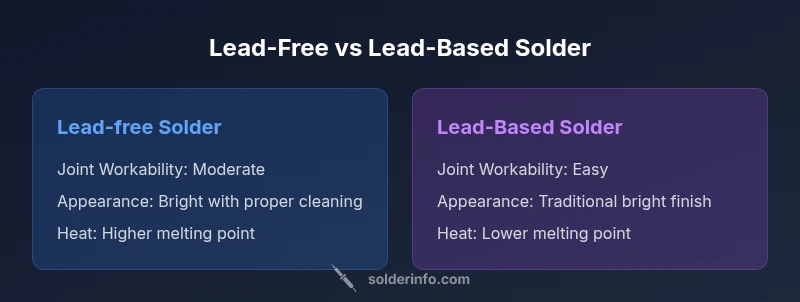
| Feature | Lead-free Solder | Traditional Lead-based Solder |
|---|---|---|
| Joint Workability | Moderate, needs flux optimization | High, easy wetting and quick joints |
| Appearance | Bright joints with proper cleaning; may show residue if not cleaned | Bright, traditional finish with minimal post-cleanup complexity |
| Thermal Behavior | Higher melting temperatures; careful heat management required | Lower melting temperatures; forgiving with heat |
| Health & Safety | Lower lead exposure; requires good flux handling | Higher lead exposure risk if ventilation and PPE are insufficient |
| Compatibility with Came/Copper Foil | Requires compatible flux and technique; tested with copper foil and modern came | Excellent with traditional came systems; may need adjustments for modern foils |
| Flux Needs | Sensitive to flux choice; choose lead-free compatible flux | Flexible with a wide range of fluxes; simpler cleanup |
| Cost/Availability | Often similar or slightly higher cost; availability varies by region | Typically lower cost and broader availability in established markets |
Advantages
- Safer handling with reduced lead exposure
- Meets modern safety standards and environmental goals
- Expandable flux options and cleaner tech ecosystem
- Good long-term durability when properly executed
Cons
- Higher learning curve for heat control and wetting
- Potential for dull or cloudy joints if cleaning is insufficient
- Slightly higher cost or limited regional availability in some areas
Lead-free solder is a solid safety-forward choice for stained glass, especially where exposure concerns are paramount, but requires adapting technique and process to match its metallurgical behavior.
If safety and compliance drive your project, lead-free is the preferred path. Expect to invest in flux selection and heat management to achieve results on par with traditional lead solders. For large or traditional panels prioritizing ease of workability, test a few scrap joints before committing.
Quick Answers
What is the main difference between lead-free solder and traditional lead solder for stained glass?
Lead-free solders use tin-based alloys (often with silver or copper) and require different fluxes and heating profiles. Lead solder uses tin-lead alloys that typically flow at lower temperatures. The choice affects heat management, appearance, and long-term durability.
Lead-free is tin-based and needs different heat and flux; lead solder is easier to work with but contains lead.
Is lead-free solder safe for stained glass artists?
Lead-free solder reduces lead exposure during handling and cleanup, improving workspace safety. Still, ventilation and proper PPE are important because flux fumes and heat are still present.
Yes, lead-free is safer in terms of lead exposure, but you still need good ventilation.
Will lead-free solder look different on the finished panel?
If properly cleaned and flux-managed, lead-free joints can look similar to leaded joints, but you may notice a different brightness or halo if residue remains. The finish also depends on glass and flux choices.
With good cleaning, the look can be very similar, just watch for any residue.
Can I mix lead-free solder with lead-based solder?
Mixing alloys is generally not recommended for stained glass because different melting points can cause flaws or joint inconsistency. If needed, perform isolated tests and consult supplier guidance.
It’s best to avoid mixing unless you’ve tested it carefully.
What flux is best for lead-free stained glass soldering?
Choose a flux formulated for lead-free tin-based solders. The flux should promote good wetting and be compatible with your glass and came materials. Always clean thoroughly after soldering.
Use a flux designed for lead-free solders and clean well after work.
How do I fix a dull or cloudy joint with lead-free solder?
Reflow the joint with appropriate heat, reapply flux if needed, and clean with an appropriate cleaner. Sometimes a light polish after cleaning improves clarity.
Reheat carefully, reflux, then clean and polish to restore clarity.
Top Takeaways
- Prioritize safety and flux compatibility when choosing solder
- Invest time in practice panels to master heat control
- Test lead-free joints on scrap glass before full projects
- Clean thoroughly to prevent residue and clouding
- Consider long-term durability and aging when deciding