Solder Copper Jewelry Wire: A Complete How-To Guide
Master copper jewelry wire soldering with proper prep, flux, and heat control. This SolderInfo guide covers tools, materials, steps, finishing, and troubleshooting for durable copper joints.


Goal: solder copper jewelry wire by prepping the ends, applying flux, and heating with a small torch to form a strong, clean joint. This guide covers safety, flux selection, lead-free solder, and techniques to prevent oxidation and burnout for reliable results. It emphasizes working with a stable heat source, keeping joints small, and inspecting before finishing to ensure long-lasting wearability.
Understanding Copper and Solder Basics
Copper jewelry wire is a popular choice for its warm color and malleability, but it also oxidizes quickly when heated. Copper’s low melting point relative to many other metals means heat control is essential to avoid burn-through while still achieving a clean solder joint. According to SolderInfo, choosing the right flux and solder alloy for copper greatly reduces oxidation and improves flow, resulting in stronger connections. When you see a copper joint glow, you want a bright, cherry-red hue rather than dull, gray oxidation—this indicates a well-flowed solder with good metallurgical bonding. As you plan a project, think about joint geometry (butt, lap, or scarf joints) and how copper’s ductility will react to bending after soldering. Practice on scrap wire to dial in heat settings and flux coverage before shaping your final piece.
Safety First: PPE and Ventilation
Soldering copper jewelry generates fumes and heat. Always work in a well-ventilated area or use a fume hood, and wear safety glasses, a mask, and heat-resistant gloves. Keep a fire extinguisher nearby and remove flammable materials from the bench. Lead-free solders are preferred for wearable pieces, but you should still minimize inhalation of fumes by using a properly rated respirator when soldering for extended periods. The SolderInfo team emphasizes safety as the foundation of good technique: if you’re uncomfortable with fumes or heat, pause and reassess your setup before continuing.
Tools and Materials You Need
Before you begin, assemble a dedicated work area with a heat-resistant soldering mat, a small torch, flux, lead-free solder, and wire in copper gauges suitable for jewelry. A flux brush helps apply a thin, even coat, while a pair of fine-tipped tweezers keeps parts aligned as heat approaches. Use a pipe cleaner or sanding pad to scuff the wire lightly for better solder adhesion. The goal is to create a clean surface that lets solder flow cleanly without bridging or leaving gaps. In this article, we’ll separate essential tools from optional accessories to keep your setup efficient and affordable.
Surface Prep: Cleaning and Prepping Copper Wire
Oxidation and oils on the copper surface impede solder flow. Start by cleaning the wire with isopropyl alcohol or acetone, then lightly abrade the ends with fine abrasive (320–600 grit) to expose bright metal. Cut ends squarely to ensure a tight fit, and dry thoroughly before fluxing. For jewelry, a small bevel on the joint edges can help solder flow and reduce the chance of a cold joint. Always re-verify alignment after cleaning, because oxidation-free surfaces are critical for a smooth solder run.
Choosing Solder and Flux for Copper Jewelry
For copper jewelry, select a lead-free solder formulated for soft or medium-hard joints, and pair it with a flux designed to promote clean solder flow on copper. Rosin-based flux is common for jewelry work, but water-soluble fluxes can be easier to clean post-solder. Flux serves two purposes: it prevents oxidation during heating and helps the solder wet the metal surfaces. Ensure the flux you choose is compatible with your solder alloy and has good tolerance for copper’s thermal properties.
The Step-by-Step Soldering Process
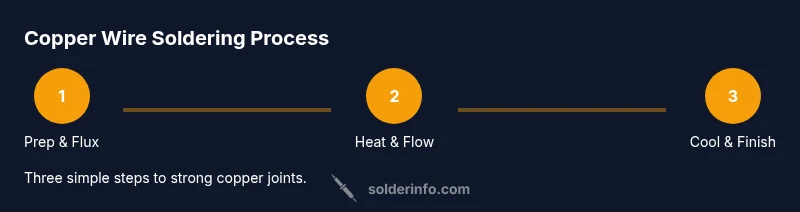
- Prep and secure the parts on a fireproof surface. 2) Apply a thin, even layer of flux to both surfaces. 3) If desired, lightly tin the copper ends for faster solder flow. 4) Bring the joint to temperature with a small, moving flame, avoiding prolonged heat on any single spot. 5) Introduce the solder so it flows into the joint; let capillary action pull the metal and avoid forcing solder through the back. 6) Remove the heat and let the piece cool naturally to prevent stress. 7) Quench and rinse, then inspect for a clean, uniform joint. 8) Polish the joint to a smooth, wearable finish.
Finishing: Cleaning, Quenching, and Polishing
After soldering, remove flux residues by cleaning with water and a gentle brush. If oxidation appears, a mild pickle bath or polishing compound can restore brightness. Dry thoroughly and finish with a soft cloth or jewelry polish to bring out the copper’s warm tone. For copper jewelry, a protective coating or lacquer can slow tarnish, especially for pieces that see frequent handling or moisture. Always test finishes on scrap pieces first to avoid altering your final design.
Common Issues and How to Fix Them
Cold joints occur when heat is insufficient or warmed surfaces don’t wet properly; fix by re-heating with flux and reflowing the joint. Flux blackening or excessive oxidation during soldering can be mitigated by cleaning and reapplying flux and by adjusting the flame to a steadier, smaller, hotter tip. If solder won’t flow, ensure the joint is clean, surfaces are tinned, and the heat is evenly distributed. Practice on scrap wire to fine-tune timing, heat, and flux coverage, which reduces defects in final pieces.
Practice and Troubleshooting for Consistent Results
Build a small practice set of copper wire joints with varying joint types (butt, lap, scarf) to refine heat management and flux usage. Track the results of each experiment: note the alloy, flux used, wire gauge, flame settings, and cooling method. Solder success comes from repetition, consistent cleanliness, and deliberate heat control. As you gain experience, you’ll recognize the telltale signs of a good flow and a solid, wearable joint.
Tools & Materials
- Butane micro-torch(adjustable flame, use in well-ventilated area)
- Lead-free jewelry solder(choose appropriate alloy for copper)
- Flux for copper jewelry(rosin-based or water-soluble flux; ensure compatibility)
- Soldering block or fire brick(heat-resistant base)
- Copper jewelry wire(6–20 gauge depending on design)
- Flux brush(apply a thin, even coat)
- Soldering tweezers/picks(hold parts during heating)
- Safety gear (goggles, mask)(protect from fumes and hot particles)
- Water bucket and tongs(cooling and handling hot pieces)
- Polishing cloth or steel wool(finish joint edges)
- Optional pickle pot/neutralizer(oxidation removal after soldering)
Steps
Estimated time: 45-60 minutes
- 1
Prep workspace and safety
Set up a ventilated area, lay out tools, and wear PPE. Ensure a clear, dry bench and a metal heat sink to minimize heat transfer to delicate parts.
Tip: Keep a water container nearby for quick cooling if needed. - 2
Clean and cut ends
Wipe copper ends with alcohol, cut ends square, and lightly abrade to remove oxidation for better solder adhesion.
Tip: Use fresh abrasive and swap between wires for best flow. - 3
Flux and position joints
Apply a thin flux film to both surfaces and align parts precisely before heating.
Tip: A tiny bevel on edges helps solder to wick in. - 4
Pre-tin ends (optional)
Lightly tin the wire ends to promote solder flow and reduce the required heat.
Tip: Do not over-tin; only a thin layer is needed. - 5
Heat and apply solder
Move the torch in small, circular motions to evenly heat the joint, then introduce solder until it flows into the joint.
Tip: Avoid staying in one spot; heat control prevents burn-through. - 6
Cool and inspect
Allow the piece to cool naturally, rinse, and inspect for a clean fill and a smooth contour.
Tip: If messy, reflow after cleaning with fresh flux. - 7
Finish and polish
Polish the joint area with a soft cloth or appropriate metal polish; remove oxidation if needed.
Tip: Test wearability on a scrap to ensure comfort. - 8
Optional cleaning step
If oxidation remains, use a mild pickle bath or neutralizer, then rinse and dry thoroughly.
Tip: Avoid high concentrations of acids near skin-contact areas.
Quick Answers
Do I really need flux for copper wire soldering?
Flux prevents oxidation and helps solder flow. It’s essential for copper to achieve a clean, reliable joint. You can experiment with flux types but start with a flux designed for jewelry use.
Flux prevents oxidation and helps solder flow, which is essential for copper joints. Start with a jewelry-grade flux.
Is lead-free solder safe for wearable copper jewelry?
Lead-free solder is recommended for wearables due to skin contact. Choose a jewelry-grade alloy and follow manufacturer safety guidelines during use.
Yes. For wearables, use lead-free solder and follow safety guidelines.
What heat level should I use for copper soldering?
Use a small, steady flame and avoid overheating; copper conducts heat quickly and can burn through if not controlled. Move the flame to heat the joint evenly.
Use a small, steady flame and move it around the joint to heat evenly.
Should I pre-tin copper ends before joining?
Pre-tinning can help solder flow and reduce time at high heat. Apply a light coat and avoid over-tinning to prevent excess solder at the joint.
Pre-tin lightly to improve flow, but don’t overdo it.
How do I prevent copper from oxidizing after soldering?
Quench and rinse after soldering, then polish. If tarnish appears, buff gently and consider a protective coating to slow further tarnish.
Quench, rinse, and polish; consider a protective coating.
Can I solder copper wire to other metals?
Yes, but compatibility matters. Use compatible flux and solder, and be mindful of differing expansion rates and finishes.
Yes, but ensure compatibility and proper flux for the metals involved.
Watch Video
Top Takeaways
- Prepare surfaces and flux properly before soldering.
- Use lead-free solder and controlled heat for copper jewelry.
- Inspect and polish for durable, wearable joints.
- Practice on scraps to improve consistency.