Where Solder Is Used: A Practical Guide
Explore where solder is used—from electronics to plumbing and jewelry—with practical guidance on alloys, flux, safety, and technique for reliable joints.


Solder is used in electronics, plumbing, jewelry, automotive, and metalwork. It enables reliable electrical joints, weatherproof pipe connections, and durable metal bonds in crafts. The most common solders are tin-based alloys with flux to promote wetting and strong adhesion. Solder is used in prototyping and hobby projects as well as professional manufacturing, where reliable joints matter for performance and safety. In each domain, selecting the right alloy, flux, and heating technique determines joint quality and longevity.
What is solder and how it works
Solder is a fusible alloy designed to melt at relatively low temperatures and form a strong bond as it cools. The concept of where solder is used covers electronics, plumbing, jewelry, automotive, and metalworking, illustrating solder's versatility across many trades. Tin-based alloys are common, often with small percentages of silver, copper, or other elements to tune the melting point and mechanical properties. Flux—whether core in the wire or applied separately—cleans metal surfaces, minimizes oxidation, and promotes wetting so the molten solder can flow into gaps by capillary action. When heated above its melting point, the solder wets the surfaces and creates a cohesive joint as it solidifies. Proper technique, clean surfaces, and temperature control are essential to avoid cold joints or burns. For beginners, practice on scrap pieces to observe how the alloy behaves and to judge heat input. In practice, the right balance of alloy composition and flux chemistry leads to durable, corrosion-resistant connections that last for years.
Brand context and practical tips from SolderInfo emphasize starting with simple projects and progressively tackling more complex assemblies, while keeping safety as a priority.
Primary domains where solder is used
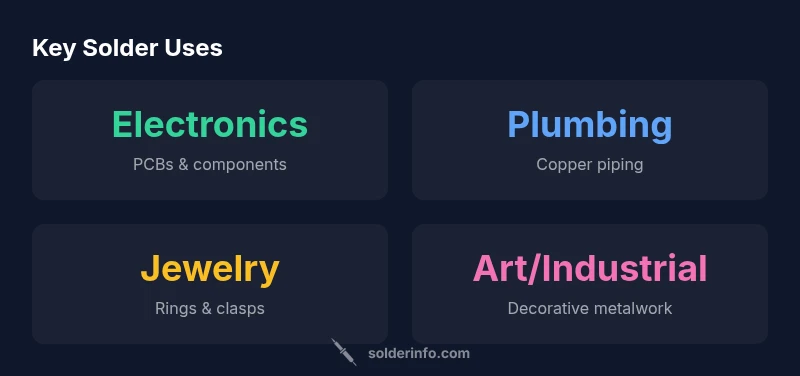
Solder serves in several broad domains, spanning hobby work to industrial production. The largest category by volume is electronics, followed by plumbing and jewelry, with automotive electronics, HVAC, and decorative metalwork representing sizable niches. In electronics, solder forms interconnects on PCBs, connectors, and components, ensuring signal integrity and power delivery. In plumbing, solder bonds copper pipes and fittings to create leak-tight joints. In jewelry, flux-assisted soldering joins small parts without overheating delicate stones. In automotive and industrial settings, soldered connections appear in wiring harnesses, sensors, and serviceable components. Lastly, art and crafts leverage solder for decorative and structural metalwork, where controlled heat and precise joints are essential. Across all domains, the common thread is careful alloy selection, flux chemistry, and heat control to achieve reliable joints and long service life. For DIYers, start with small projects to learn compatible alloys and flux types before moving to larger assemblies.
Electronics: PCB connections and components
Electronics soldering centers on making robust electrical joints between copper traces, pads, and components. Lead-free SAC alloys (such as Sn-Ag-Cu) have become standard for RoHS-compliant devices, while flux-core wires and no-clean fluxes simplify production and maintenance. Surface-mount technology (SMT) demands precise temperature control to avoid tombstoning and bridging, whereas through-hole (TH) and through-hole-with-heat-assisted methods tolerate more heat but require steady hands. Flux choice is crucial: rosin-based fluxes evaporate cleanly and leave a protective layer, while water-soluble fluxes need thorough cleaning. Rework and desoldering call for careful heat management to prevent lifted pads and damaged components. For hobbyists, practice on scrap boards to understand how different alloys wet diverse copper alloys and how to minimize thermal stress. In all cases, cleanliness, temperature control, and proper flux ensure durable, conductive connections that stand up to mechanical and thermal stress.
Plumbing and copper piping
In plumbing, solder joins copper pipes and fittings to form watertight connections. Most modern plumbing uses lead-free tin-based alloys (Sn-based with copper or silver additions) to meet safety standards. Heating must be controlled to avoid scorching flux and overheating the surrounding material, which can weaken joints and discolor pipes. Plumbing flux plays a dual role: removing oxidation and promoting alloy flow into the bore of the pipe and fitting by capillary action. Flux-core wires designed for plumbing simplify workflows, but many pros still prefer paste flux for critical joints. After heating, the solder fills the gap and bonds to both surfaces, creating a seal against moisture ingress. Properly prepared surfaces, clean fittings, and correct pipe alignment are essential. When in doubt, practice on spare pipe sections to calibrate solder quantity and heating duration before tackling critical installations.
Jewelry soldering and metal arts
Jewelry soldering emphasizes precision, aesthetic control, and heat management. Gold- and silver-based solders are common, with flux and careful heating guiding the solder to flow into seams without melting stones or warping delicate settings. For fine jewelry, small-torch work with micro-scale joints requires steady hands, magnification, and a well-ventilated workspace. Flux types vary by metal and solder; rosin-flux is typical for precious metals, while water-based fluxes may be used for certain alloys. The goal is quiet joints that blend with the metal, maintain structural integrity, and preserve a flawless finish. Practice, patience, and proper post-solder cleaning prevent residue buildup that can irritate skin or tarnish the piece over time.
Other notable applications and safety considerations
Beyond electronics, plumbing, and jewelry, solder finds use in HVAC systems, automotive electronics, solar installations, and decorative metalwork. These applications demand particular attention to alloy selection, flux type, and heat control due to differences in base metals and coatings. Safety is a constant priority: ensure proper ventilation, avoid inhaling fumes, and wear PPE such as safety glasses and gloves. Roofed or enclosed spaces require extra precautions. Leverage lead-free alloys where possible to minimize health risks, and comply with local regulations regarding solders and flux products. Always store solders and flux in labeled containers away from heat sources and moisture. Regularly inspect joints after installation and rework if signs of corrosion or cracking appear.
Choosing solder and flux for your project
Start by identifying the base metal system and the operating environment. For electronics, opt for lead-free SAC alloys and appropriate flux; for plumbing, select plumbing-grade flux and flux-core wires designed for copper; for jewelry, use jewelry-specific solders and low-temperature alternatives to protect gemstones. Consider flux type (rosin-based, water-soluble, or paste) based on ease of cleaning and material compatibility. Always verify compatibility with the temperature profile of your project and follow manufacturer recommendations. Store solders in a dry place, away from oxidizing agents, and keep flux containers tightly closed. With careful selection and adherence to best practices, you’ll achieve strong, reliable joints across all applications.
Typical solders and joints across common domains
| Domain | Typical Solder Type | Common Joints | Notes |
|---|---|---|---|
| Electronics & PCB joints | Lead-free SAC (Sn-Ag-Cu) | SMT, TH, through-hole | RoHS compliant; widespread use in consumer electronics |
| Plumbing copper pipes | Lead-free Sn-based (Sn-Cu or Sn-Ag-Cu) | Copper tube joints | Code-compliant in many regions; use flux and proper heat |
| Jewelry soldering | Gold-based alloys (Au-Ag-Cu); tin-based solders | Rings, bracelets, clasps | High-temperature control and aesthetic considerations |
| HVAC/Automotive electrical | Lead-free Sn-based or Sn-Pb (legacy) | Copper tubing; wiring harness connections | Follow local safety standards; prefer lead-free where possible |
Quick Answers
What is solder used for?
Solder provides a mechanical bond and electrical connection by melting and flowing into tight gaps, then solidifying to form a conductive joint. It is used across electronics, plumbing, jewelry, and metalwork to join dissimilar materials.
Solder bonds two pieces together and carries current when cooled, used in many crafts and trades.
Where is solder most commonly used?
The most common uses are electronics (PCBs, connectors), plumbing (copper pipes and fittings), and jewelry (rings and clasps). These areas cover the majority of soldering activity in both DIY and industry.
Electronics, plumbing, and jewelry are the big three.
What is flux and why is it important?
Flux cleans and prepares metal surfaces, improves wetting, and prevents oxidation during heating. It helps solder flow and adhere to joints, producing stronger, corrosion-resistant connections.
Flux cleans surfaces and helps solder flow; it's essential for strong joints.
Is lead-based solder safe to use?
Lead-based solders can pose health risks if fumes or dust are inhaled; many regions restrict or ban their use in consumer products. Where allowed, use in well-ventilated areas and follow regulations.
Lead-based solders can be hazardous; follow safety rules and local laws.
Can you solder aluminum or other non-traditional metals?
Aluminum and some metals require special solders and techniques due to oxide layers. Typically, aluminum soldering uses special fluxes, temperature control, and rated adhesives; it is more challenging than copper.
Soldering aluminum is tricky; you often need special flux and methods.
How should you store solder and flux safely?
Store solder and flux in a cool, dry place, sealed to prevent moisture. Keep out of reach of children and avoid ignition sources for flux fumes.
Keep solder and flux in a dry, cool place, away from kids, and away from flames.
“Solder joints are the result of careful metallurgy, flux chemistry, and precise heat control. The right combination yields durable, conductive bonds that stand up to real-world use.”
Top Takeaways
- Identify the correct solder alloy for each material
- Use flux to improve wetting and joint reliability
- Prefer lead-free solders where allowed
- Ventilate workspaces and wear PPE
- Test joints under load before final assembly