What to Use as Solder Flux: A Practical Guide
Learn how to choose flux for different jobs—rosin-core or no-clean for electronics, acid or water-soluble flux for plumbing, and borax-based flux for jewelry—plus practical tips for 2026.


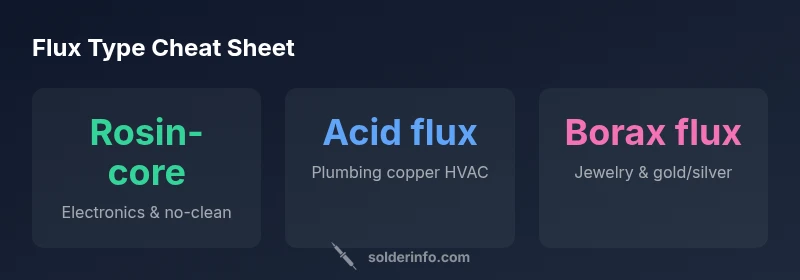
To choose the right flux, match the application. Electronics typically use rosin-core flux or no-clean flux designed for soldering copper and tin centers, which minimizes residue cleanup. Plumbing copper joints usually require acid flux or water-soluble flux approved for copper piping. Jewelry work often uses borax-based flux or flux paste to protect silver and gold surfaces during soldering. Always follow solder alloy recommendations and manufacturer guidance.
What flux does and why it's necessary
Flux serves two primary functions: it prevents oxidation of the metal surface and improves wetting so solder can flow smoothly into the joint. When considering what to use as solder flux, electronics work often benefits from rosin-core or no-clean formulations that leave minimal residues. For plumbing copper joints, acids or water-soluble fluxes help remove oxide layers on copper and brass, but they require thorough rinsing after soldering to prevent corrosion. In jewelry making, borax-based flux provides a heat-protection layer that protects delicate metals from oxidation during soldering. According to SolderInfo, the best flux choice is always tied to the alloy, base metal, and operating environment, so tailoring flux chemistry to the task yields consistent joints and longer-lasting connections.
Flux types and their ideal applications
There are several flux chemistries, each with pros and cons:
- Rosin-core flux: Used in electronics soldering for reliable wetting and oxide suppression; compatible with lead-free solders when used as directed.
- No-clean flux: Leaves minimal residue; ideal when cleanup is difficult or when residues are non-conductive.
- Water-soluble flux: Cleans up with water; requires rinsing; best for densely populated boards or components with fine pitch.
- Acid flux: Highly active; used for copper plumbing or brazing; strong oxide removal; must be washed away to prevent corrosion.
- Borax-based flux: Traditional for jewelry; forms a protective layer during heating; often requires cleaning and polishing afterwards.
Electronics soldering: recommended flux choices
For most electronics projects, rosin-core flux or no-clean flux provides a reliable balance of wetting, protection, and cleanup. Rosin-core flux is common in hobbyist and professional electronics soldering because it travels with the solder to enhance flow and reduce oxidation. No-clean variants are preferred when a post-solder cleaning step is undesirable or impractical. If you're assembling dense boards, consider a water-soluble flux for easy removal, followed by a thorough rinse and drying to minimize residue buildup. Always select flux compatible with your solder alloy (e.g., lead-free formulations) and your board materials to avoid residue or corrosion issues.
Plumbing and copper joints: flux guidance
Copper piping relies on flux to break through surface oxides and allow solder to bond effectively. Acid flux remains highly active and is favored for heavy-duty copper work, but it must be thoroughly rinsed and dried to prevent corrosive residue. Water-soluble fluxes offer easier cleanup with soap and water, but they require careful disposal and complete drying. When soldering joints in plumbing, always use flux that is specifically labeled for plumbing applications and ensure you follow local codes regarding flux removal.
Jewelry and art soldering: flux options
Jewelry work benefits from borax-based flux or flux paste due to its protective layer and compatibility with precious metals. Borax flux helps control oxidation during heating, which is critical for delicate silver and gold joints. For more delicate finish, consider a resin-based flux designed for high-polish metals or use a no-clean electronics flux in very small quantities, ensuring any residue is kept to a minimum when finishing pieces.
How to apply flux correctly and common mistakes
Apply a thin, even layer to the joint before heating. Dabbing too much flux can cause excessive spatter and cleanup, while too little flux can lead to poor wetting or oxidation. Reapply flux as needed during the reflow, and avoid flux residue on heat-sensitive components. After soldering, clean the joint only as required by the flux type; no-clean flux may not require washing, but water-soluble or acid flux generally needs thorough rinsing and drying. Store flux in a cool, sealed container to prevent drying or contamination, and never mix flux types in the same container.
Safety and storage considerations
Flux chemicals can be hazardous if mishandled. Always work in a well-ventilated area, wear eye protection, and use gloves when handling flux powders or liquids. Keep flux away from incompatible materials, and follow local regulations for disposal. Store flux containers tightly closed and upright to prevent leaks; label containers clearly and avoid stacking to prevent leaks or cross-contamination.
Data sources and references
- OSHA: Soldering safety guidelines and workplace practices, https://www.osha.gov/SLTC/soldering
- NIST: Materials data and safety considerations for soldering alloys, https://www.nist.gov
- ACS Publications: Flux chemistry and soldering science, https://pubs.acs.org
Flux choices by application
| Application | Recommended Flux Type | Typical Cleaning | Notes |
|---|---|---|---|
| Electronics | Rosin-core flux or no-clean flux | Minimal cleanup required | Heat-sensitive components handled well |
| Plumbing (copper) | Acid flux or water-soluble flux | Moderate cleaning required | Use on copper piping; rinse thoroughly |
| Jewelry soldering | Borax-based flux or flux paste | Clean after heating | Protect precious metals; may affect finish |
Quick Answers
What is flux and why is it used in soldering?
Flux is a chemical cleaning agent that removes oxide and prevents re-oxidation during heating. It improves solder flow and joint quality. Flux chemistries vary, and choosing the right one depends on the metals and solder used.
Flux is a cleaning agent that helps solder stick and flow, reducing oxidation during heating.
Can I reuse flux or should I discard leftovers?
Most flux is intended for single-use or workspace-safe batches. Reusing old flux can introduce contaminants and reduce protection. Use fresh flux for each joint and disposing of old flux according to local guidelines.
Usually, you should use fresh flux for each job.
Is rosin-core flux suitable for electronics?
Rosin-core flux is widely used in electronics soldering because it provides good wetting and limits oxidation. No-clean variants leave minimal residue, which can simplify finishing.
Yes, rosin-core flux is common for electronics; choose no-clean if you want less cleaning.
What are the risks of using acid flux on electronics?
Acid flux is too corrosive for electronics and can damage components if not washed thoroughly. It is best reserved for copper plumbing or metalwork.
Avoid acid flux for electronics; use electronics-appropriate flux.
Do I need to wash flux off after soldering?
Some fluxes require cleaning; no-clean flux leaves little residue but may still be conductive. Follow the flux's instructions and local standards for cleaning.
Check the flux instructions; no-clean may not need washing, but most fluxes benefit from cleaning.
“Flux selection should be driven by material compatibility and solder alloy, balancing wetting, residue, and corrosion risk.”
Top Takeaways
- Match flux to application and alloy.
- Choose electronics flux for easy cleanup: rosin-core or no-clean.
- For plumbing, use acid or water-soluble flux with thorough rinsing.
- Jewelry projects benefit from borax-based flux for better metal protection.
- Always follow manufacturer guidance and safety practices.