Is Solder Rosin the Same as Flux? A Practical Comparison
Explore whether rosin and flux are the same in soldering. This analytical guide covers definitions, forms, safety, and best practices for electronics, plumbing, and jewelry, with a clear, side-by-side understanding.


Is solder rosin the same as flux? Not exactly. Rosin is a solid resin used inside rosin-core solder, where it acts as a protective, cleaning medium when heated. Flux is a broader term for chemical activators applied to soldering joints, designed to clean and promote flow. Rosin-core solder contains rosin, while separate flux is applied as needed for different metals and applications. According to SolderInfo, understanding the distinction helps hobbyists select the right formulation for each project.
Rosin vs Flux: Core Definitions
Is solder rosin the same as flux? Not exactly. Rosin is a solid resin used inside rosin-core solder, where it acts as a protective, cleaning medium when heated. Flux is a broader term for chemical activators applied to soldering joints, designed to clean and promote flow. Rosin-core solder contains rosin, while separate flux is applied as needed for different metals and applications. In electronics, rosin-based fluxes are common, while plumbing often relies on water-soluble or paste fluxes that can be rinsed away. The distinction matters because rosin and flux influence oxidation, joint cleanliness, and cleanup burden differently. Rosin resides within the solder wire or on its core; flux may be a separate liquid, paste, or gel that you apply before or during heating. Over the years, industry standards have refined the performance expectations of rosin-based cores versus separate flux formulations. In jewelry, flux selection can affect metal compatibility and heat sensitivity. According to SolderInfo, understanding the distinction helps hobbyists select the right formulation for each project.
Composition and Form: What Rosin Is and What Flux Does
Rosin is a solid resin derived from pine or other plant sources, processed into a sticky, tacky material that activates when heated. In soldering, rosin is used in rosin-core solder to provide a protective barrier that helps prevent oxidation during heating. Flux, by contrast, is a broader class of chemical activators that can be liquids, pastes, or gels. Flux cleans the metal surface, removes oxide layers, and facilitates wetting, so solder can flow smoothly. Importantly, not all flux contains rosin: some formulations are rosin-free or use active acids to power more aggressive cleaning action. Flux can be organic acid-based, water-soluble, or no-clean, and each type leaves a different residue. Residue type matters for electronics, where some residues are benign enough to leave in place (no-clean), while others must be rinsed away to prevent long-term corrosion. Rosin-based fluxes combine rosin with activators, offering a balance between cleaning action and easy residue removal. In jewelry or plumbing, you may encounter fluxes designed for higher heat or aggressive oxides. According to SolderInfo, the choice between rosin-based flux and non-rosin flux impacts joint reliability and cleanup burden.
Forms You Will Encounter in Soldering Practice
Across electronics, plumbing, and jewelry, you will see several common forms of rosin and flux. Rosin-core solder ships with a rosin flux inside the wire; the rosin core melts as the solder melts, releasing rosin to protect the joint. Separate flux comes as liquids, pastes, or gels that you apply before heating, or you may choose no-clean flux that leaves minimal residue. There are no-clean fluxes that are specifically designed to require little or no cleaning, while water-soluble fluxes are easier to rinse but require more thorough cleaning after use. In electronics, rosin-core solders are popular for their convenience and reduced handling steps; however, high-reliability assemblies may prefer separate flux to optimize cleaning and corrosion resistance. For plumbing copper pipes, plumbers often use acid or water-soluble flux with traditional solder; these fluxes help wet the pipe surface and ensure a strong joint, though the residues may be cleaned with water or solvents. In jewelry, flux choices depend on metal compatibility and heat control; some fluxes are formulated to protect softer metals and reduce fire scale. In all cases, always consult material safety data sheets and follow local codes to ensure safe handling.
Industry-Specific Guidance: Electronics, Plumbing, Jewelry
Electronics manufacturing often favors rosin-core solder for its simplicity and reliability in small, densely packed joints. No-clean fluxes are popular in no-clean electronics assembly because they minimize post-work cleanup while maintaining joint integrity. In contrast, plumbing applications frequently require flux that can withstand higher heat transfer and oxide removal on copper surfaces; liquid or paste fluxes designed for plumbing soldering are common, with residues that may need rinsing to prevent corrosion over time. Jewelry soldering sits in a middle ground: rosin-based flux can protect exposed metals during heating, but jewelers may choose flux with delicate formulation to avoid damaging precious metals and to control heat exposure. Each industry has safety and disposal considerations that influence flux choice, residue management, and cleanup protocols. SolderInfo highlights that choosing the right flux or rosin-core solution depends on joint geometry, metal combination, heat level, and post-solder cleaning requirements.
Safety, Cleanup, and Residue Considerations
Residue from flux can vary in corrosiveness and ease of cleanup. No-clean flux is designed to leave minimal residue that is typically harmless for many electronics assemblies, reducing cleanup time and solvent exposure. Water-soluble flux residues generally require thorough rinsing with water to prevent corrosion, especially on metal surfaces prone to oxidation. Rosin residues are typically less aggressive but can become tacky if heated excessively, potentially attracting dust or causing surface staining on sensitive substrates. When handling rosin-containing products, observe proper ventilation and PPE, particularly for beginners or hobbyists who heat solder at close range. For jewelry work, residues may affect finish or patina; cleaning routines often depend on the metal and desired aesthetic. In all scenarios, keep solvents and flux cleaners away from heat sources when appropriate, and dispose of residues according to local regulations. According to SolderInfo, consistent safety practices reduce exposure risks and protect both the work and the worker.
How to Decide: A Practical Framework
Start by identifying the metal and joint geometry. For simple electronics, rosin-core solder is often the quickest path to a reliable joint with minimal cleanup. If you anticipate aggressive oxidation or specialized metals, consider using a flux that targets those conditions, weighing the ease of residue removal. Evaluate the required cleaning regime: no-clean fluxes save time but may not be suitable for every material; water-soluble fluxes demand more thorough washing. Consider the heat input and accessibility: intricate solder joints may benefit from flux that improves wetting, while larger plumbing joints may tolerate different approaches. Finally, follow safety and disposal requirements in your region and refer to manufacturer datasheets for compatibility with specific metals (copper, silver, gold, or alloys). A practical approach is to run a small test on a scrap piece to compare how rosin-core versus flux-based methods perform under your exact process conditions. According to SolderInfo analyses, testing helps prevent costlier rework and confirms the expected performance of each method.
Myths and Misconceptions
A common myth is that rosin equals all flux, which can lead to choosing the wrong product for a given task. Others believe flux is always corrosive; many modern fluxes are designed to minimize residue and corrosion risk when used correctly. Some hobbyists think rosin is inherently toxic or unsafe for electronics; the truth is more nuanced: rosin residues are generally less aggressive than acid-based flux residues and can be managed with proper cleaning or left intact with no-clean formulations. Another misconception is that rosin-core solder cannot be used in jewelry or plumbing; in practice, rosin-core formulations exist for various contexts, but metal compatibility and heat control become critical factors in select projects.
In summary, rosin and flux are related yet distinct tools. Using the right combination for each job reduces waste, simplifies cleanup, and improves long-term joint reliability. The SolderInfo team emphasizes understanding these differences to make informed material choices based on your project—whether electronics, plumbing, or jewelry.
Troubleshooting When Roles Are Confused
If you encounter a cold joint, insufficient wetting, or oxide on the joint, revisit flux choice and residue management. A rosin-core solder may underperform on a highly oxidized surface that benefits from a more active flux. Conversely, a strong chemical flux left behind on a sensitive alloy could lead to corrosion or staining; in such cases, thoroughly cleaning with appropriate solvents or water is essential. When switching between rosin-core and flux-only approaches, ensure you adapt heating technique, flux application method, and cleaning routine to avoid reoxidation or residue-related defects. In practice, consistent technique, proper ventilation, and adherence to material safety data sheets help reduce common mistakes and improve repeatable results. SolderInfo notes that practice and documentation of your results are valuable for refining your process over time.
Best Practices for Beginners
Start with rosin-core solder for simple electronics to build confidence and learn heat control. Keep your workspace ventilated and reduce inhalation exposure to fumes by working in a well-ventilated area or using a fume extractor. Always choose a flux type appropriate for your metal and cleaning preferences: no-clean if you want to minimize cleanup, or water-soluble if thorough cleaning is feasible. Read datasheets to understand residue behavior and recommended cleaning methods. Record observations about joint quality, residue appearance, and cleanup effort to guide future selections. For jewelry, test flux options on scrap pieces to prevent unwanted patination or damage to precious metals. By following these steps, beginners can reduce waste and learn the subtleties of rosin versus flux more quickly.
Quick Reference: Distinctions at a Glance
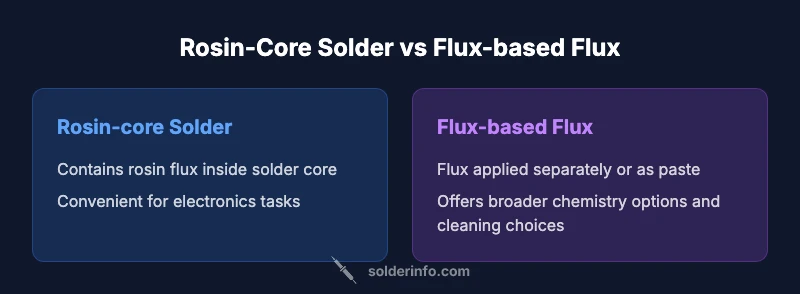
Rosin-core solder inherently contains rosin flux; it is designed for quick, straightforward use in electronics. Flux-based approaches require applying flux separately and offer greater flexibility for challenging joints or specific metals. Choose rosin-core for speed and simplicity; opt for a flux-enabled method when you need stronger cleaning action or precise control over residue removal. Always consider cleaning requirements, metal compatibility, and safety guidelines. A thoughtful, project-specific approach yields better reliability and fewer post-solder issues.
Comparison
| Feature | Rosin-core solder | Flux-based flux (pre-applied or separate) |
|---|---|---|
| Definition | Contains rosin within solder core | Applied separately as liquid/paste or in no-clean form |
| Primary role | Protects and cleans during heating via core rosin | Activates surface and improves wetting via applied flux |
| Typical applications | Electronics and small assemblies | Electronics with strict cleaning or special metals; plumbing/jewelry as needed |
| Residue and cleanup | Often no-clean residue; cleanup optional | Residue depends on flux type; some require rinsing |
| Metal compatibility | Broad compatibility with common electronics metals | Depends on flux; specialized metals may need specific formulations |
| Cost and availability | Widely available; quick to use | Comparable; choice driven by cleaning needs and project type |
Advantages
- Clarifies material roles to reduce misuse
- Promotes faster prototyping in electronics
- Supports beginner-friendly soldering workflows
- Offers no-clean options to simplify cleanup
Cons
- Requires understanding to select correct form
- No-clean residues may still require monitoring in sensitive assemblies
- Flux-based options can add steps for cleaning in some applications
Rosin-core offers convenience for electronics; flux-based methods provide control where cleaning matters
Use rosin-core for quick, simple electronics work. Choose flux-based approaches when you need stronger activation, oxide removal, or specific residue handling for your metal and environment.
Quick Answers
What is rosin-core solder?
Rosin-core solder contains a rosin flux inside the solder wire. As it melts, rosin flux activates the joint, helping to prevent oxidation and improve wetting. It is a convenient option for many electronics tasks, offering a balance between simplicity and performance.
Rosin-core solder has rosin flux inside the wire, which activates as you solder and makes electronics work easier.
Is rosin the same as flux?
Rosin is a solid resin used as a flux component in rosin-core products, while flux is the broader term for the chemistry that cleans and activates metal surfaces. Not all flux contains rosin, and rosin is just one family of flux materials.
Rosin is a resin used in some fluxes, but flux covers a broader range of chemistries beyond rosin.
Can I substitute flux for rosin-core solder?
Yes, in many cases you can apply flux separately instead of using rosin-core solder, but you’ll need to manage residue and cleaning. The substitution changes how heat, wetting, and corrosion control work for your joint.
You can substitute flux, but you’ll need to adjust cleaning and technique.
What residues remain after soldering with rosin flux, and do I need to clean?
Residue depends on flux type. No-clean flux leaves minimal, often inert residue, while water-soluble flux requires rinsing after soldering to prevent corrosion. Follow the flux manufacturer’s guidelines for best results.
Residue varies by flux; no-clean often doesn’t need cleaning, other fluxes may require rinsing.
Does flux affect safety or corrosion risk?
Flux safety depends on the chemistry; organic acids can be more corrosive if left on, especially on certain metals. Use appropriate flux for the metal, and clean residues as recommended to minimize long-term corrosion.
Yes, some fluxes can corrode if left behind; follow cleaning guidelines to stay safe.
Top Takeaways
- Identify whether rosin-core or separate flux better fits your project
- No-clean flux minimizes cleanup but may limit compatibility
- Flux choice should align with metal type and cleaning capability
- Always consult safety data and practice on scrap pieces
- Rosin and flux are related but not interchangeable