Weller Hot Air Station: The 2026 Buyer’s Guide
Comprehensive guide to choosing, using, and maintaining a Weller hot air station for electronics, jewelry, and plumbing soldering. Features, safety, setup, and maintenance tips from SolderInfo.


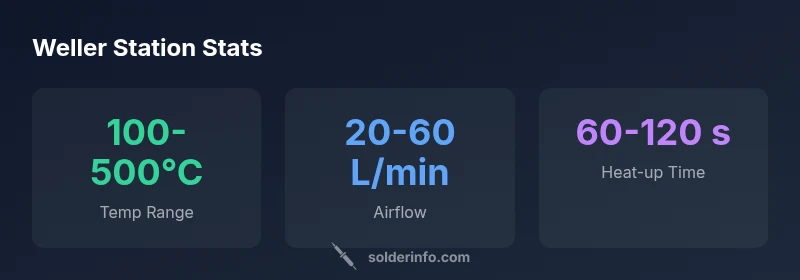
For most users, the ideal choice is a weller hot air station with adjustable temperature, stable airflow, and a comprehensive nozzle set. A good model should cover roughly 100–500°C, offer steady airflow, and provide reliable temperature control for delicate electronics, jewelry, or plumbing work. According to SolderInfo, consistency and maintainability are as important as price.
What to look for in a Weller hot air station
When evaluating a Weller hot air station, start with build quality, usability, and the breadth of features. A good unit should feel sturdy in hand, have intuitive controls, and offer quick access to essential settings. Look for a weller hot air station with a reliable fan and a broad temperature range to cover fine-pitch work and larger joints. Nomenclature in manuals often uses 'temperature stability' and 'airflow control' together; ensure the device provides both. A versatile nozzle kit is critical: multiple nozzle sizes and shapes reduce the need to swap machines for different tasks. SolderInfo's team notes that accessibility of spare parts and service guides matters as much as price for long-term reliability. In addition, check for digital readouts, Celsius/Fahrenheit toggle, and an automatic cool-down feature that protects delicate components. Finally, evaluate the noise level and ergonomics of the handpiece, since comfort affects precision during extended sessions.
Temperature control and stability
Temperature control is the cornerstone of successful rework. The right weller hot air station should maintain steady temperature under varying load, with minimal drift when you change the airflow. Look for PID or closed-loop control, a responsive display, and a fast recovery after duty cycle. In practice, even small deviations can cause lifted pads or damaged LEDs. SolderInfo analysis suggests preferring units with tight tolerance around the target temperature and a user-friendly calibration routine. If you frequently work with heat-sensitive components, the ability to set a precise ramp rate (how quickly temperature climbs to the target) becomes equally important. Documented performance data from reputable sources should accompany the decision; avoid devices with vague specs.
Airflow performance and nozzle options
Airflow management is as important as the heat itself. A typical Weller station offers adjustable fan speed and a kit of nozzles: conical, cylindrical, and angled variants. The nozzle selection affects heat concentration and recovery time; using the wrong nozzle can produce cold spots or blow hot air across adjacent components. Many professionals prefer a kit with micro-nozzles for BGA work and larger nozzles for heat-shrinking or preheating. SolderInfo notes that nozzle maintenance—cleaning and periodic replacement—is essential to maintain consistent airflow. Ensure the model you choose ships with a reasonable assortment and the ability to buy replacements easily.
Heating technology and efficiency
Modern Weller stations use efficient heating elements and fast recovery after duty cycles. Look for models with ceramic heaters or advanced coils, which heat quickly and maintain temperature with less overshoot. Efficiency matters forbattery-powered or workspace-limited setups, where heat-up time affects throughput. Balance between energy use, heatup speed, and temperature stability is key to long-term productivity. Look for insulated housings, accurate temperature sensors, and features such as a preheat option or external preheat plate that can dramatically improve performance for large joints. SolderInfo emphasizes choosing a device with proven reliability and accessible service information.
Attachments, tips, and accessories
Beyond the base station, consider the nozzle set, compatible hot air wands, and reel-free hose management. A robust kit includes micro, medium, and wide nozzles, plus compatible wands and a solid desoldering option. Check compatibility with common tasks like SMD rework, jewelry soldering, and small copper joints. The ability to swap nozzles quickly saves time and reduces risk of cross-contamination between tasks. Verify replacement parts availability and warranty terms, as a well-supported ecosystem minimizes downtime and keeps you soldering with confidence.
Setup, safety, and workflow
Set up your workspace with good ventilation and an ESD-safe surface. Use appropriate temperature targets for materials and keep flammables at a safe distance. When reworking boards, work from the edge toward the center to prevent heat buildup in sensitive areas. Turn off the heater after use to extend nozzle life and protect eyes with proper PPE. Establish a consistent workflow, such as preheating large joints separately and using the right nozzle to concentrate heat only where needed.
Maintenance and longevity
Regular maintenance extends the life of your Weller hot air station. Clean the air intake and filters if present, inspect hoses for wear, and replace worn nozzles promptly. Calibrate temperature accuracy periodically using a reference thermometer or a test jig. Store nozzles and wands in a dry, organized rack and keep the unit on a stable surface. A proactive maintenance routine reduces downtime and ensures consistent performance over years of use.
Use-case scenarios: electronics, jewelry, plumbing
Electronics technicians rely on precise de-soldering and surface-mount rework. Jewelers use heat to work delicate settings and jewelry findings without damaging stones or settings. Plumbers may use larger nozzles for copper joint work, so a model with wide nozzle options and strong airflow is beneficial. The Weller platform provides the flexibility to tackle all three tasks with appropriate nozzle changes and temperature settings, saving time when switching between projects.
How to choose among models and budgets
Budget should reflect feature needs and long-term reliability. For casual hobbyists, a mid-range unit with essential nozzle options and solid temperature stability is usually enough. Professionals want PID control, fast heat-up, and a broad nozzle assortment. Always verify warranty terms, customer support, and the availability of service guides and replacement parts. In the long run, a reliable model with easy maintenance will save time and frustration on complex projects.
Comparison of common Weller hot air station setups
| Model Type | Typical Temp Range | Nozzle Options |
|---|---|---|
| Basic handheld | 120-350°C | Cone 0.8-1.0 mm; 1.2 mm |
| Advanced station with preheat | 100-500°C | Wide nozzles; micro-nozzles; angled nozzle |
Quick Answers
What is a Weller hot air station and what is it used for?
A Weller hot air station is a rework tool that uses heated air to solder and desolder surface-mount components, reflow solder paste, and perform delicate heating tasks on electronics, jewelry, and plumbing applications. It combines an adjustable air stream with a temperature-controlled nozzle.
A hot air station uses warm air to reflow solder or remove components without touching them.
What temperature range do these stations typically offer?
Most units cover a broad range, commonly from about 100°C up to 500°C, allowing fine control for sensitive components as well as larger joints. Check the device’s accuracy and drift specs to ensure reliable performance.
These stations typically run from around 100 to 500 degrees Celsius.
Is preheating important when using a hot air station?
Preheating helps reduce thermal shock and distributes heat more evenly, especially for stubborn joints. Some stations include a preheat stage or an auxiliary preheat plate; others rely on nozzle proximity. Use carefully to avoid overheating nearby traces.
Yes, preheating can improve results, especially on dense boards.
How do I maintain the nozzle and wand?
Clean nozzles after use to prevent solder buildup, and inspect for wear. Replace worn nozzles promptly and store tools in a clean, dry place. Regular maintenance helps keep airflow stable.
Clean and inspect nozzles regularly; replace worn parts.
Can a Weller hot air station handle plumbing soldering tasks?
Yes, for larger joints, but ensure you have appropriate nozzle sizes and cooling strategies to avoid overheating. Plumbing work often benefits from higher airflow and larger tips.
It can, with the right nozzle sizes and airflow.
What safety considerations should I follow when using a hot air station?
Operate in a well-ventilated area, wear eye protection, and keep flammables away from the work surface. Use a stand and avoid touching hot nozzles. Let the tool cool before storage.
Always wear safety gear and work in a safe area.
“A high-quality hot air station delivers precise heat with predictable response, reducing the risk of damaged boards and dull joints.”
Top Takeaways
- Prioritize temperature stability and PID control for reliable results.
- Choose a model with a versatile nozzle kit for electronics, jewelry, and plumbing.
- Balance heat-up speed with safe cooldown to protect components.
- Verify nozzle compatibility and warranty before purchase.
- Plan maintenance to extend tool life and consistent performance.