Solder vs Soldering Iron: A Practical Comparison Guide
A detailed, analytical comparison of solder and soldering iron, explaining roles, materials, heat control, and safety across electronics, jewelry, and plumbing. Learn how to choose the right combination for durable joints and efficient workflows.


Understanding solder vs soldering iron is essential for reliable joints: a solder is the metallic filler that forms the bond, while a soldering iron is the heat source that melts that solder. The two work together, but they serve different roles across electronics, jewelry, and plumbing. Mastering their interplay—material choice, heat control, and safe handling—helps you achieve durable, clean joints with fewer defects.
Solder vs Soldering Iron in Practice
In the world of metal joining, the terms solder and soldering iron refer to two different pieces of the puzzle. Understanding how they relate—and how each is chosen—helps you predict joint quality before you even start. According to SolderInfo, electronics work often hinges on pairing a temperature-controlled iron with the right alloy to achieve a strong, reliable bond. This distinction is not academic: it influences heat management, flux choice, and safety in every project, from tiny electronics boards to jewelry clasps. The same logic applies to plumbing and metal jewelry where different alloys and temperatures matter. When you understand which is the filler and which is the heat source, you can plan joint geometry, flux use, and thermal cycles with confidence.
The Anatomy: What is Solder?
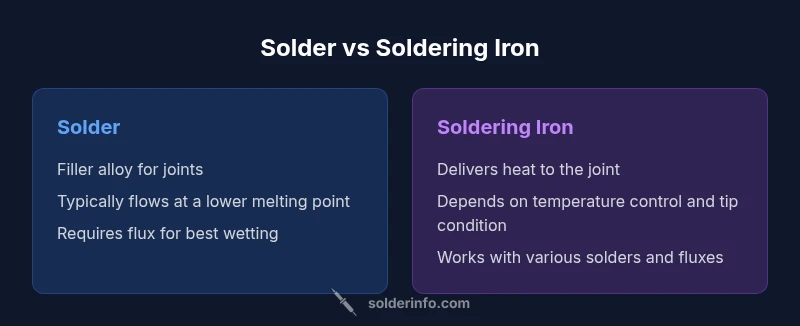
Solder is an alloy designed to melt at a comparatively low temperature so it can wet and join metal surfaces when cooled. Most hobbyists encounter tin-based solders, sometimes with small percentages of silver or copper to improve strength. Leaded solders have historically offered easy flow and reliable joints, but many regional codes now prefer lead-free formulations for health and environmental reasons. Flux is an accompanying chemistry that cleans metals and improves wetting, helping the molten solder spread evenly across joints.
The Anatomy: What is a Soldering Iron?
A soldering iron is a heat-delivery tool. It provides controlled heat to solder and components so the filler metal can flow and fuse with surfaces. Iron designs range from simple pencil irons to sophisticated temperature-controlled stations with replaceable tips. The quality of the tip, its cleanliness, and its compatibility with the solder formula determine how efficiently heat is transferred and how clean a joint becomes. In practice, the iron is as important as the solder itself because heat management governs wetting, dwell time, and risk of damage.
Heat Transfer and Temperature: Why It Matters
Heat transfer is the core mechanism that turns a solid alloy into a joint. If you apply too little heat, solder won’t flow, creating a cold joint that looks dull and may fail mechanically. Too much heat or heat for too long, and you risk damaging components, lifting pads, or burning flux residues. The key is matching the solder’s melting point with the iron’s ability to deliver consistent, localized heat. Temperature control helps maintain a stable molten pool and prevents overheating sensitive components during electronics work or jewelry setting.
Alloys and Flux: Leaded vs Lead-Free
The alloy composition in solder determines melting behavior, mechanical strength, and electrical conductivity. Leaded solders typically melt at lower temperatures and are easier to work with, but many applications require lead-free options due to health and environmental considerations. Flux types—rosin, water-soluble, or no-clean—affect joint cleanliness and residue removal. Lead-free alloys often require slightly higher heat and may benefit from more effective flux cleaning to ensure reliable joints in electronics and plumbing.
Safety and PPE: Handling Solder and Iron
Handling solder and the iron demands respect for heat and fumes. Soldering creates hot surfaces, molten metal, and chemical vapors from flux. Adequate ventilation, fume extraction when possible, and eye protection are essential. Use a stand to keep the hot tip away from flammable materials, and always wash hands after handling solder to minimize exposure to metal ions. In jewelry work and delicate electronics, extra care with components and heat timing minimizes the risk of damage.
Use-Cases Across Domains: Electronics, Jewelry, Plumbing
In electronics, the goal is precise, clean joints that conduct reliably without damaging nearby traces. For jewelry, aesthetics and modest heat tolerance drive selection of low-heat alloys and well-controlled temperatures. Plumbing typically uses lead-free solders that tolerate larger joints and higher heat transfer in metal pipes. Across these domains, the soldering iron acts as a universal heat source, but the chosen alloy and flux determine performance and safety. This cross-domain view highlights why learning the distinction matters for any hobbyist or professional.
Setup Scenarios: When to Pair Both
Most projects benefit from a deliberate pairing of solder and iron. Start with a clean, tinned iron tip and fresh flux to establish a stable heat source and wetting, then apply the appropriate solder alloy to form the joint. For tiny components, lower heat and small amounts of solder minimize the risk of thermal damage. For larger joints or thicker metals, more dwell time and careful temperature control reduce the chance of cold joints or uneven coverage. The ability to read the joint and adjust heat is the practical art of soldering.
Quality and Joint Reliability: Factors That Matter
Joint quality depends on surface cleanliness, flux activity, and controlled heat delivery. A good joint should be shiny, have a smooth fillet, and show uniform wetting along the joint interface. Poor preparation or uneven heat leads to dull surfaces, gaps, or cracks. Across domains, reliability improves when you plan the solder choice in advance, prepare surfaces, avoid overheating plastics, and maintain consistent technique during the operation. The soldering iron’s stability and the solder’s composition together determine long-term performance.
Maintenance and Longevity: Keeping Tools Ready
Regular maintenance extends the life of both solder and iron. Clean tips with a damp sponge or brass fiber, re-tin tips after use, and store irons away from moisture. Replace worn tips and ensure flux remains uncontaminated. Proper storage inhibits oxidation on the iron and degradation of the solder alloy. Routine checks reduce risk of unexpected failures and maintain consistent performance across projects.
Troubleshooting Common Issues: Quick Remedies
Cold joints appear dull and feel weak; reflow the joint with a brief heat pulse and fresh solder. Bridges form when too much solder connects adjacent pads; remove excess solder with a wick or de-soldering tool, then rework carefully. Oxidation on the tip harms heat transfer; clean and re-tin the tip to restore performance. If flux residues remain, clean with an appropriate solvent and inspect the joint under good lighting. These practices keep tools productive and joints dependable.
Quick Reference: Beginner Checklist
- Inspect work area for safety and ventilation.
- Prepare surfaces: clean, degrease, and lightly flux.
- Tin the iron tip and test temperature with a test joint.
- Apply solder with a steady hand, not a quick burst.
- Inspect the joint for even wetting and absence of bridges.
- Clean and store tools after use.
- Choose the solder alloy suitable for the application and region regulations.
- Maintain your iron tip with regular re-tinning.
Comparison
| Feature | Solder | Soldering Iron |
|---|---|---|
| Primary role | Filler metal that forms the joint | HeatDelivery device that melts solder and heats components |
| Typical use cases | Bonding metals in electronics, jewelry, plumbing | Local heat source for creating/repairing joints |
| Heat source | N/A (filler alloy) | Electrical resistance heating element or induction in advanced models |
| Required accessories | Flux, solder, tip cleaner, stand, cleaning sponge | Temperature-controlled unit, compatible tips, stand, sponge |
| Safety considerations | Fume exposure from flux and metal; hot liquid metal | Burn risk from hot tip; tip oxidation and electrical hazards |
| Best for | Delicate joints needing precise wetting and minimal heat input | Projects requiring rapid, controlled heat delivery to joints |
Advantages
- Clarifies roles, reducing guesswork about materials vs tools
- Supports cross-domain decision-making across electronics, jewelry, and plumbing
- Encourages better safety practices with dedicated heat control
Cons
- Misalignment of solder type and iron settings can cause poor joints
- Overreliance on heat may hide surface contamination or flux issues
- Lead-free practices may require higher heat and longer dwell times
Correct pairing matters: use appropriate solder with a properly controlled soldering iron for reliable joints.
A well-chosen solder alloy and a temperature-controlled iron reduce defects and improve joint longevity. The right combination supports clean surfaces, consistent wetting, and safer work practices.
Quick Answers
What is the difference between solder and a soldering iron?
Solder is the metal alloy that forms the joint, while a soldering iron is the heat source used to melt the solder and bond metals. They serve different roles, but both are essential for reliable joints. Understanding this separation helps with material selection and technique.
Solder is the metal that seals the joint, and the soldering iron is the heat tool that melts it. Both are needed for a strong bond.
Can I use any solder with any soldering iron?
Most solders are designed to work with standard irons, especially in electronics with compatible flux. Ensure the flux type and alloy are appropriate for the application and heat capability of your iron. In jewelry or plumbing, follow domain-specific recommendations to avoid joint failure.
Typically yes, but check flux and alloy compatibility for your project.
What temperature range should I aim for when soldering?
Use a temperature appropriate to the alloy and component sensitivity. Delicate electronics benefit from lower heat and shorter dwell times, while larger joints may tolerate higher heat. Always work conservatively and adjust as you observe joint behavior.
Start with a moderate heat and adjust based on how the solder flows.
Is lead-based solder still allowed?
Lead-based solders are still used in some applications but many regions require lead-free formulations for safety and compliance. Check local regulations and project specifications before choosing a solder.
Lead-free is common today; check your local rules.
What maintenance does a soldering iron require?
Keep the tip clean and well-tinned, use a proper stand, and replace worn tips as needed. Regularly inspect the cord and switch, and ensure there is good ventilation during use. Proper care extends tip life and improves heat transfer.
Keep the tip clean, tin it, and replace worn tips when needed.
How important is ventilation and safety?
Ventilation is essential to minimize fumes from flux and solder. Use a fume extractor or work in a well-ventilated area, wear eye protection, and keep flammable materials away from the workbench. Safety first protects you and the workspace.
Ventilate well and wear safety gear to reduce fumes and burns.
Top Takeaways
- Know the distinct roles of solder and soldering iron
- Choose alloys and flux compatible with your domain
- Control heat to prevent damage and ensure wetting
- Maintain tools for consistent performance
- Follow safety and ventilation guidelines