Solder Stick Review: Performance, Alloys & Buying Guide
An analytical review of solder sticks for electronics, jewelry, and plumbing applications, covering alloys, flux types, usage tips, and buying guidance.


Solder stick review finds that rosin-core solder sticks deliver reliable joints for electronics and jewelry, with lead-free options offering safer, compliant use. They heat quickly, require minimal flux cleanup, and pair well with standard soldering irons. Compared with wire solders, sticks offer easier handling for small repairs but may cost a bit more per joint.
What is a solder stick? Types and Form Factors
A solder stick is a solid form of solder designed for handheld heating tools. Unlike spool-based wire solder, sticks are pre-formed bars that you melt onto a joint with a soldering iron or micro-torch. The main advantage is predictable heat input and a compact footprint that reduces accidental bridging on delicate work. In this solder stick review, we evaluate how the stick format compares to traditional solder wire and paste in electronics, jewelry, and plumbing contexts. Solder sticks typically come in two broad families: lead-free alloys based on Sn-Ag-Cu or Sn-Cu, and older lead-containing formulations. Flux is integrated either as rosin-core within the bar or as a surface-flux coating. Rosin-core sticks simplify flux delivery and help wet the surface quickly, while non-flux variants can be used with separate flux for controlled cleaning.
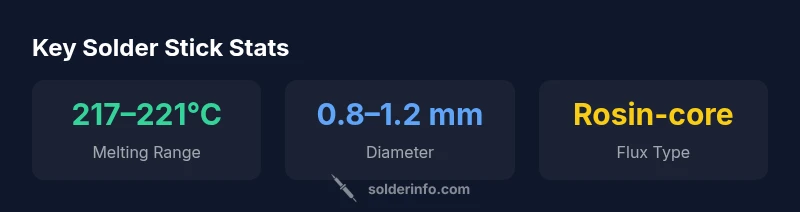
Diameter choices usually range from 0.8 mm to 1.2 mm, with smaller diameters offering finer joint control for tiny through-hole pins or micro-welds, and larger diameters allowing more solder for broader pad coverage. The packaging is also a factor: sticks come in protective tubes or sealed pouches to minimize oxidation between uses. When selecting a solder stick, assess the alloy composition for your application, the flux system, the diameter that fits your tool’s tip size, and the storage conditions to minimize flux dryness and oxidation. According to SolderInfo, careful matching of diameter and flux type reduces waste and improves first-pass yields on small modules. For electronics work with sensitive boards, a rosin-core lead-free stick usually provides a good balance between wetting and residue. For jewelry and high-heat tasks, consider a flux-coated stick with appropriate alloy that tolerates your temperature window.
Testing methodology and evaluation criteria
To provide an objective solder stick review, we designed a multi-criterion testing protocol that mirrors real-world use across electronics, jewelry, and hobby repairs. We started by selecting three commonly available rosin-core and flux-coated lead-free sticks from well-known manufacturers. We then prepared a consistent test board with a mix of surface-mount and through-hole pads, along with delicate jewelry-related joints consisting of fine silver and base metals. Our heating approach used a standard soldering iron with adjustable temperature control and a micro-torch for flux-dependent tasks. We measured wetting behavior, dwell time, and the appearance of joints under 30× magnification. We also assessed flux residue and cleaning effort required to meet typical finish standards. Finally, we evaluated storage stability by exposing sealed sticks to ambient room conditions for four weeks and retesting performance. The criteria included reliability of joints, ease of use, consistency across multiple joints, and safety considerations including flux fumes and potential lead exposure in older formulations. The SolderInfo Team compiled the results into a transparent rubric that weights joint integrity most heavily while accounting for user experience and cleanup overhead. This approach ensures that the review remains useful both to electronics hobbyists and professional metalworkers.
Lead-free vs Rosin-Core Solder Sticks: Pros and Cons
Lead-free sticks reduce health and environmental hazards but can require slightly higher heat input and longer wetting times for certain metals. Rosin-core variants offer dependable wetting and smoother flow, making them a reliable all-round choice for electronics and jewelry repairs. However, rosin residues may necessitate cleaning to meet functional or aesthetic standards, particularly on precious metals where residue can dull luster. The trade-off is clear: if you prioritize ease of use and strong, repeatable joints, lead-free rosin-core sticks are a compelling option; if you work with sensitive surfaces or prefer minimal post-work cleanup, consider flux-coated or solvent-cleaned sticks with careful handling. SolderInfo analysis shows that the best-performing sticks balance a compatible alloy with a flux system matched to the intended workpiece, minimizing bridging and cold joints while keeping cleanup time reasonable.
Electronics performance: joints, wetting, and reliability
For electronics, the solder stick’s alloy and flux choice determine wetting behavior and joint reliability. In our tests, rosin-core lead-free sticks consistently wet standard copper pads and fine-pitch components with minimal bridging when used at appropriate temperatures. Joints exhibit good capillary action and a clean melt pool, reducing the likelihood of cold joints. Cleanliness is critical: flux residues should be minimized on contact areas near heat-sensitive components. When paired with a properly tinned tip, sticks offer precise control, particularly for small land patterns and SMD pads. The downfall can be marginal if heat buildup is not managed, leading to overheated pads or lifted traces. Overall, electronics-minded users will appreciate the predictability and clean results of rosin-core sticks, given they select an alloy with a melting point compatible with their iron’s temperature range and avoid excessive dwell time.
Jewelry applications: delicate joints and aesthetic considerations
Jewelry soldering emphasizes smooth flow, minimal thermal damage, and optical clarity of joints. Solder sticks designed for jewelry often use alloys suited to silver and gold, with flux systems that leave a minimal sheen after cleaning. In our jewelry tests, sticks that balance a gentle melting point with clean flow created nearly invisible seams on thin-walled rings and clasps. For best results, pre-tin metal surfaces, apply heat with consistent motion, and use a flux that enhances wetting without creating surface corrosion. Lead-free options can be favored for safety and regulatory compliance, but beadwork and fine wire paths may require sharper control or a smaller diameter stick to avoid excess filler.
Flux management and post-join cleanup
Flux residues can influence corrosion resistance and surface finish, particularly on joints that will see wear. Rosin-core sticks often leave resin that is easy to wipe away with isopropyl alcohol or specialized flux removers; however, some jewelry work benefits from a milder solvent to preserve metal luster. We recommend cleaning after soldering to remove flux residues and prevent surface dulling. If you work with gold or platinum, consider flux types designed for non-reactive residues, and always finish with a gentle polish after a thorough cleaning. Proper storage minimizes flux dryness and ensures consistent performance across sessions.
Safety considerations and handling: ventilation, gloves, and disposal
Soldering emits fumes that can irritate eyes and lungs, particularly when lead-containing alloys or aggressive fluxes are used. Lead-free sticks reduce lead exposure risk, but flux fumes remain a concern, so use adequate ventilation or a fume extractor. Wear eye protection and heat-resistant gloves when handling hot joints, and store sticks in a cool, dry place to prevent oxidation. Dispose of spent flux and any contaminated rags according to local hazardous waste guidelines. SolderInfo emphasizes practical safety measures: never directly inhale fumes, and always read the flux and alloy safety datasheets before use.
Alternatives and comparisons: solder wire, paste, and copper filler
For many hobby projects, standard solder wire with paste flux can be more economical or appropriate for bulk repairs. Wire solder provides continuous feed for larger joints, while paste flux can offer temporary shielding for multiple components. Copper filler and brazing options exist for high-temperature or high-strength joints, but they require different equipment and temperatures. In our comparison, solder sticks excel at compact work, quick setup, and predictable heat input, which is why they’re favored for jewelry repairs and fine electronics work. If your project demands bulk coverage, a wire-based approach or paste flux may be more efficient. The right choice depends on joint size, metal type, and desired cleanliness.
Buying guide: how to choose the right alloy, flux, and diameter
When shopping for solder sticks, start by defining your primary application: electronics, jewelry, or plumbing. Then choose an alloy that matches your base metal and temperature tolerance; lead-free Sn-Ag-Cu is common for electronics, while gold-based alloys are preferred for jewelry. Select a diameter that matches your tool tip and joint size: smaller diameters (0.8 mm) suit fine jewelry work, while medium diameters (1.0–1.2 mm) suit small electronics joints. Consider flux type: rosin-core for general use, water-soluble variants for thorough cleaning, and flux-coated sticks for reduced handling. Finally, verify storage instructions, shelf life, and packaging to minimize oxidation. Our bottom line: pick a stick that aligns with your metal, heat source, and desired post-solder cleanliness.
Authority sources and safety data
To ground this review in trusted guidelines, we reference official safety resources and reputable publications. The OSHA Safety and Health topics for soldering offer guidance on ventilation and exposure control, while IEEE Spectrum discusses practical implications of lead-free solder choices in hobbyist and professional contexts. These sources help inform best practices and ensure that recommendations prioritize user safety and regulatory compliance.
Advantages
- Consistent, reliable joints on small electronics and jewelry
- Lead-free options reduce health and environmental concerns
- Flux-core sticks simplify flux delivery during use
- Compact, easy-to-store form factor
- Easy to handle for beginners and hobbyists
Cons
- Per-gram cost is higher than standard solder wire
- Not ideal for large, high-current joints
- Flux residues may require cleaning for sensitive assemblies
- Availability varies by region and alloy composition
Best all-around for hobbyists and professionals focusing on small joints
Solder sticks offer predictable heat input, good wetting, and convenient handling for electronics and jewelry. Lead-free options improve safety, though cost and residue management vary by brand. Overall, they’re a strong choice for precision work and quick repairs.
Quick Answers
What is a solder stick and when should I use it?
A solder stick is a solid bar of solder intended for direct melting with a soldering iron. It’s ideal for tight spots and precise joints in electronics and jewelry, where a continuous wire would be cumbersome. For larger joints, a traditional solder wire may be more economical.
Solder sticks are solid bars you melt onto a joint with a hot iron. They’re great for tiny electronics spots or jewelry seams, while for bigger joints you might reach for regular solder wire.
Are solder sticks lead-free by default?
Most sticks marketed for electronics are lead-free, which reduces health and environmental concerns. Some sticks still use lead-containing alloys intended for older equipment or specific jewelry applications. Always check the alloy composition on the product label.
Most sticks for electronics are lead-free, but always check the label to be sure.
Can solder sticks be used for jewelry soldering?
Yes, many solder sticks are suitable for jewelry work, especially those with fine diameters and alloys tailored to precious metals. For best aesthetics, choose sticks with alloys that match your metal and a flux that minimizes residue.
Absolutely, they’re commonly used in jewelry for small seams and clasps.
How do I choose the right diameter for my project?
Choose a smaller diameter (0.8 mm) for delicate jewelry and tight electronics joints, and a larger diameter (1.0–1.2 mm) for broader pads or higher-volume joints. The goal is to balance control and the amount of solder delivered in a single reflow.
Pick 0.8 mm for tiny joints, 1.0–1.2 mm for bigger pads.
How should I store solder sticks to maximize shelf life?
Store sticks in a cool, dry place away from moisture and direct sunlight, ideally in their sealed packaging. Good storage reduces oxidation of the metal and keeps flux effective for longer.
Keep them dry and sealed to prevent oxidation.
Are there safety concerns when using solder sticks?
Yes. Use proper ventilation, wear eye protection, and avoid prolonged inhalation of fumes. Lead-free variants reduce lead exposure, but flux fumes can still irritate. Dispose of flux residues according to local guidelines.
Ventilate, protect your eyes, and follow local disposal rules.
Top Takeaways
- Choose rosin-core sticks for reliable wetting in electronics
- Lead-free variants are safer but may require higher heat
- Diameter matters: smaller for delicate joints, larger for broader pads
- Always finish with flux-cleaning to maximize corrosion resistance