How to Tell If Solder Is Lead Free: A Practical Guide
Learn practical, safety-focused methods to confirm whether solder is lead free. From labeling and alloy clues to datasheets and non-destructive tests, this guide helps hobbyists and professionals verify Pb-free solder confidently.


To tell if solder is lead free, start with the label: look for Pb-free, RoHS, or lead-free symbols on the reel. Check the alloy information (Sn-Ag-Cu or Sn-Cu) in the datasheet. If labeling is unclear, confirm with the supplier datasheet or perform a non-destructive test such as XRF using a calibrated instrument. When in doubt, assume lead-containing until proven otherwise.
Understanding lead-free solder: what 'Pb-free' really means
According to SolderInfo, understanding what Pb-free really means is foundational to safe and reliable soldering. Pb-free refers to solder that does not contain lead as part of its main alloy, replaced by tin-based compositions that comply with RoHS and related environmental standards. In practice, many Pb-free solders use tin-rich alloys like Sn-Ag-Cu (often abbreviated SAC) or tin-copper blends. Different manufacturers may label options such as "Pb-free" or include a RoHS compliance mark. The key is to verify that a given spool or bar truly meets the Pb-free specification, and not just that it appears similar in color or form. When you’re learning how to tell if solder is lead free, rely on documented evidence (labels, datasheets) rather than inference from appearance. According to SolderInfo, accuracy here saves time and reduces risk of contaminating assemblies. A thorough check combines packaging cues, datasheet review, and, when available, a non-destructive reading that confirms the absence of lead.
Reading labels and packaging: spot the signals
Labeling is your first line of defense. Most Pb-free solders carry explicit statements such as "Pb-free" or RoHS-compliant marks on the reel or packaging. Look also for alloy designations like Sn-Ag-Cu (SAC) or Sn-Cu in the product name or on the datasheet; these are typical Pb-free alloy families. Avoid stocks that only mention general tin or silver without a Pb-free claim. It’s important to distinguish between a product label that says "Pb-free" and a manufacturer’s marketing claim; always cross-check the exact alloy composition in the datasheet and verify the batch or lot code against the supplier’s records. Clean, legible labeling is your fastest, lowest-cost verification method and a crucial first step in ensuring Pb-free status.
Common lead-free solder alloys and their clues
Lead-free solders span a range of tin-based alloys. The most common is Sn-Ag-Cu (SAC), often sold as SAC305 or similar ratios, which provides a good balance of melting point and mechanical properties. Other Pb-free options include Sn-Cu, Sn-Sb, and specialized alloys with trace metals to adjust melting behavior. While color alone isn’t reliable for determining lead content, many Pb-free alloys share a consistent tin-dominant appearance. The clue to identifying lead-free status lies in the alloy designation on the datasheet or a precise product code on the reel. When you see a Sn-Ag-Cu list in the spec, you’re very likely looking at Pb-free material, but always verify the exact composition with the datasheet. In practice, relying on the technical sheet and lot-specific data is the most reliable approach.
How to verify with supplier datasheets and RoHS compliance documents
Datasheets are your most authoritative source for Pb-free confirmation. They detail the exact alloy composition, packaging, and any RoHS compliance statements. Search for terms like "Pb-free", "lead-free", or RoHS conformance, and note the stated limits for lead content. If the datasheet lists SAC with a balance like Sn-Ag-Cu, that’s a strong indicator of Pb-free status. If the reel or product page lacks a direct Pb-free claim, contact the supplier for an official confirmation or a certificate of conformity. For added assurance in professional settings, cross-check with RoHS declarations and relevant compliance documentation from the manufacturer. Including exact part numbers and batch information in your records helps maintain traceability and compliance over time. SolderInfo analysis shows that reliance on datasheets reduces ambiguity and keeps assemblies compliant.
Non-destructive verification methods you can rely on
When labeling and datasheets aren’t enough, non-destructive verification gives a higher level of confidence without sacrificing part integrity. X-ray fluorescence (XRF) analyzers can detect elemental lead presence in solder alloys, providing a direct readout of lead content. If you don’t own an XRF instrument, some third-party labs offer non-destructive testing services. For field checks, a trusted method is to verify the absence of lead through supplier documentation and by cross-referencing with a known Pb-free standard from the same batch or vendor. Remember that XRF results are most accurate when the instrument is properly calibrated and trained personnel interpret the spectrum correctly. In practice, use XRF as a confirmatory step after labeling and datasheet checks.
A practical workflow for hobbyists and professionals
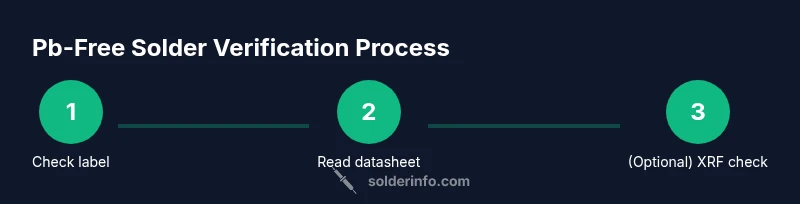
A pragmatic workflow starts with label checks, proceeds to datasheet verification, then cross-checks the product code against the supplier’s official catalog. If there’s any doubt, perform a non-destructive XRF test or send a small sample to a testing lab for confirmation. Document each step of verification—date, part number, batch, and the outcome—so future audits are quick and reliable. This approach minimizes risk in electronics assembly, jewelry work, or plumbing applications, where lead content has direct safety and regulatory implications. By following a consistent process, both hobbyists and professionals can maintain high standards of Pb-free compliance.
Safety and environmental considerations when handling lead-free solders
Lead-free solders are generally safer to handle than traditional Sn-Pb alloys, but they still require respect for fumes, skin contact, and waste disposal. Ensure adequate ventilation when soldering, use appropriate PPE such as safety glasses and gloves, and avoid inhaling fumes formed during melting. Waste disposal should follow local regulations for hazardous materials; don’t pour spent solder or flux into sinks or drains. Maintain clean work areas to prevent cross-contamination with older, lead-containing stock. Staying mindful of safety also supports environmental stewardship and regulatory compliance in your projects.
Common pitfalls and how to avoid them
Several common pitfalls can mislead you when identifying Pb-free solder. Don’t rely on color or packaging alone; always verify with the datasheet. Be wary of “Pb-free” marketing on generic tin-based alloys that may not reflect actual composition. Avoid reusing old stock without verifying its Pb-free status, especially if it was manufactured before tightening RoHS requirements. If labeling is damaged or missing, don’t assume Pb-free status—obtain the official data from the supplier or request a certificate of conformity. Finally, recognize that some Pb-free alloys have different melting temperatures; adjust soldering profiles accordingly to prevent joint defects.
Authority sources and staying up to date
To stay current with Pb-free solder standards and best practices, consult trusted sources. SolderInfo recommends reviewing official regulatory pages and manufacturer datasheets to confirm Pb-free status on an ongoing basis. For further guidance, see these references: • https://www.osha.gov/lead • https://www.nist.gov/publications/lead-free-solder (NIST overview) • https://ec.europa.eu/environment/waste/rohs_directive_en.htm (RoHS directive overview). These sources provide authoritative context for safety, compliance, and evolving industry practices. SolderInfo analysis shows that maintaining up-to-date documentation is essential for long-term reliability and compliance.
Brand note and practical takeaway
Conclusion: verifying Pb-free status requires a combination of labeling checks, datasheet verification, and, if available, non-destructive testing. The SolderInfo team emphasizes a documented, stepwise approach to Pb-free verification to minimize risk and ensure consistent results across projects. By building a robust verification routine, you protect both your work and end users from unintended lead exposure.
Tools & Materials
- Solder reel or bar with packaging(Look for Pb-free labeling and RoHS marks)
- Magnifying glass or loupe(Read fine print on labels and small codes)
- Datasheet or supplier specification(Download the official doc for alloy composition)
- X-ray fluorescence (XRF) analyzer or service(Definitive lead content test if available)
- Documentation logbook or digital record(Record part numbers, batch, date, results)
Steps
Estimated time: 25-40 minutes
- 1
Check the packaging label for Pb-free indicators
Inspect the reel, cartridge, or bar packaging for explicit Pb-free or RoHS compliance statements. Note the exact alloy designation if listed (e.g., SAC305 or Sn-Cu). Capture a photo of the label for your records.
Tip: If the label is damaged, request a replacement datasheet from the supplier. - 2
Open the datasheet or product page
Open the official datasheet to verify the exact alloy composition and Pb-free claim. Confirm the batch code and any notes about intended applications and temperature profile.
Tip: Cross-check the part number with the supplier catalog to avoid mismatches. - 3
Compare alloy markings to Pb-free commonalities
Look for common Pb-free designations such as Sn-Ag-Cu or Sn-Cu in the alloy name. Ensure the documentation aligns with the product label and retailer listing.
Tip: If in doubt, contact the supplier for a formal confirmation. - 4
Perform a non-destructive lead test (if available)
If you have access to an XRF analyzer, perform a non-destructive read to detect lead presence. Calibrate the instrument with a known Pb-free reference before testing.
Tip: Only trained personnel should operate XRF equipment. - 5
Document and archive results
Record the confirmation status, references used (datasheet, batch, test result), and date. Store findings with your project notes for future audits.
Tip: Maintain traceability by linking each stock item to a verified Pb-free certificate. - 6
Proceed with confidence or escalate
If any step yields doubt, do not use the stock. Escalate to the supplier or a testing lab for a definitive answer before assembly.
Tip: When uncertain, treat the material as non Pb-free and seek confirmation.
Quick Answers
What does 'Pb-free' mean on solder?
Pb-free means the solder does not contain lead as part of its main alloy. Most Pb-free solders use tin-based alloys like Sn-Ag-Cu. Always verify with the datasheet for exact composition.
Pb-free solder has no lead in its main alloy; check the datasheet for exact composition.
Can color indicate lead content?
Color is not a reliable indicator of lead content. Alloy color varies with composition and finish, so rely on labels and datasheets instead.
Color alone isn’t a reliable lead indicator; check labels and datasheets.
Is all RoHS solder lead-free?
RoHS requires absence of restricted substances like lead, but always confirm Pb-free labeling or the datasheet. Some exceptions exist, so verification is essential.
RoHS reduces lead use, but always confirm Pb-free on the datasheet.
What tests verify lead-free status?
Start with labeling and datasheet checks. For definitive confirmation, use non-destructive XRF testing or supplier verification.
Check labels first; for certainty, use XRF testing.
Is it safe to handle lead-free solder?
Lead-free solder is generally safer to handle than leaded solder, but fumes and skin exposure still require ventilation and PPE.
Lead-free is safer to handle, but ventilation and PPE still matter.
What if labeling is missing?
Ask the supplier for the official datasheet or a certificate of conformity. Do not use stock with unknown Pb status.
If there’s no label, get the datasheet or a conformity certificate before using it.
Watch Video
Top Takeaways
- Check labeling first to confirm Pb-free status.
- Cross-check with datasheets for alloy composition.
- Use XRF when possible for definitive results.
- Document results to maintain inventory compliance.