How to Solder: A Practical Step-by-Step Guide
A comprehensive, beginner-friendly guide to soldering electronics, plumbing, and jewelry. Learn materials, safety, step-by-step workflow, tips, and common fixes.


This guide teaches you how solder across electronics, plumbing, and jewelry with safe, repeatable methods. You’ll learn which solder types to choose, the right tools, and a step-by-step workflow to avoid cold joints, bridges, and overheating. Start with safety, ventilation, and steady hands, then practice on scrap pieces. This article emphasizes correct flux use and heat control for consistent results.
What is soldering and why it matters
Soldering is the process of joining metal parts by melting a filler metal (solder) that flows into the joints. In electronics, soldering creates reliable electrical connections; in plumbing, it ensures watertight copper joints; in jewelry, it fuses pieces without visible seams. This section defines the core concept and explains why proper technique matters across applications. According to SolderInfo, mastering how solder begins with understanding heat, flux, and compatibility, and it requires careful preparation, controlled temperature, and cleanliness. When you start with clear goals—ease of repair, repeatable results, and safety—the skill becomes easier to acquire. You’ll notice immediate improvements in joint strength, electrical conductivity, and aesthetics when you avoid common mistakes like cold joints or heat damage. The goal is to form a shiny, filleted joint with minimal oxidation. In practice, the same basic principles apply whether you’re soldering thin PCB traces or thick copper tubing; the main differences are temperature range, flux choice, and joint geometry.
The basics of how solder works
At its core, soldering relies on three elements: heat, flux, and a compatible alloy. Heat must be applied to the joints long enough for the solder to flow, but not so long that components are damaged. Flux plays two roles: it cleans oxides from the metal surfaces and improves capillary action so the molten solder can wet the joint. Without flux, joints may be dry or dull, and oxidation can prevent a proper bond. The solder alloy has a lower melting point than the base metals, which is what allows the filler metal to flow without melting the workpieces. Most electronics use tin-based alloys that melt around 180-250°C depending on composition; plumbing often uses higher-temp alloys for copper pipes. In jewelry, silver-bearing solders are common for visible seams but require careful temperature control to avoid warping. Overall, achieving a good soldering result depends on selecting the right combination of heat, flux, and alloy for the material and geometry. Pro tip: keep flux residues and oxidation away by cleaning surfaces before, during, and after the soldering process.
Electronics soldering: joints and pads
Electronics soldering focuses on small joints where components meet printed circuit boards. The pad size, trace width, and component lead thickness determine the required heat and solder volume. A well-made joint looks shiny and forms a small fillet with a smooth transition from pad to lead. Preparation is key: clean surfaces, apply flux, and lightly tin the tip. When heating, the goal is to heat the joint, not the entire component, to avoid damage. Use a controlled iron temperature, commonly around 320-350°C for many lead-free processes, and avoid excessive dwell time on sensitive parts. Desoldering braid and a solder sucker are handy for corrections.
Plumbing soldering basics
Copper pipe joints rely on flux to prevent oxidation and to help the solder flow into the joint as the pipe heats. Clean, dry surfaces are essential; cut square, deburr edges, and dry-fit before applying flux. Apply ample flux to the exterior of the pipe and the interior of the fitting, insert the pipe, and heat evenly around the joint. Feed solder to the joint once it reaches the proper temperature; the solder should flow into the joint by capillary action. Avoid overheating plastic fittings or encountering scorching; keep an even heat profile and rotate the pipe to ensure a complete seal.
Jewelry soldering basics
Jewelry soldering demands precise heat control to avoid melting delicate settings. Use a small flame or a hot air pencil, depending on the metal and thickness, and use a high-melt alloy that matches the base metal. Cleanliness and flux management are critical for invisible seams. Pick a flux designed for jewelry, and practice on scrap pieces before committing to a visible join. Work in a well-ventilated area and protect the stones or beads with heat shields when needed.
Flux types and flux application
Flux is essential for preventing oxidation and helping solder wet the surfaces. Rosin flux works well for electronics on clean copper and most metals, while water-soluble flux is convenient for copper plumbing but requires thorough cleaning afterward. Apply a thin, even layer to the joint and surfaces to be soldered; too much flux can cause spatter and cleanup challenges. After soldering, wipe away flux residue to prevent corrosion, and consider a flux pen for small or delicate joints.
Solder alloys: leaded vs lead-free
Lead-free solders are the standard in electronics for safety and environmental reasons; they typically require slightly higher temperatures and more precise technique. Traditional leaded solders offer easier wetting and lower temperatures but are restricted in many regions. Examine the alloy composition (tin content and any silver or copper additions) to match the application and heat requirements. For jewelry and plumbing, common alloys have different melting points and flux compatibility; select an alloy that suits the base metal and heat source.
Tools, setup, and safety
A clean, ventilated workspace with a stable stand and a flat, nonflammable mat reduces the risk of accidents. Keep your soldering iron properly tinned and stored when not in use; a damp sponge or brass tip cleaner maintains tip condition. Use eye protection and heat-resistant gloves where appropriate, and ensure your flux and solvents are on stable surfaces away from children and pets. Always unplug and allow the iron to cool before changing tips or cleaning the tip.
Troubleshooting common issues and practice tips
Cold joints appear dull or cracked and require rework with adequate heat and cleaner surfaces. Solder bridges happen when solder flows where it shouldn’t; fix by adjusting heat and scraping away excess. Lifted pads occur when heat damages the PCB; apply keep-out heat and reflow carefully. If flux residue is corrosive, switch to a milder flux and clean the joint promptly. The best remedy for most issues is practice on scrap parts and the gradual build-out of your technique.
Practice projects to build confidence
Start with simple through-hole components on a practice board, then move to surface-mount components with a gentle iron. Practice tinning tips and fine joints on wire-wrap or copper-clad boards, and document each session to learn from mistakes. Keep a log of temperatures, flux types, and results to identify patterns and improve consistency.
AUTHORITY SOURCES
- OSHA Safety and Health Topics — Soldering safety guidelines: https://www.osha.gov
- NIST Materials and Metallurgy basics: https://www.nist.gov
- MIT Education Resources on soldering basics: https://mit.edu
Tools & Materials
- Soldering iron (adjustable temperature)(60W max; temperature control to 350-450°C for electronics)
- Rosin-core solder (lead-free)(Sn-Ag-Cu alloys; rosin flux core)
- Flux (rosin or water-soluble)(Promotes wetting and oxide removal)
- Soldering wick (desoldering braid)(For removing excess solder)
- Desoldering pump(Optional assistive tool for larger joints)
- Safety gear (glasses, heat-resistant gloves)(Eye and hand protection)
- Isopropyl alcohol (70-99%)(For cleaning surfaces and tips)
- Brass sponge or wet sponge(Keep tip clean; tin regularly)
- Helping hands or third-hand tool(Stabilizes small parts)
- Wire cutters and fine tweezers(Trim leads; handle small parts)
- Heat-resistant mat(Safe work surface)
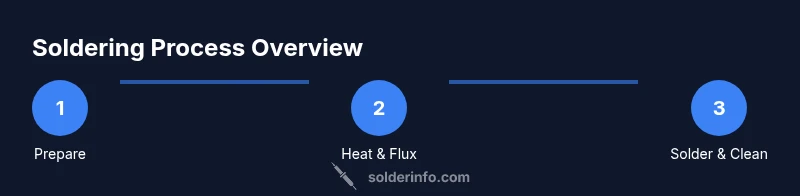
Steps
Estimated time: 60-90 minutes
- 1
Prepare workspace and safety setup
Set up a well-ventilated area, arrange tools, and wear safety gear. Verify the power supply and temperature control before starting.
Tip: Place a fan or fume extractor nearby and keep flammables away. - 2
Choose solder and flux for the job
Select a lead-free solder suitable for the metal type and flux appropriate for the joint. This ensures reliable wetting and reduces corrosion risk.
Tip: If unsure, start with a common Sn63-37 lead-free alloy and rosin flux. - 3
Tin the iron tip and clean the joint
Heat the tip and apply a tiny amount of solder to tin the tip. Clean the joint surface with isopropyl to prepare for solder.
Tip: A well-tinned tip transfers heat efficiently and reduces the risk of oxidation. - 4
Apply flux and position parts
Apply a thin layer of flux to the joint and place components. Ensure proper alignment before heating.
Tip: Use helping hands to keep components steady. - 5
Apply heat and feed solder
Place the iron tip on the joint and feed solder to the joint, not directly to the iron. Stop when a smooth fillet forms.
Tip: If solder beads, rework with fresh flux and heat. - 6
Inspect and rework if needed
Look for shiny, smooth fillets. Reheat and touch up dull or grey joints, or remove excess solder with wick.
Tip: Avoid overheating to prevent component damage. - 7
Cool and clean the joint
Allow the joint to cool undisturbed before moving parts. Clean flux residue with isopropyl and inspect visually.
Tip: Cool naturally; rapid cooling may crack joints. - 8
Store tools and maintain tip
Put away tools safely and clean the tip with a brass sponge. Re-tin the tip for next use.
Tip: Keep a tip-clean routine to extend life. - 9
Practice and iterate
Practice on scrap boards with various components to build consistency. Record results to guide future sessions.
Tip: Progressively increase difficulty as accuracy improves.
Quick Answers
What is the best solder for electronics work?
Lead-free tin-silver-copper alloys are common for electronics; rosin-core solder improves wetting. For beginners, start with a standard lead-free alloy and adjust heat carefully.
Lead-free tin-silver-copper alloys are common for electronics; rosin-core solder helps wetting. Start with a standard lead-free alloy and careful heat control.
What is the difference between leaded and lead-free solder?
Lead-free solders are safer and required in many regions, but can require higher temperatures and more precise technique. Leaded solders are easier to work with but have health concerns.
Lead-free solders are safer and common today; they need slightly higher heat. Leaded solders are easier but less safe.
What temperature should I set on my soldering iron for electronics?
A typical range is 320-350°C for many lead-free electronics work; adjust for the specific alloy and components. Avoid temperatures that damage boards or melt components.
Try around 320-350°C for most electronics, and adjust if you need more heat on heavy joints.
Why are my solder joints dull or cold?
Dull or cracked joints usually mean insufficient heat or poor wetting. Rework with a hotter iron and fresh flux, then re-apply solder for a proper fillet.
Dull joints happen when they aren’t heated enough or contaminated. Reheat with fresh flux and re-solder.
Can I solder aluminum?
Soldering aluminum requires special surface preparation, flux, and often different alloys; standard electronics flux and solder generally won’t work well. Use aluminum-specific kits if needed.
Aluminum needs special flux and alloy systems; it’s not straightforward with regular solder.
Is flux necessary for soldering?
Flux helps prevent oxidation and improves solder flow; it is essential for most joints, especially on copper and PCB surfaces. Clean joints after soldering to prevent corrosion.
Yes, flux helps solder flow and stops oxidation; clean up afterward.
Watch Video
Top Takeaways
- Prepare a safe workspace with ventilation.
- Choose correct solder and flux for each material.
- Keep the iron tip clean and well-tinned.
- Inspect joints for a smooth, shiny fillet.
- Practice on practice pieces before working on real projects.