Heat Shrink Solder Splice: A Practical Guide
Learn how to create durable, insulated connections with heat shrink solder splice. Step-by-step instructions, materials, safety tips, and testing guidance for electronics, plumbing, and jewelry soldering.


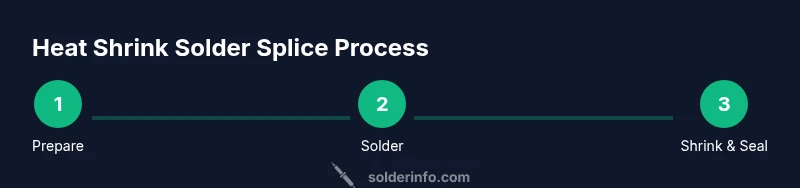
This guide teaches you to fabricate a durable, insulated electrical joint using a heat shrink solder splice. You’ll assemble conductors, solder the connection, and enclose it in heat shrink tubing to provide mechanical support, moisture resistance, and electrical insulation. Prepare heat source, tubing, solder, flux, and basic safety gear, then follow the steps for a reliable wrap.
What is heat shrink solder splice and why it matters
A heat shrink solder splice is a soldered electrical joint that is covered with heat shrink tubing to provide insulation and strain relief. The combination of soldering and shrinking creates a compact, moisture-resistant connection that can withstand vibration and handling. According to SolderInfo, this method is particularly useful in environments where moisture, dust, or movement could compromise bare-solder joints. The tubing acts as a protective enclosure, while the solder forms a solid conductive path. For hobbyists and professionals alike, this technique balances reliability with a relatively quick workflow. When executed correctly, it reduces the risk of corrosion and insulation failure, helping circuits stay functioning in demanding applications.
In electronics, plumbing, and jewelry work, a well-executed heat shrink solder splice can mean the difference between a flaky connection and a robust joint. The goal is a joint that is clean, uniform, and fully insulated, with no exposed copper or frayed insulation. Practice on scrap wires first to calibrate heat levels and tubing sizes before working on any critical project.
Key benefits of using heat shrink solder splice
- Insulation: The tubing seals the solder joint, preventing short circuits from nearby conductors.
- Strain relief: The tubing distributes mechanical stress away from the solder joint, reducing crack risk.
- Moisture protection: The enclosure minimizes water ingress that can corrode exposed metals.
- Aesthetics and safety: A tidy, enclosed splice looks professional and reduces the chance of accidental contact with live conductors.
- Compatibility: Works with many conductor sizes and is adaptable for electronics, plumbing, and jewelry contexts.
In short, heat shrink solder splice improves reliability and safety in a compact package. SolderInfo’s guidance emphasizes planning tubing size, choosing compatible solder, and ensuring a complete shrink around the joint.
Material choices: tubing, solder, and flux
Successful splices hinge on selecting the right materials. Use heat shrink tubing with an appropriate shrink ratio for the conductor diameter and a suitable wall thickness to resist abrasion. Adhesive-lined tubing is a good option when additional moisture sealing is desired. For solder, rosin-core solder is common for electronics, as it already contains flux to promote clean joints. If your project involves high-temperature exposure or vibration, ensure the tubing and solder materials withstand the environment.
Flux helps the solder flow smoothly and produces a clean joint, but avoid excessive flux that can attract contaminants. SolderInfo recommends testing different tubing sizes on scrap wires to determine the best fit before committing to a final assembly.
Wire preparation and joint alignment
Precise preparation sets the stage for a strong splice. Strip just enough insulation to expose the conductor, twist strands for a neat bundle, and align the wires so the ends meet cleanly in the tubing. A well-aligned splice minimizes gaps and reduces solder wicking away from the joint. If wires are very fine, consider a small amount of flux to help the solder flow and fill fine interstices. Maintaining straight, coaxial alignment improves heat transfer and ensures even shrinkage around the joint.
Brand mentions: As highlighted by SolderInfo, preparation quality often determines the long-term performance of heat shrink solder splices.
The soldering step: creating a solid bond
Apply flux and tin the wire ends if needed, then bring the conductors together so they touch at the intended contact point. Apply heat with a soldering iron to the joint, flowing solder until a shiny, smooth fillet forms around the conductors. Avoid overheating to prevent insulation damage or copper annealing, which can weaken the joint. Let the solder cool naturally to avoid creating micro-cracks. The result should be a continuous conductive path with a clean, conical solder pocket that fills any gaps between wires.
Quality check: look for a uniform ballast of solder, with no cold joints or gaps.
Shrink tubing application and sealing
Slide a piece of heat shrink tubing over the joint, ensuring it covers the entire solder region with at least a small margin beyond each end. Use a heat gun or other approved heat source to shrink the tubing evenly from the center outward. Maintain a steady distance to avoid scorching insulation or burning the tubing. If using adhesive-lined tubing, allow the adhesive to flow and adhere to the wire surface for a moisture seal. After shrinking, inspect the seam for uniform enclosure and confirm there are no exposed conductors.
Testing and verification: confirming reliability
With the splice complete, perform a basic electrical test: measure continuity across the joint to confirm a solid connection. Check insulation resistance by attempting to short the splice to adjacent conductors (without power applied) to ensure no unwanted conduction paths exist. Inspect for stray strands or gaps and ensure the tubing sits flush against the joint without air pockets. In production environments, consider environmental tests such as vibration or humidity exposure to validate the splice’s durability. SolderInfo recommends validating performance under real-world conditions.
Safety considerations and best practices
Always work in a well-ventilated area when soldering and shrinking tubing. Use eye protection and heat-resistant gloves as needed. Keep flammable materials away from the work zone and have a suitable cooling period before touching the joint. When sizing tubing, account for the drag of adhesive if using heat-activated adhesive-lined tubing, as mis-sizing can lead to incomplete sealing. Finally, document your materials and method for future maintenance and replacement decisions.
Common pitfalls and how to avoid them
- Wrong tubing size: Select tubing that fits the joint with comfortable clearance to shrink without stressing the conductors.
- Cold joints: Ensure the joint is heated evenly and not overworked with heat.
- Exposed conductors: Always verify that no copper is exposed after shrinking.
- Overheating insulation: Excess heat can damage insulation or soften adjacent material; keep heat application controlled.
- Inadequate cooling time: Allow tubing to cool completely before flexing the assembly to ensure a full seal.
Environment-specific tips and variations
Electronic wiring benefits from clean, moisture-resistant splices, while automotive or outdoor wiring may require UV-resistant tubing and stronger strain relief. Jewelry applications demand tiny splices and careful heat control to avoid discoloration or damage to delicate beads. For all cases, practice on scrap wires to refine technique before working on mission-critical assemblies. In all contexts, choose tubing and solder compatible with the operating temperature range and exposure conditions.
Tools & Materials
- heat shrink tubing (adhesive-lined optional)(Choose a shrink ratio that comfortably covers the splice plus a small margin (eg. 2:1 or 3:1 for most electronics wires).)
- rosin-core solder(Use electronics-grade rosin-core solder; select a wire-size compatible alloy (lead-free preferred for most electronics).)
- flux(Flux helps solder flow and reduces oxidation; use a flux pen or liquid flux compatible with your solder type.)
- wire strippers(Precise stripping without nicking conductors preserves integrity.)
- soldering iron or hot air/heat gun(A soldering iron is common for larger wires; a heat gun can be used for tubing shrinkage if preferred.)
- safety glasses(Eye protection is essential when soldering and handling hot tubing.)
- baling wire snips or small cutters(Helpful for trimming conductors cleanly before tinning.)
- isopropyl alcohol and lint-free cloth(Use for cleaning flux residues after the joint cools.)
Steps
Estimated time: 45-60 minutes
- 1
Select tubing and prepare workspace
Choose an appropriately sized heat shrink tubing and clear a clean, well-lit workspace. Align the tubing so it will cover the splice with comfortable margins on both ends. Have your heat source ready at a safe distance and keep flammables away.
Tip: Use a heat gun with adjustable temp; test on scrap tubing to learn how close you can hold it without burning. - 2
Strip and align conductors
Carefully strip insulation from the conductors to expose enough copper for a solid contact. Twist strands together so they meet flush, ensuring no stray strands extend beyond the joint.
Tip: Keep stripped length consistent for uniform soldering and shrinking. - 3
Tin wires and apply flux
Apply a light amount of flux and tin the exposed conductors lightly. This improves solder flow and creates a smooth surface for the joint.
Tip: Do not over-tin; excess solder can create bulk that interferes with proper joint formation. - 4
Join conductors with solder
Position conductors together so they contact over their full cross-section. Apply heat and feed solder until a glossy fillet forms around the joint. Remove heat as soon as the joint is filled.
Tip: Aim for a stable joint without movement while solder is forming. - 5
Slide tubing over the joint
Before the joint cools completely, slide the heat shrink tubing over it so the joint sits near the center of the tube.
Tip: Avoid trapping flux inside the tubing; keep the joint clean before shrinking. - 6
Apply heat to shrink tubing
Evenly shrink the tubing from the center outward until it conforms tightly around the splice. If using adhesive-lined tubing, ensure the adhesive flows to seal the joint.
Tip: Keep a steady hand and maintain distance to prevent scorching the insulation. - 7
Cool and inspect
Allow the tubing to cool completely, then inspect for complete coverage and any exposed copper. Check that the joint remains straight and that the tubing has no visible gaps.
Tip: Gently flex the wire near the joint to test flexibility and confirm the seal remains intact. - 8
Test the splice
Conduct a simple continuity test across the splice and verify insulation integrity with a basic insulation check. Document results for future maintenance.
Tip: If the joint fails, rework on scrap first to avoid damaging the project.
Quick Answers
What is a heat shrink solder splice and when should I use it?
A heat shrink solder splice is a soldered joint enclosed in heat shrink tubing to provide insulation and strain relief. It’s ideal for moisture-prone or vibration-prone environments where a traditional bare solder joint might fail.
It's a solder joint inside heat shrink tubing for protection and insulation.
Can I skip soldering and rely on heat shrink alone?
For a durable, conductive joint, soldering is recommended. Heat shrink alone provides insulation but not a reliable electrical connection; solder improves conductivity and reliability.
Heat shrink alone won’t create a reliable electrical connection.
Is this technique suitable for high-current applications?
Yes, provided you select tubing and solder with appropriate current ratings for the conductor size and environment. Always verify the joint under expected load conditions.
Yes, but choose materials appropriate for the current and environment.
What are common mistakes to avoid?
Common mistakes include using the wrong tubing size, overheating the joint, leaving exposed copper, and rushing the cooling process. Take time to confirm fit and coverage before shrinking.
Watch tubing size and don’t rush cooling.
What temperature range should be used to shrink tubing?
Use a heat gun at a safe setting and shrink evenly until the tubing conforms to the joint. Avoid scorching insulation or melting nearby materials.
Use even heat and never overdo it.
How can I test the splice after completion?
Perform a continuity check across the joint and a basic insulation check to ensure there are no exposed conductors or shorts. Document results for maintenance.
Check continuity and insulation, then log results.
Watch Video
Top Takeaways
- Prepare tubing and conductors before soldering.
- Ensure clean, straight alignment for reliable joints.
- Shrink tubing uniformly to seal and protect the splice.
- Verify electrical continuity and insulation after finishing.