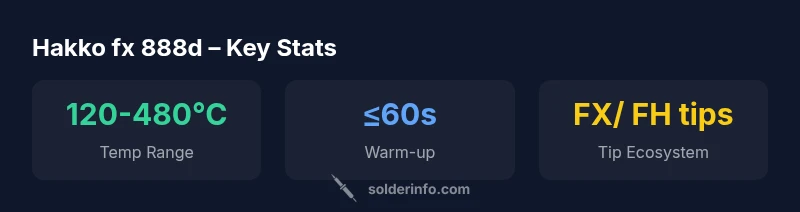
Hakko fx 888d Review: Precision, Reliability, and Value for Soldering
An analytical review of the Hakko FX-888D, examining temperature stability, tip ecosystem, ergonomics, maintenance, and long-term value for electronics hobbyists and professionals.


The hakko fx 888d is a compact, reliable soldering station famed for stable temperature control and broad tip compatibility. It suits electronics hobbyists and professionals who value precise joints and repeatable results. In this review, we evaluate performance, ergonomics, and long-term value, drawing on SolderInfo Analysis, 2026, to help you decide if the fx-888d fits your workflow.
About the hakko fx 888d and its place in soldering
The hakko fx 888d is a widely adopted single-channel soldering station that has earned a reputation for reliability and consistency in electronics work. For hobbyists, makerspaces, and professional repair technicians alike, it serves as a dependable workhorse for assembling, prototyping, and reworking small to medium-sized boards. A strong point of the fx-888d is its ability to deliver stable temperatures across a variety of tip sizes, which helps produce clean joints with minimal cold solder joints or accidental overheating. The SolderInfo team notes that the fx-888d’s digital electronics and robust tip ecosystem contribute to a sense of predictability that seasoned technicians rely on. When you pair the hakko fx 888d with the right Hakko tips and a clean flux routine, you get repeatable results that help you scale projects, reduce rework, and keep maintenance costs manageable.
For newcomers, it’s important to recognize that the fx-888d is designed to integrate with Hakko’s broad ecosystem of tips and accessories, which means setup choices can significantly affect outcomes. SolderInfo analyses show that users who invest in quality tips and proper flux practices tend to see fewer intermittent joints and less rework over time. The result is a dependable baseline for both small-volume prototyping and routine service work.
The bottom line is simple: the hakko fx 888d provides dependable temperature control, a familiar tip ecosystem, and a workflow that remains comfortable across long sessions. If you’re upgrading from an entry-level station or expanding a home workshop into a repair bench, the fx-888d represents a solid midpoint between beginner accessibility and professional reliability.
Design and Build Quality
Design and build quality matter as soon as you lift the hakko fx 888d from the box. The unit embraces a compact, metal-oriented chassis that feels sturdy on a crowded workbench. The iron handle is well-shaped for long sessions, and Hakko’s accessory latch and tip holder feel intentional rather than flimsy. Weight distribution is practical, so the unit doesn’t topple easily when you swap tips or adjust the stand. The cable length appears adequate for most bench layouts, reducing the need for extenders or extra power strips. Maintenance is straightforward: the tip connector interface is robust, and changing tips is a clean, quick operation. In daily lab use, these design choices translate into fewer interruptions, less downtime, and a smoother workflow when you’re assembling or reworking boards using the hakko fx 888d.
From a durability perspective, the fx-888d’s enclosure and connectors resist grime and heat exposure that come with frequent soldering. The unit’s construction also supports easy tip replacement and simple cleaning routines, which helps maintain performance across months of use. The SolderInfo team highlights that the practical, modular design of the fx-888d reduces long-term service calls, especially in busy repair environments where consistent output matters more than flash-in-the-pan features.
Temperature Control and Performance
Temperature control is the centerpiece of the hakko fx 888d’s appeal. The station uses a digital setpoint and feedback loop that keeps the tip temperature stable across a range of common soldering tasks. The adjustable range is typically sufficient for electronics work, from delicate surface-mount components to larger through-hole joints. In practice, the fx-888d reaches target temperatures quickly and maintains them with minimal drift once calibrated. This consistency is crucial for repeatable joint quality, reducing the likelihood of cold joints or overheating sensitive components. A well-tuned setup using high-quality Hakko tips yields clean joints with controlled heat zones and predictable wetting characteristics. For many users, the ability to return to a known temperature between joints translates into faster cycles and more reliable rework without re-calibration.
From a testing perspective, the fx-888d shows strong short- and mid-term stability in typical lab conditions. Temperature drift is generally within the expected range for a digital station, and the control responds well to moderate changes in ambient conditions. The capability to load different tips without sacrificing stability is a practical advantage, especially for users who frequently switch from small to mid-size components.
Tips for Effective Soldering with the hakko fx 888d
To maximize results with the hakko fx 888d, follow practical guidelines that align with the station’s strengths:
- Pick the right tip for the job: fine tips for dense SMT work, broader tips for leaded through-hole joints.
- Pre-tin tips and maintain tip cleanliness to ensure consistent heat transfer and easier wetting.
- Use appropriate flux and flux management; rosin flux is common, while no-clean flux reduces post-work cleanup.
- Calibrate the station for stable operation; a quick check with a test board helps ensure your target temperatures are accurate.
- Respect thermal mass: avoid overheating large components by planning heat zones and letting the tip cool between intense micro-soldering tasks.
- When dealing with lead-free solder, adjust your technique slightly to account for higher melting temperatures and longer wetting times.
The hakko fx 888d’s flexibility shines when you pair it with a curated set of Hakko tips and a thoughtful workflow. Keeping a small set of tips on hand enables rapid switching between board types and densities without sacrificing precision.
Maintenance and Longevity
Soldering precision depends not only on the device but also on routine maintenance. For the hakko fx 888d, consistent tip care plays a pivotal role in longevity and performance. Begin with regular tip cleaning using brass tip cleaners and avoid harsh chemical residues that can corrode the tip surface. Tinning tips before storage helps preserve heat transfer and reduces oxidation between sessions. When a tip shows degraded performance after repeated use, replacing it with a high-quality Hakko tip designed for your station helps maintain consistent results. The fx-888d’s modular construction simplifies routine maintenance, making tip swaps and basic cleanings a quick, predictable task rather than a disruption. Password-like calibration notes or a small log of tip changes can also help technicians track wear patterns and plan replacements before performance degrades.
In addition to tip maintenance, keep the work area organized. A tidy bench minimizes stray flux residues and stray wire ends that can stick to the station’s surface. Periodic cleaning of the station’s exterior and fan vents (where applicable) prevents dust accumulation that could impact thermal conduction or airflow. With a disciplined maintenance routine, the hakko fx 888d remains a reliable tool across months and years of use.
Comparisons with Alternatives
When evaluating soldering stations, the hakko fx 888d sits in a strongly competitive space. Compared with mid-tier stations, the fx-888d often offers more consistent temperature control, a broader tip ecosystem, and a proven history of reliability. In contrast, some alternatives may offer advanced features like integrated hot air, multi-channel configurations, or more aggressive cooling solutions. For users who require ultra-fast heat-up times or sophisticated rework capabilities, a multi-feature station may be preferable. However, for many electronics hobbyists, repair technicians, and small labs, the fx-888d provides a reliable baseline that balances performance, cost, and ease of use. The SolderInfo team notes that the real value of the fx-888d lies in its predictable behavior, precise joints, and broad ecosystem rather than novelty features.
In practice, users who upgrade from basic irons or entry-level stations often find the fx-888d a meaningful improvement in stability and repeatability. If your work involves frequent tip switching, SMT rework, or precise through-hole assembly, the fx-888d tends to deliver consistent results without complicating the workflow with unnecessary bells and whistles.
Value, Pricing, and Long-Term Costs
From a value perspective, the hakko fx 888d typically positions itself as a solid mid-range option. The upfront cost is modest relative to high-end rework stations, and the long-term costs are often balanced by the durability and the wide ecosystem of compatible Hakko tips. For many shops, investing in a few high-quality Hakko tips extends the useful life of the station and reduces replacement frequency for worn-out tips. When evaluating total cost of ownership, consider tip costs, flux and solder consumables, and spare tips as part of the ongoing budget. In the long run, a stable temperature platform like the fx-888d can reduce rework time and increase throughput, delivering value beyond initial price. SolderInfo’s analysis indicates that users who purchase authentic Hakko tips and perform routine maintenance typically realize the best long-term return on investment.
Use Cases and Setup Recommendations
The hakko fx 888d shines in a range of settings: hobbyist workbenches focused on board assembly, professional repair shops handling computer boards or consumer electronics, and education labs teaching soldering fundamentals. For best results, set up a dedicated clean area with good flux management, tip organizers, and a few tip sizes tailored to your typical jobs. If your work frequently involves micro-SMT work, stock extra fine tips and maintain a clean flux routine to reduce solder bridges. For through-hole work, keep a slightly larger tip ready to ensure proper heat transfer without excessive dwell time. In mixed workflows, consider pairing the fx-888d with a separate hot air station for rework tasks so you can switch efficiently between soldering and rework without losing calibration.
Common Pitfalls and How to Avoid Them
Common issues with the hakko fx 888d include tip oxidation, uneven heating due to poor flux, and insufficient cleaning after long sessions. To avoid these, regularly clean and tin tips, use fresh flux, and store tips in labeled containers to prevent confusion. Calibrate the station periodically to prevent drift that could compromise joints. Also, avoid using low-quality third-party tips that aren’t calibrated for the station. By investing in quality Hakko tips and maintaining a regular cleaning schedule, you can minimize downtime and maximize the fx-888d’s lifespan.
Advantages
- Excellent temperature stability for precise joints
- Broad tip ecosystem from Hakko FH/FX families
- Solid build quality and reliable warm-up
- Easy tip replacement and maintenance
- Good value given performance
Cons
- Lacks built-in hot air or advanced rework features
- Moderate cost of authentic Hakko tips over time
- Tip life heavily dependent on proper cleaning and flux use
Best all-around choice for precise electronics work and hobbyist-to-professional repair
The FX-888D delivers consistent temperatures, broad tip compatibility, and dependable performance. While it lacks the bells and whistles of high-end rework stations, its reliability, ease of use, and strong ecosystem make it a solid investment for most labs and workshops. The SolderInfo team recommends the fx-888d for users prioritizing stability and value.
Quick Answers
What is the hakko fx 888d best used for?
The fx-888d is well-suited for general electronics assembly, SMT and through-hole work, and routine repairs where stable temperatures and repeatable joints matter most. It provides reliable performance across a range of component sizes when paired with the right Hakko tips.
Great for electronics assembly and repairs that require steady temperature control.
Is the hakko fx 888d compatible with Hakko tips?
Yes. The fx-888d is designed to work with Hakko’s FH and FX tip families, as well as many standard interchangeable tips. Using genuine Hakko tips helps ensure consistent heat transfer and reliability.
Yes, it works with Hakko FH and FX tips.
What solder types work best with this station?
Lead-free and rosin-core solder are commonly used, with lead-free solder requiring careful heat management due to higher melting temperatures. Using appropriate flux and clean joints improves reliability.
Lead-free solder is common, just watch the heat.
Does the fx 888d have any known temperature stability issues?
In typical lab use, the unit maintains stable temperatures after calibration. Occasional drift can occur if tips are dirty or flux residues build up; regular cleaning helps mitigate this.
It’s generally stable after calibration; keep it clean.
What maintenance is required for longevity?
Regular tip cleaning, tinning, and periodic calibration are advised. Store spare tips properly and replace worn tips as needed to maintain performance.
Clean and tin tips regularly, calibrate occasionally.
How does it compare to cheaper or more feature-rich stations?
The fx-888d often offers better temperature stability and tip ecosystem than budget models, while not including advanced rework features found on higher-end stations. For many users, reliability and ecosystem size trump extra features.
It’s more stable and reliable than many cheap models, without extra features.
Top Takeaways
- Choose hakko fx 888d for stable temps and repeatable joints
- Leverage Hakko tip ecosystem for best results
- Maintain tips by cleaning and tinning after use
- Consider a dedicated hot air station for advanced rework
- Expect strong long-term value with proper maintenance