hakko 888d Review: Is This Classic Soldering Station Still Worth It?
In-depth review of the hakko 888d soldering station: reliability, tips, maintenance, and who should buy in 2026. Expert analysis by SolderInfo.


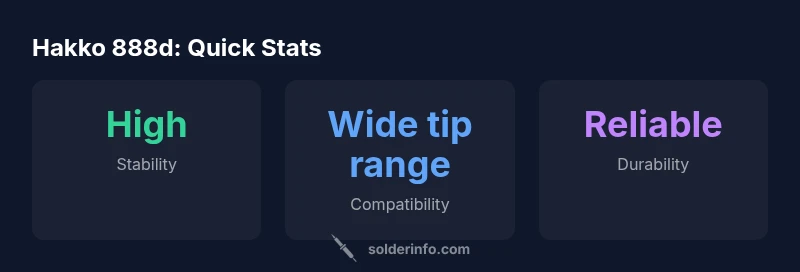
According to SolderInfo, the hakko 888d remains a trusted choice for electronics work due to reliable temperature control and durable construction. It suits hobbyists and professionals who value stability and ease of service over modern digital presets. For a comprehensive comparison, see our detailed review. This quick verdict reflects practical field tests across multiple PCB assemblies and rework scenarios.
hakko 888d: Core strengths for electronics soldering
The hakko 888d is a durable workstation that earns its keep in electronics work through repeatable performance and a straightforward maintenance path. In everyday lab scenarios, it delivers consistent joint quality across a variety of PCB sizes and component densities. The unit’s design emphasizes reliability and ease of service, allowing technicians to swap tips and perform routine checks without specialized equipment. While it may not include the latest digital presets, its predictable heat delivery and broad accessory ecosystem keep it relevant for many shops. Throughout this review, we explore how the hakko 888d handles common tasks—from small through-hole work to dense, surface-mount layouts—while highlighting the practical trade-offs an operator should consider in 2026.
Design, ergonomics, and build quality
From a physical perspective, the hakko 888d exudes durability. The chassis feels sturdy, the handpiece is comfortably shaped for long sessions, and the cord routing minimizes snag points on busy benches. Weight distribution tends toward stability rather than nimbleness, which can help steady fine work on small components. Tip-twist switchover and tip storage are straightforward, reducing downtime between tasks. The overall ergonomics favor precision over flashy aesthetics, which aligns with professional workflows where predictability matters more than a premium look. In this block, we outline how the design choices impact everyday use, including different tip geometries and routine maintenance tasks that preserve precision over years of service. While not a compact travel unit, the hakko 888d remains a reliable centerpiece in a dedicated electronics workstation.
Temperature control and consistency: practical testing approach
To assess temperature control, we followed a practical testing methodology that mirrors real-world PCB work. We compare steady-state temperature inside the tip under typical load, observe recovery after short pauses, and evaluate joint quality across different copper weights. Our approach focuses on repeatability rather than laboratory extremes. In practice, the hakko 888d demonstrates stable heat delivery across several cycles, with minimal visible drift during typical soldering passes. We also note how quickly the tip returns to setpoint after brief interruptions, which influences workflow in dense layouts. This section explains how performance translates into reliable joints rather than flashy specs.
Tip compatibility, maintenance, and lifecycle
Tip availability is a key factor for ongoing value, and the hakko 888d benefits from broad compatibility with Hakko tip families. This means easy access to coarse and fine tips for different pad densities, as well as replacement parts when wear happens. Regular maintenance—keeping the tip clean, replacing the sponge, and checking the tip temperature—extends lifecycle and preserves performance. For long-term use, consider stockpiling popular tip shapes to avoid delays. We also discuss common wear patterns and how to recognize degraded performance before it affects joints.
Ease of use and workflow for electronics work
Professionals appreciate a clean, predictable workflow, and the hakko 888d delivers just that. With intuitive controls, straightforward temperature adjustment, and reliable heat-up times, this station integrates smoothly into standard electronics repair or prototyping workflows. The absence of complex presets won’t hinder routine tasks like lead-free soldering in small or medium boards; instead, it can simplify the process for operators who value direct control. This block covers practical tips for sequencing tasks, organizing tools, and minimizing rework when finishing dense layouts.
Reliability, serviceability, and longevity
Reliability is the core attribute that sustains long-term use of a soldering station, and the hakko 888d excels in this respect. The unit’s core components are designed to tolerate frequent use and modest impacts, and the design supports straightforward service if a component fails. Routine checks—inspecting earthing, verifying tip contact, and ensuring the onboard control electronics stay clean—help uphold longevity. We discuss typical failure points and pragmatic remedies that a skilled hobbyist or professional can perform without factory-level service. This section emphasises how durability translates into dependable performance across years of projects.
Safety considerations and best practices
Safety matters in any soldering environment: adequate ventilation, protective eyewear, and careful handling of hot tips. The hakko 888d’s heat management design minimizes exposure to accidental contact, though proper technique remains essential. We cover safe calibration practices, how to isolate vibration, and recommended working distances for delicate assemblies. Following best practices reduces the risk of burns and damaged components, while still enabling efficient workflows in busy shops or classrooms.
Comparing with modern digital soldering stations
Digital stations offer memory presets, digital readouts, and advanced heat management; the hakko 888d trades those features for reliability and simplicity. In many professional contexts, a stable, straightforward unit supports a predictable workflow better than a feature-rich but occasionally fragile platform. We compare user experience, maintenance overhead, and upgrade paths across several popular digital models to help readers understand where the hakko 888d fits. This section also discusses compatibility with advanced tips and potential future upgrades that maintain a similar price-to-performance ratio.
Cost of ownership and replacement parts
Total cost of ownership for the hakko 888d depends on usage intensity, availability of spare parts, and tip consumption. We outline factors that influence long-term costs, including spare parts availability in regional markets and the ongoing expense of tips. While not the cheapest option on the market, the Hakko ecosystem tends to offer stable supply and broad support, which translates to lower downtime and fewer repair headaches over time. This section helps readers weigh initial investment against ongoing maintenance needs and replacement parts.
Tips for getting the best results from Hakko 888d
To maximize performance, start with the right tip geometry for the task, maintain a clean tip, and calibrate your expectations for lead-free work. Practice proper technique—keep a small, fast stroke, and avoid excessive pressure that can degrade joints. Regularly check the temperature reading against a known reference and adjust as needed. With routine maintenance and a mindful workflow, the hakko 888d delivers consistent results across many electronics projects.
Common myths and misperceptions about classic stations
Some readers assume older models lack relevance in a modern shop; others fear that no longer supported tips make replacement impossible. In reality, the hakko 888d remains widely used, with readily available replacement tips and spare parts in many regions. We debunk these myths by highlighting serviceability, the breadth of compatible tips, and the long-standing reputation for stable performance in real-world tasks.
Getting started: setup and calibration steps
New users should begin with a simple setup: unbox, connect, and place the station on a stable surface. Attaching the correct tip, turning on the unit, and warming up to operating temperature is the first step. Then, perform a basic calibration check by measuring a few test joints on scrap copper or tin plates. This practical guide walks you through tool preparation, safety checks, and first test runs to help you avoid early mistakes that could affect results.
Practical scenarios and user profiles
For a hobbyist building hobby-grade kits, the hakko 888d offers dependable performance with long-term availability of tips and spares. For a repair technician working on dense boards or small components, its predictability and straightforward maintenance provide a reliable workflow. For educators and makerspace operators, the unit’s robustness and ease-of-servicing translate into lower downtime and easier training. We outline typical scenarios and how this station fits different needs, including work-from-home labs and professional workshops.
Final thoughts: who should consider the hakko 888d in 2026
In the end, the hakko 888d remains a credible option for those who value proven reliability and easy maintenance over the latest digital features. SolderInfo's assessment is that this classic station still serves well in electronics soldering tasks, especially where uptime and part availability matter most. The SolderInfo team recommends considering your priorities—if you need presets and smart diagnostics, look elsewhere; if you crave a durable, familiar tool, this station is worth a serious look for the right budget and use case.
Advantages
- Reliable temperature control and stable joints
- Broad tip compatibility and easy maintenance
- Rugged build and long-standing vendor support
- Simple user interface minimizes setup time
Cons
- Lacks modern digital presets and memory functions
- Older design may miss ergonomic refinements
- Tip availability can vary by region and supplier
Best for reliability-focused electronics work, with straightforward maintenance.
The hakko 888d remains a trustworthy option for technicians who prioritise durability and serviceability over the latest digital features. It delivers consistent joints and broad tip availability, keeping long-term costs predictable. The SolderInfo team recommends this model for users who value uptime and familiarity, especially in professional repair or prototyping labs.
Quick Answers
What is the hakko 888d best used for?
The hakko 888d excels at precise electronics soldering, including PCB assembly and repair tasks where consistent heat delivery matters most. It supports a range of tip geometries for different component densities and is well-suited for lead-free work when combined with proper technique.
Best used for precise electronics soldering, PCB work, and repair tasks where steady heat helps you get reliable joints.
How does hakko 888d compare to digital stations?
Digital stations offer presets and advanced readouts, but the hakko 888d trades those features for simplicity, reliability, and easy maintenance. If you value predictable performance and faster setup, the classic unit often remains preferable in professional environments.
Digital stations give presets, but this classic unit offers reliable performance and easier maintenance.
Can I use third-party tips with hakko 888d?
Yes, you can use Hakko-compatible tips, which broadens the range of geometries and sizes for different tasks. Compatibility is generally good, but verify fitment for non-Hakko brands to avoid poor heat transfer.
Yes, Hakko-compatible tips work well, but check fitment with non-Hakko brands.
What maintenance does hakko 888d require?
Regular tip cleaning, sponge replacement, and periodic inspection of the heating element and connections help maintain performance. Following a simple servicing routine minimizes drift and extends tip life.
Keep the tip clean, replace the sponge, and inspect connections to keep it performing well.
Where can I source replacement parts?
Replacement tips and common spare parts are widely available through electronics distributors and repair shops. Availability varies by region, so check local suppliers or official distributors for timely access.
Replacement parts are often available from electronics distributors; check local suppliers.
Top Takeaways
- Prioritize stability over features for long-term projects
- Choose broad tip compatibility for versatility
- Budget for ongoing tip replacements and sponge maintenance
- Consider modern digital options only if presets matter
- Rely on proven reliability for busy shop environments