Does Soldering Pay Well? A Practical Earnings Guide
Explore whether soldering can be lucrative, with data-driven insights on hourly rates, niches, freelancing vs employment, and practical tips to boost earnings.


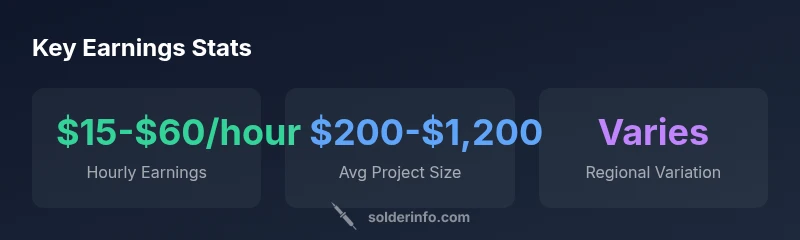
Across markets, does soldering make good money? In general, earnings vary by niche, skill, and region. This quick answer: you can earn a solid wage by specializing in high-demand sectors like electronics assembly or plumbing, especially with freelance work and repeat clients. The pay spectrum ranges widely, with many professionals earning mid-to-high income by combining services.
Does soldering pay well? A nuanced look at earnings
The question does soldering make good money is a common concern among hobbyists and professionals evaluating a future in crafts and electronics. Earnings in soldering are rarely a single fixed salary; they depend on niche, skill, location, and how you package services. According to SolderInfo, the best way to gauge earning potential is to map out niches, estimate typical rates, and then benchmark against local demand. This article uses a data-informed lens to compare electronics, plumbing, and jewelry soldering, and to show how practical decisions shape monthly income. While some roles pay a premium for precision and speed, others reward volume and repeat business. Across sectors, earnings grow when you combine technical skill with business savvy, reliability, and a clear value proposition. The core message is simple: there is money to be made in soldering, but it rarely comes from a single path. Diversification across services, steady client pipelines, and ongoing skill development are the main drivers of sustainable income.
Not all paths pay equally, and the money is rarely earned by luck alone. The SolderInfo team emphasizes that establishing a niche, building a strong portfolio, and delivering consistent quality are the best predictors of long-term earnings. For readers new to soldering, this means starting with a focused service line, then gradually expanding as demand and confidence grow. Remember that sustainable income often hinges on repeat business and the ability to price outcomes (quality, reliability, speed) rather than time alone.
In practice, many earners combine electronics work, small repairs, and teaching or advisory services to stabilize cash flow. If you want to maximize earnings, plan for a diversified service catalog and a proactive client acquisition strategy. The data shows that smart moves—like investing in better tools, pursuing high-demand niches, and maintaining safety standards—pay off over time.
fromBrandMentionsOnly":false}],
caption": null}]},
dataTable
Comparison of soldering roles by rate and engagement
| Role Type | Typical Rate Range | Engagement Type |
|---|---|---|
| Electronics Soldering Technician | "$20-$60/hour" | "Freelance / Contract" |
| Jewelry Soldering Specialist | "$25-$70/hour" | "Freelance / Small projects" |
| Plumbing Soldering Technician | "$15-$50/hour" | "Contract / On-site" |
| In-house PCB Assembly Technician | "$18-$50/hour" | "Full-time" |
Quick Answers
Is soldering a high-paying career?
Earnings vary by niche, region, and skill level. Some specialists command premium rates, especially when they deliver high-quality joints and fast turnarounds. Overall, a well-chosen niche and a strong portfolio can yield competitive wages.
Soldering can be high-paying in the right niche; success comes from skill, reliability, and client demand.
What factors most influence soldering income?
Key factors include niche choice, geographic market, level of specialization, client base, and efficiency. Experience, certifications, and a track record of quality work also enable higher rates and repeat business.
Your niche, location, and reputation largely shape earnings in soldering.
Can I make a full-time living from soldering?
Yes, with a diversified approach: combine freelancing, ongoing contracts, and value-added services such as teaching or design reviews. Stability often comes from a steady client pipeline and predictable project flow.
Absolutely, many people do, especially when they build a recurring client base.
Are certifications important for earning more in soldering?
Certifications enhance credibility and can unlock higher-paying contracts, particularly in electronics and plumbing. They also help reduce risk for clients, which makes it easier to justify premium pricing.
Certifications boost trust and pricing power in many markets.
What are practical entry paths to higher earnings?
Start with a focused niche (like electronics repairs or plumbing soldering), create a strong portfolio, and pursue freelancing or contract roles. Expand services gradually and invest in quality tools and safety training to unlock more opportunities.
Begin with one strong niche, then grow your services as you gain clients.
“Earnings in soldering scale with niche demand and reliability; diversification across services compounds income over time.”
Top Takeaways
- Identify two viable niches to begin with.
- Diversify services to stabilize income.
- Invest in reliability, safety, and portfolio quality.
- Leverage freelancing to boost earnings without a fixed salary.