Why Solder Won’t Stick to Metal: An Urgent Troubleshooting Guide
Urgent guide to fix solder adhesion problems when solder won’t stick to metal. Learn surface preparation, flux selection and freshness, temperature control, and a practical troubleshooting workflow to restore reliable joints.


If solder won’t stick to metal, the most likely issue is surface oxidation or insufficient flux. Start by cleaning the metal with isopropyl alcohol and a brass brush, then apply fresh flux and re-tin the joint. According to SolderInfo, proper surface prep and compatible flux are the quickest paths to reliable adhesion. Also confirm you’re using the correct alloy for the metal and avoid overheating, which can burn flux and worsen oxidation.
Understanding the problem: why is solder not sticking to metal
When you’re in the middle of a repair, the question why is solder not sticking to metal can derail your workflow. The most common culprits are surface prep, flux, and heat management. Oxidized or contaminated surfaces prevent wetting and cause solder to bead rather than spread. The fix starts with a quick triage: inspect for oil, fingerprints, or oxide; confirm flux freshness; and verify heat application matches the metal and solder alloy. Addressing surface cleanliness and flux compatibility often resolves the issue within minutes, restoring proper wetting and strong joints.
Common root causes
Identifying the root cause is key to fast repair. The most frequent culprits include a dirty or oxidized metal surface, contaminated handling residues, expired or incompatible flux, and using a solder alloy that does not wet the metal well. Less common but real issues include overheating, which burns flux and rapidly oxidizes the surface, and a dull tip that fails to transfer heat efficiently. By testing one variable at a time, you can isolate the exact reason solder is not adhering.
Surface preparation essentials: cleaning, degreasing, and abrasion
Surface prep sets the stage for success. Start with a clean workspace and wipe the metal with isopropyl alcohol to remove oils. Lightly abrade the area with a brass brush or fine abrasive pad to remove film and expose fresh metal. Wipe again, then apply flux. Always re-tin the metal and the tip before attempting adhesion. Skipping these steps is the fastest path to failure.
Flux choices and flux freshness
Flux is the wetting agent that enables solder to flow and adhere. Choose a flux compatible with your solder alloy and metal type, and ensure it is fresh; expired flux loses activity and can hinder wetting. Use enough flux to cover the joint but avoid pooling. For lead-free or rosin-core solders, select a flux formulated for these chemistries and re-apply as needed after cleaning.
Solder alloys and metal compatibility
Not all solders perform the same on every metal. Copper, brass, and phosphor bronze wet very differently from stainless steel or aluminum. Ensure the solder alloy matches the metal’s properties and the flux used. In some cases, a metal surface may require a different flux or a metallurgical prep, like a light acid-etch or tin plating, to improve adhesion. General guidelines help, but always validate with a scrap joint first.
Temperature, timing, and technique
Wet the joint by applying heat evenly along the seam; avoid heating one spot aggressively. If flux boils away or burns, lower the temperature and extend the preheat. Preheating helps large or dense metals reach a wettable state, reducing thermal shock. Reflow the joint with gentle, continuous motion to encourage spread rather than solder balls. Good technique minimizes air entrapment and improves adhesion.
Practical diagnostic tests you can run
A quick test is to try a small scrap joint on a similar metal surface with the same flux and solder. If it wets, your original workpiece likely had surface contamination. If it still won’t wet, re-evaluate flux choice or heat input. Document the conditions (flux type, alloy, and temperature) to refine your process and prevent future failures.
Safety, tips, and when to seek professional help
Soldering involves hot metal and fumes. Wear eye protection and gloves, work in a well-ventilated area, and keep a damp cloth or fire extinguisher nearby. If you continue to see poor wetting after trying the standard fixes, consult a professional who can advise on specialized prep or alloys. Remember, consistent surface prep reduces repeat problems.
Steps
Estimated time: 30-60 minutes
- 1
Inspect the workspace and surface
Examine the workpiece for oil, fingerprints, corrosion, and oxide. Note any unusual surface texture or residue that could impede wetting. A bright light and a magnifier can help you spot invisible films. Document your observations to guide the rest of the steps.
Tip: Use clean gloves and avoid touching the pristine area after inspection. - 2
Clean and degrease the surface
Wipe the area with high-purity isopropyl alcohol and dry. If residues persist, gently abrade with a brass brush to remove oxide and films, then wipe again. Ensure the surface is completely dry before fluxing.
Tip: Always wipe in one direction to avoid re-depositing contaminants. - 3
Choose and apply flux correctly
Select a flux compatible with your metal and solder. Apply a thin, even layer; avoid pooling as excess flux can burn and hinder adhesion. If flux looks cloudy or dried, discard and re-apply fresh flux.
Tip: Label and store flux properly to maintain activity; keep cap on when not in use. - 4
Tin the tip and prepare solder
Pre-tin the soldering iron tip and tin a small amount of solder on the joint pad or wire end. This helps heat transfer and begins wetting. Check that the solder alloy matches the metal surface.
Tip: Keep the tip clean; a dirty tip reduces heat transfer and wetting efficiency. - 5
Heat control and joint wetting
Apply heat to the joint evenly, not to the flux itself. Move the iron around the seam to distribute heat and encourage wetting. If flux burns or boils, lower the temperature and extend preheating time.
Tip: Use preheat for larger or dense metals to avoid thermal shock. - 6
Test, adjust, and reflow
Inspect the joint; it should be smooth and glossy with good fillet wetting. If needed, reapply flux and reflow. Validate your results with a scrap joint and adjust your process for future work.
Tip: Always test on scrap metal before committing to the final workpiece.
Diagnosis: Solder won't wet and adhere to metal after flux application
Possible Causes
- highOxidized or dirty surface
- highExpired or incompatible flux
- mediumWrong solder alloy for the metal
- lowOverheating or insufficient heating
Fixes
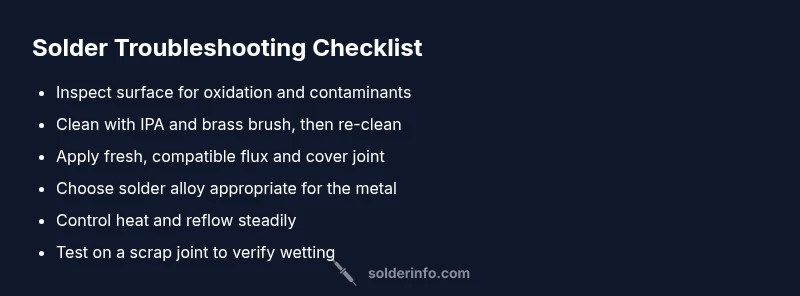
- easyClean the surface with isopropyl alcohol and a brass brush, then re-clean before flux
- easyApply fresh, compatible flux and ensure even coverage over the joint
- mediumUse an appropriate solder alloy for the metal and verify flux compatibility
- mediumAdjust heat; avoid localized overheating and ensure even preheating
Quick Answers
Why won’t solder stick to metal even after cleaning?
Oxidation can reform quickly; if flux is weak or overheated, wetting fails. Re-clean, re-flux, and verify heat is appropriate. Also confirm alloy compatibility with the metal.
Oxides reform quickly; re-clean, re-flux, and check heat and alloy compatibility.
Is flux freshness important?
Yes. Flux loses activity over time, reducing wetting and increasing joint defects. Always use fresh flux for critical joints and store properly.
Flux freshness matters; expired flux reduces wetting.
Can I use lead-free solder on all metals?
Lead-free solders work on many metals, but some surfaces need special prep or a different alloy. Always test on a scrap piece before committing.
Lead-free works in many cases, but check compatibility first.
What if overheating caused the flux to burn?
Overheating can burn flux and oxidize the surface, preventing wetting. Lower heat, preheat gradually, and reflow with even motion.
Overheating burns flux, causing poor wetting; reduce heat and reflow.
Do I need a hot air rework station for sticking problems?
A hot air station is not usually required for basic adhesion problems. Use a properly heated iron and clean flux; reserve hot air for complex components.
A hot air station isn't usually needed for simple sticking issues.
Should I discard a joint that looks dull or grainy?
Yes. A dull, grainy looking joint usually indicates poor wetting and possible contamination. Rework with clean surface prep and correct heat.
Dull joints usually mean poor wetting; rework with proper prep.
Watch Video
Top Takeaways
- Prepare the metal surface before fluxing.
- Choose flux and solder alloy to match the metal.
- Control temperature to prevent oxidation.
- Practice on scrap joints to refine your technique.