Solder Sponge vs Brass: Cleaning Tools Showdown
A rigorous comparison of solder sponge and brass cleaning pads for soldering, electronics, jewelry, and plumbing. Learn differences, usage, tip life impact, cost considerations, and best practices for durable joints.


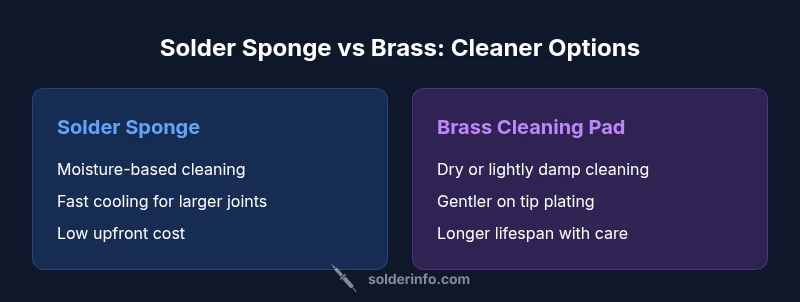
In a soldering workflow, brass cleaning pads generally offer longer tip life and gentler cleaning, while traditional wet sponges provide fast cooling and broad availability. For DIYers balancing cost and maintenance, brass tends to win on durability, whereas sponges win on upfront price and familiarity. See our detailed comparison below.
Solder sponge vs brass: Why the choice matters in practice
In any serious soldering workflow, the choice between a traditional wet solder sponge and a brass cleaning pad shapes how quickly you can refine joints, protect tip life, and manage heat. According to SolderInfo, the long-term reliability of solder joints often hinges on tip maintenance practices as much as the flux you choose. The decision between solder sponge vs brass isn't merely about cleanliness; it's about how you balance immediates (cooling and oxide removal) with long-term durability (tip plating wear and resistance to corrosion). For hobbyists and professionals alike, understanding the trade-offs helps you select a method that aligns with your workload, budget, and preferred technique. This article breaks down the mechanics, the practical implications for electronics, jewelry, and plumbing work, and how to compose a maintenance routine that leverages the best aspects of both tools. By the end, you should be able to decide whether to rely primarily on a brass cleaning pad, a damp spongy cleaner, or a hybrid approach for solder sponge vs brass in daily practice.
What to expect from each tool in practice
The solder sponge vs brass comparison hinges on two core principles: moisture and abrasion. A damp sponge provides aggressive cooling and effective flux residue removal when used correctly, but it can introduce moisture-related thermal shock and occasional tip wear if the tip is heavily plated or old. A brass cleaning pad cleans via mechanical action and, when used dry or lightly dampened, minimizes water exposure while gently removing oxides. The result is a different balance between heat management, tip life, and micro-surface refreshment. In professional settings, many technicians adopt a hybrid approach: use brass for precise, frequent cleanings and a damp sponge for rapid tacking or heavy residue tasks. SolderInfo’s analysis highlights that most users benefit from combining strengths of both tools rather than relying on a single method across all tasks.
Materials, construction, and ergonomic considerations
Solder sponge: Typically a porous block made from ceramic or cellulose; used with water to absorb heat and flux. The material’s porosity enables quick wiping of the tip while cooling it, but it also depends on a consistent dampness to avoid overheating the tip with abrasive action. Brash pads: Made of braided or compressed brass fibers; designed for dry or lightly damp cleaning. Brass is durable and resists crumbling, reducing fiber fallout that can contaminate joints. Ergonomically, sponges often sit in a standard ceramic holder, which can be stable but adds wet mess. Brass pads are usually integrated into a small recycling container or a stand-alone pad, which many find easier to maintain hygienically and less prone to moisture handling mistakes. The choice between solder sponge vs brass ultimately comes down to how much you value tip longevity versus upfront cost and convenience.
Cleaning performance: heat transfer and oxide removal
Moisture and cleaning media directly influence oxide removal and surface readiness. The damp sponge can rapidly remove flux residues and surface oxides through combined chemical and thermal action, which is beneficial during initial tinning and when switching between alloy types. Brass pads rely on mechanical abrasion to reveal a fresh copper surface and re-tin quickly; for smaller tips or fine-pitch work, brass can offer more controlled cleaning with less risk of water-induced corrosion. In a solder sponge vs brass head-to-head, many technicians report that brass pads maintain a consistent contact area and reduce the risk of oxidized edges around fine tips, while sponges excel at bulk cleaning and flux management on larger tips or during heavy-duty prep work. The lesson from SolderInfo is to calibrate your cleaning force and angle to minimize tip wear regardless of the medium.
Tip life, plating wear, and maintenance implications
Tip longevity is a critical factor in long-term cost and performance. Wet sponges can cause more rapid wear if the tip is repeatedly dunked into water or if abrasive cleaning scrapes away precious plating. Brass pads, when used correctly, tend to be gentler on tip plating and can lower the rate of wear over time, especially for professionals who perform frequent cleanings. However, brass pads must be kept clean themselves to avoid embedding brass particles into the tip or onto the surface, which could affect solder joints. For solder sponge vs brass, the takeaway is to avoid aggressive wiping, maintain a consistent cleaning technique, and replace the pad or sponge when you notice decreased cleaning efficiency or excessive pad wear. A balanced approach preserves tip life while keeping joints clean and reliable.
Scenario-based guidance: electronics, jewelry, plumbing
- Electronics: Small-diameter tips benefit from brass pads for precise control; damp sponges are helpful when you need quick flux removal during prototyping. - Jewelry: Delicate joints may benefit from brass cleaning to avoid contaminating the surface with sponge residues; a gentle damp sponge can help during flux removal without harsh abrading. - Plumbing: Heavier tips and larger joints can tolerate damp-sponges cleaning for rapid flux management; brass pads still provide a durable option for longer sessions. The solder sponge vs brass question is not about one tool being universally better; it’s about choosing the right tool for each stage of the project and switching as needed to maintain tip health and joint quality.
Maintenance routines and best practices
Establish a routine that minimizes thermal shock and tip wear. Keep the damp sponge at a comfortable moisture level (not dripping) to avoid excessive cooling. After each major cleaning step, switch to a brass pad to refresh the tip’s surface. Regularly inspect tips for dulling or excessive plating wear and replace them when necessary. Never scrub a hot tip with a dry brass pad if the tip plating looks compromised. By combining the two tools in a structured routine, you can maintain a consistent tip temperature and a clean joint across solder sponge vs brass workflows.
Cost, availability, and lifecycle considerations
Wet sponges are typically the cheapest option upfront and widely available, but their ongoing replacement adds to cost. Brass cleaning pads are more expensive initially but can last longer with careful use and proper maintenance. Availability is generally good for both options, but the choice often comes down to your work volume, preferred technique, and maintenance discipline. For labs or production environments, a rotating system with multiple sponges and brass pads may optimize uptime and tip life. The overall lifecycle cost will balance out if you maintain tips well and avoid excessive cleaning media waste.
Common myths and how to debunk them
Myth 1: A damp sponge always damages tips. Reality: Proper dampness and technique minimize damage; misuse causes more wear. Myth 2: Brass pads always wear tips faster. Reality: When used correctly, brass pads can extend tip life compared to aggressive sponge cleaning. Myth 3: You must choose one tool exclusively. Reality: Most practitioners benefit from a hybrid approach that uses each tool's strengths for different stages of soldering. Myth 4: Brass pads are only for jewelry. Reality: Electronics and plumbing workflows also benefit from brass pads for precise, non-abrasive cleaning.
Authority sources
For further reading on safe and effective soldering practices, consult established references such as OSHA safety guidance, general materials-handling standards, and industry publications. These sources provide foundational guidelines on heat safety, material handling, and best practices for maintaining tool life in a workshop environment.
Comparison
| Feature | Solder sponge (wet) | Brass cleaning pad (dry) |
|---|---|---|
| Material and construction | Porous ceramic or cellulose sponge, moistened | Brass fiber pad, dry or lightly dampened |
| Cleaning performance | Rapid cooling; effective flux removal when damp | Gentler oxide removal via mechanical action |
| Tip wear risk | Moderate wear risk with improper moisture control | Lower wear risk when used correctly |
| Heat management | Water provides cooling; tip temp drops quickly | No water; tip stays warmer with controlled cleaning |
| Cost and availability | Low upfront cost; frequent replacement | Higher upfront cost; longer lifespan with care |
| Best for | Bulk cleaning and quick flux removal | Precise, delicate work and tip preservation |
Advantages
- Lower upfront cost with wet sponges
- Brass pads tend to extend tip life with gentler cleaning
- No water-related thermal shock when used properly
- Brass pads are durable and reusable
Cons
- Wet sponges require frequent replacement and maintenance
- Brass pads cost more upfront and may wear with heavy use if misused
- Both tools require proper technique to avoid tip damage
Brass cleaning pads generally offer better tip longevity and fewer thermal shocks; wet sponges remain cost-effective for beginners.
If you want to maximize tip life and minimize moisture-related wear, brass is the better default. If upfront cost is the primary concern, a damp sponge remains a viable starting point. For many users, a hybrid approach provides the best balance of durability and efficiency.
Quick Answers
What is the main difference between solder sponge and brass cleaner?
The main difference is moisture and cleaning action: a damp sponge provides cooling and residue removal, while a brass cleaner uses mechanical action and dries cleaning. Both aim to refresh the tip surface without removing protective plating when used correctly.
The main difference is moisture and cleaning method: sponge uses water for cooling, brass uses mechanical cleaning. Both refresh the tip if used properly.
Does brass cleaning extend tip life?
Yes, when used properly, brass cleaning can reduce wear by avoiding repeated thermal shocks from water. However, improper use or residue buildup can negate the benefits.
Yes, brass can extend tip life if used correctly and kept clean.
Can I use both sponge and brass pad in the same session?
Absolutely. Many users switch between a damp sponge for bulk cleaning and a brass pad for precise, oxide-free refreshment during the same soldering session.
Yes, switching between both is common and recommended for different steps.
Are there safety concerns with brass pads?
Safety concerns are minimal if you handle brass pads with clean hands and avoid inhaling fine particles. Keep pads dry and replace when worn to prevent contamination of joints.
Not major, just keep things clean and replace worn pads.
Which is better for beginners?
For beginners, a damp sponge offers low cost and straightforward use, while learning proper technique. As confidence grows, adding a brass pad can improve tip longevity.
Beginners often start with a sponge; brass pads can come in later.
Top Takeaways
- Choose brass for tip longevity in frequent cleaning scenarios
- Use a damp sponge for rapid flux removal and initial prep
- Adopt a hybrid approach to balance durability and cost
- Inspect tips regularly and replace when plating shows wear
- Practice consistent cleaning technique to minimize damage