Harbor Freight Solder Gun Tips: A Practical How-To
Practical Harbor Freight solder gun tips to improve joints, reduce cold solder joints, and extend tool life. Learn safety, tip selection, temperature control, cleaning, and maintenance to get consistent results.


Master Harbor Freight solder gun tips to achieve clean joints, reduce cold solder, and extend tool life. This quick guide covers essential prep, tip selection, temperature control, and safe use. Follow 5 practical steps to improve reliability and consistency when using inexpensive Harbor Freight tools.
Why Harbor Freight Solder Gun Tips Matter
According to SolderInfo, practical guidance helps hobbyists and professionals get reliable results with affordable tools such as Harbor Freight solder guns. When you work with budget hardware, your success hinges on technique more than brand prestige. The Harbor Freight gun can deliver solid performance if you approach it with a plan: select the right tip, keep it clean, and control heat precisely. This combination translates into cleaner joints, reduced rework, and safer work environments. Whether you solder electronics, jewelry, or plumbing fittings, disciplined practice elevates results and minimizes waste. By adopting consistent heat management and tip maintenance, you turn a low-cost tool into a dependable asset for a wide range of projects.
Understanding Your Solder Gun: Heat, Tip, and Wire
A solder gun is a portable heat source that relies on proper heat transfer to melt solder and form firm joints. Harbor Freight models typically offer interchangeable tips and compact form factors, which keeps them handy for small electronics, jewelry work, or light plumbing tasks. Temperature control varies by model; some guns provide dial adjustments, while others rely on technique and timing to keep heat under control. Tip shape matters: conical tips excel at precision work on delicate pads, while broad bevel or chisel tips distribute heat more evenly for larger joints. The choice of solder (lead-free vs. traditional alloys) and flux also dictates how easily solder flows and wets surfaces.
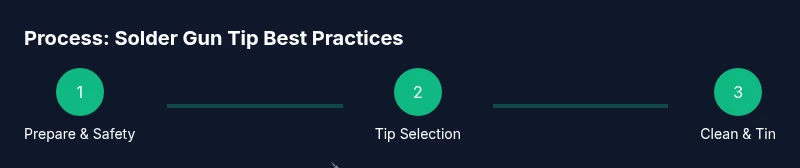
Choosing the Right Harbor Freight Solder Gun Tip
Selecting the correct tip is the most immediate way to improve results. For electronics, a fine-point or bevel tip minimizes bridging and protects nearby components. For plumbing, a wider chisel tip helps heat a copper joint more uniformly and speeds the process. Harbor Freight typically offers a variety of tips; keep several on hand to handle pins, connectors, and larger connections. Always inspect tips for wear, corrosion, or deformation, and replace them when wetting becomes inconsistent. Tin the tip before use to prevent oxidation and ensure faster heat transfer.
Prep and Safety Before You Begin
Prepare a clean, well-ventilated workspace with a stable, heat-resistant mat. Wear safety glasses and keep flammable materials away from the soldering area. Gather tools and spare parts, secure the workpiece, and inspect the gun for any loose components. Ensure adequate lighting and have a damp sponge or brass tip cleaner within reach to maintain tip sharpness during work. If fumes are a concern, use a small fan or a fume extractor to improve air quality. Always unplug the tool before changing tips or performing maintenance.
Temperature Control and Solder Types
Even if your Harbor Freight gun lacks precise temperature readouts, you can manage heat through technique. When using lead-free solder, flux becomes critical to prevent oxidation and to promote wetting; the solder tip should be kept clean to maximize heat transfer. Rosin-core flux is common for electronics, while plumbing solder often requires different flux types and precautions. In all cases, start with a clean, tinned tip, a small amount of flux on the joint, and a cautious approach to heat—add solder in small increments and avoid dwelling on one area for too long. If a joint resists flow, pause to re-tin the tip and reapply flux before continuing.
Technique: The Right Motion for Clean Joints
Effective soldering relies on controlled heat and careful motion. Bring the tip to the joint and feed solder into the seam, not directly onto the tip. Maintain contact just long enough for the solder to wet the joint and form a shiny, smooth fillet. Avoid dragging the tip across pads; instead, use a steady arc motion that aligns with the component leads. When working on delicate components, use minimal heat and short contact times, then inspect the joint for visible wetting and mechanical strength. Practice makes perfect—consistency comes from repetition and mindful technique.
Maintenance and Cleaning for Longevity
Post-work, unplug the gun and allow it to cool. Clean the tip with a damp sponge or brass tip cleaner to remove flux residues and oxidation. Tin the tip while it’s still warm to protect against oxidation. Store tips in a dry, organized container and keep the gun and cord away from moisture. Regularly inspect the power cord and heating element for wear, and replace worn parts promptly. Use a heat-resistant mat during storage to prevent accidental burns or fire hazards.
Common Mistakes with Harbor Freight Solder Guns and How to Fix
Common issues include overheating joints, using an inappropriate tip for the task, and neglecting maintenance. Overheating can damage components or plastics nearby; underheating leads to dull, brittle joints. To fix issues, re-tin the tip, re-flux the joint, and choose a tip that matches the joint size. If joints still fail to wet properly, clean the tip thoroughly and consider a slightly different angle or a shorter dwell time. Keeping a few spare tips clean and ready reduces downtime and helps you stay productive.
Real-World Quick Tips for Electronics, Jewelry, Plumbing
Electronics demand precision: use fine-tipped irons and flux-enhanced joints to avoid bridges. Jewelry work benefits from slower, controlled motion and frequent tip maintenance to preserve the metal’s appearance. Plumbing joints require even heat distribution; a larger tip and stable hand help form robust copper connections. Across all tasks, the core principle is consistent technique, proper tip care, and methodical cleaning to ensure reliable joints and safe operation.
Tools & Materials
- Solder gun (Harbor Freight)(Ensure the model has replaceable tips and a functioning standby mode)
- Assorted solder tips(Include conical and chisel/bevel styles in small and medium sizes)
- Lead-free solder wire(Rosin-core preferred for electronics; pick flux-cavored types as appropriate)
- Flux (rosin-based)(Use flux to prevent oxidation and improve wetting)
- Soldering sponge or brass tip cleaner(Keep tip clean to maintain heat transfer)
- Safety glasses(Protect eyes from flux and splashes)
- Fume extractor or fan(Ventilation is recommended for fumes)
- Heat-resistant mat or stand(Protect workspace and catches drips)
- Tweezers and helping hands(Helpful for holding small parts)
- Solder wick (desoldering braid)(For removing excess solder)
- Alcohol wipes or isopropyl alcohol(Clean surfaces and tips)
- Scrap pieces for practice(Practice on scraps before real work)
Steps
Estimated time: 30-45 minutes
- 1
Prepare workspace and safety
Set up a clean, ventilated area. Put on safety glasses and secure the workpiece with clamps. Inspect the solder gun and tips before starting.
Tip: Always unplug the gun when changing tips or cleaning. - 2
Select the right tip and temperature approach
Choose a tip appropriate for the task and position the joint so heat will flow efficiently. If the model lacks temperature control, rely on technique and timing to avoid overheating.
Tip: Start with a smaller tip for precision, then switch if needed. - 3
Tin the tip and prepare joints
Apply a tiny amount of solder to the tip to improve heat transfer, then apply flux to the joint. Clean surfaces and ensure pads are tinned.
Tip: Tin the tip early to prevent oxidation during work. - 4
Apply solder to the joint, not the tip
Touch the tip to the joint and feed solder into the joint from the side. Avoid feeding solder directly from the spool onto the tip.
Tip: Keep the tip in contact with the joint only as long as necessary. - 5
Withdraw heat and inspect joint
Remove the heat source and let the joint cool undisturbed. Inspect for shiny, smooth, even fillets without gaps.
Tip: If it looks dull or cracked, reheat gently and apply more solder. - 6
Flux cleanup and tip maintenance
Wipe away excess flux and clean the tip with a damp sponge. Re-tin the tip to prevent oxidation after cooling.
Tip: Always clean and re-tin after use to prolong tip life. - 7
Test and finalize
Inspect connections with a multimeter if needed and verify mechanical stability. Rework any suspect joints with careful reheating.
Tip: Test quickly to catch dry joints before enclosure. - 8
Store and protect the equipment
Turn off and unplug, allow to cool, then store tips and tools in a dry area. Protect from dust and moisture.
Tip: Keep tips organized and protected to avoid corrosion.
Quick Answers
Is Harbor Freight solder gun suitable for electronics projects?
Yes, but use fine tips and lead-free solder. For sensitive components, practice on scrap and avoid prolonged heat exposure.
Yes, it's suitable for electronics if you use fine tips and control heat.
What temperature should I set Harbor Freight solder gun to?
Many Harbor Freight models do not display a precise temperature. Use the smallest tip, solder with flux, and feed solder quickly to limit heat.
Most models don't show exact temps; pick a small tip and move quickly.
How do I choose the right tip for Harbor Freight solder gun?
Use fine tips for electronics and wider tips for plumbing. Keep a few tips clean and replace worn ones.
Choose a fine tip for electronics and a wider one for plumbing.
What safety equipment should I use when soldering?
Wear safety glasses, work in a ventilated area, and keep flammable materials away. Use heat-resistant mats and proper gloves if handling hot items.
Wear safety glasses and ensure ventilation.
Why is my solder joint dull or cold and how to fix?
Cold joints occur when heat is insufficient or joints are not cleaned. Reheat gently, apply flux, and add a small amount of solder for a proper fillet.
Cold joints happen from insufficient heat; rework with flux and solder.
Can I use lead-based solder with Harbor Freight tools?
Lead-based solder is less common today; prefer lead-free alloys for safety with Harbor Freight tools, using flux to assist wetting.
Lead-free solder is safer; use flux and proper ventilation.
Watch Video
Top Takeaways
- Maintain safe workspace and PPE.
- Choose correct tip for task to optimize heat distribution.
- Tin tips and joints to improve wetting and solder flow.
- Don’t overheat; practice controlled cycles.
- Regular tip maintenance extends tool life.