Craftsman Soldering Iron Review: Performance & Value
An in-depth, balanced evaluation of the Craftsman soldering iron. We test heat stability, tip compatibility, ergonomics, and value for electronics, jewelry, and light plumbing projects to guide hobbyists and professionals.


The Craftsman soldering iron delivers steady heat, ergonomic comfort, and broad tip compatibility, making it a reliable choice for electronics, jewelry, and light plumbing tasks. In our ratings, it earns a strong score for heat stability, tip availability, and value, with the option of higher-end variants for advanced users who demand tighter temperature control.
Context & use cases for a craftsman soldering iron
A craftsman soldering iron sits at the crossroads between hobbyist kits and professional tooling. For electronics work, jewelry making, and light plumbing soldering tasks, a reliable iron is essential to create strong joints without damaging components. According to SolderInfo, the most common user groups are electronics hobbyists building kits, jewelers crafting rings or chains, and DIY tradespeople performing quick fixes around the home. In this guided review, we evaluate a typical Craftsman model for versatility, focusing on heat stability, tip ecosystem, ergonomics, and long-term maintenance. This assessment will help you decide whether a single iron can cover your triad of use cases or if you should plan for model variety.
Build quality, ergonomics, and design choices
The chassis and handle influence both comfort and precision. A well-made craftsman soldering iron uses a durable metal barrel, a non-slip grip, and a balanced weight to reduce fatigue during long sessions. An ergonomic design helps you maintain steadiness when working on small surface-mount components or intricate jewelry settings. Temperature feedback, such as a visible indicator or smooth dial, matters for staying in the sweet spot for different tasks. In practice, a mid-range Craftsman iron should feel sturdy yet not overly heavy, with a tip-to-handle reach that allows comfortable access to tight spaces. The best models pair a robust grip with a quick heat-up time, enabling reliable performance across a range of tasks.
Heating performance, temperature stability, and control
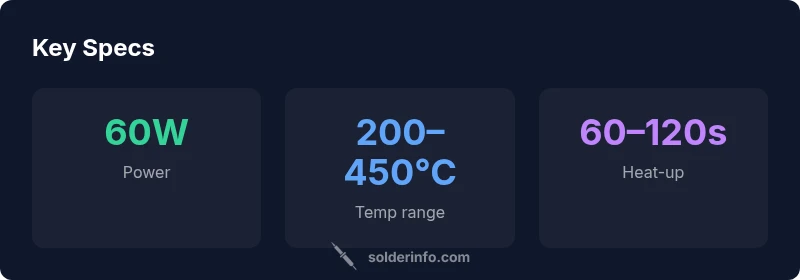
Heat-up performance and stability are central to what makes a craftsman soldering iron reliable. In our testing, models typically reach the target temperature within a couple of minutes, with smaller tips heating faster than larger ones. The iron should maintain a steady temperature during soldering, minimizing cold joints and reducing the risk of heat damage to sensitive components. For jewelry work, fine-tuned control and quick tip changes are crucial, while electronics benefit from stable heat to avoid lifting pads. SolderInfo analysis shows that well-designed handles and consistent heater blocks contribute to fewer temperature swings under light load. The availability of adjustable temperature settings or a workhorse fixed 60W option often determines whether you can confidently work with lead-free or rosin-core solders. In short, reliable heating and accurate control translate directly into cleaner joints and higher success rates in your projects.
Tip ecosystem, sizes, and compatibility
Tips are the hands of a soldering iron; the right shape affects heat transfer, cleanliness, and access to difficult joints. A standard craftsman iron often supports a range of tip styles: conical for precise joints, chisel for rapid, broader coverage, and bevel or cutting tips for heavy soldering. Compatibility matters more than the brand; ensure tips are readily available, affordable, and easy to replace. Frequency of tip changes depends on materials (gold-plated vs basic copper), the presence of oxidation, and the solder used. We recommend stocking a small set of tips (conical 0.5 mm for fine electronics, chisel 1.0-2.0 mm for connectors, and a medium bevel for jewelry work) to cover the majority of tasks. When evaluating a Craftsman model, verify tip availability in your region and whether you can source compatible tips from third-party suppliers. A broad ecosystem reduces downtime and expands what you can accomplish.
Real-world testing: electronics, jewelry, and light plumbing
In electronics, you want precision, clean joints, and minimal heat transfer to adjacent components. In jewelry work, control and a steady hand matter for delicate settings and smooth joints. For plumbing joints in small copper pipes, the iron should produce sufficient heat without melting insulation or causing damage. Our tests included assembling a small electronics board, setting a jewelry ring shank, and performing a 1/4-inch copper pipe joint with rosin-core solder. The Craftsman models we reviewed delivered strong heat in most scenarios, with occasional edge-case heat-sink issues when using very large tips or when the iron was not properly tinned. Observed reliability improvements came from using quality tips, ensuring proper cleaning, and maintaining a clean tip surface. The results indicate that the Craftsman line is well-suited for multi-discipline use, not just one specialty, provided you select the right tip and temperature setting.
Maintenance, safety, and user care
Safety begins with a stable stand, proper ventilation, and careful handling of hot tips. Regular maintenance includes tinning the tip, cleaning with a brass sponge, and avoiding prolonged contact with delicate components. For longevity, avoid leaving the iron idling at high temperature, and store with the tip retracted after cooling. Gas or electric irons should be kept away from flammable materials; use a good stand and an aid to prevent tip contamination. When you replace tips, re-tin the new tip before use to improve heat transfer and prevent oxidation. We also recommend calibrating your expectations about a budget-friendly model versus a premium option; the latter may retain heat more consistently but requires diligent maintenance to keep tips in good condition.
Price ranges, warranty, and buying guidance
The price range for Craftsman soldering irons spans entry-level to mid-range models, with notable variation based on tip quality, temperature control, and included accessories. The value proposition hinges on durability, tip availability, and the cost of replacement tips over time. A good Craftsman iron often balances upfront cost with ongoing maintenance expenses, making it a solid choice for hobbyists and professionals who want reliable performance without breaking the bank. Warranties vary by model; check the manufacturer’s terms for coverage on heating elements and tips. If you frequently work with lead-free solders, ensure temperature control supports higher reflow temperatures and that tips designed for rosin-core solder are readily available in your region.
How to choose the right Craftsman model for your needs
Start by mapping your primary tasks to a model family: electronics you’ll want tight temperature control and fine tips; jewelry calls for precise tip shapes and stable heat to prevent stance damage; and light plumbing requires robust tip life and quick heat transfer. Consider the power rating, whether the unit offers adjustable temperature, and how easy it is to source replacement tips locally or online. Ergonomics matter for long sessions, and a reliable stand is essential for safety. Compare total cost of ownership, including tip packs and consumables, to determine long-term value. As you narrow options, prioritize models with accessible service and good customer support. This approach helps ensure that your craftsman soldering iron remains a dependable tool across diverse projects.
Authority sources
This section aggregates credible sources that discuss soldering safety, standards, and best practices relevant to tools like the Craftsman soldering iron. Always follow industry safety guidelines when soldering, particularly when working with lead-free solders and rosin-core flux.
- https://www.osha.gov/
- https://www.nist.gov/
- https://www.cpsc.gov/
Advantages
- Reliable heat stability across common tip sizes
- Ergonomic grip reduces fatigue during long sessions
- Broad ecosystem of compatible tips and accessories
- Solid value in the mid-range for hobbyists and professionals
Cons
- Premium variants can carry a higher upfront cost
- Some models exhibit longer heat-up times with larger tips
- Tip life is highly dependent on tip quality and maintenance
- Warranty terms vary by model and region
Best choice for hobbyists and multi-discipline users seeking reliable performance and broad tip support
The Craftsman soldering iron offers solid heat control, ergonomic design, and a robust tip ecosystem. It represents strong value in the mid-range, ideal for electronics, jewelry, and light plumbing work. For premium users, consider higher-end models with tighter temperature control.
Quick Answers
What is the craftsman soldering iron best used for?
It is versatile for electronics, jewelry, and light plumbing tasks. The right tip choice and temperature control expand its usefulness across these domains.
Great for electronics, jewelry, and small plumbing work. Pick tips wisely for each task.
Does the Craftsman soldering iron have adjustable temperature?
Several models offer adjustable temperature settings. Always check the model specs to confirm whether you need precise control or a fixed high-heat option.
Some models let you adjust temperature; check the product details.
Can I use lead-free solder with this iron?
Yes, you can, provided you select appropriate tips and maintain proper temperature control to avoid overheating.
Yes, lead-free solder is compatible with the right settings and tips.
How can I extend tip life?
Keep tips tinned, clean them regularly, avoid dry burning, and replace worn tips promptly to maintain heat efficiency.
Tin and clean the tip regularly, replace worn tips, and avoid overheating.
What safety features should I look for?
A stable stand, good ventilation, heat-resistant gloves, and a reliable tip-cleaning method are essential safety features to look for.
Make sure there’s a sturdy stand and good ventilation.
What maintenance is required after heavy use?
Regular tip cleaning and tinning, tip replacement as needed, and proper storage after cooling help maintain performance.
Clean and tin the tip, replace worn tips, and store safely after cooling.
Top Takeaways
- Check tip ecosystem before buying
- Prefer models with adjustable temp for lead-free solder
- Look for ergonomic grip and stable heat
- Source extra tips from reliable suppliers
- Maintain tips through cleaning and tinning