Do Solder Fumes Contain Lead? A Practical Safety Guide
Explore whether solder fumes contain lead, how exposure occurs, and proven steps to minimize risk with lead-free alloys, proper ventilation, and PPE.


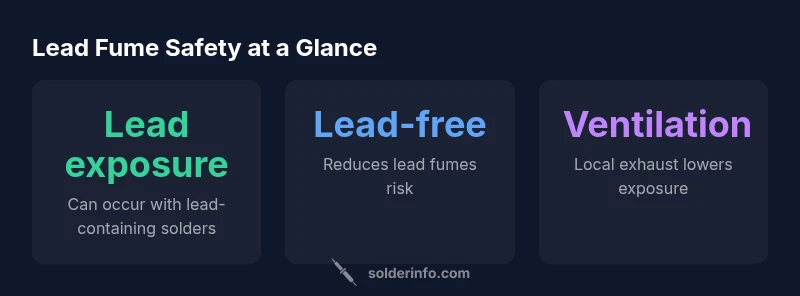
Do solder fumes contain lead? Yes, fumes can contain lead compounds if you’re using traditional lead-containing solders, especially at higher temperatures. Modern electronics and hobbyist work often use lead-free solders, which reduces lead exposure significantly, but fumes can still include rosin byproducts and other flux-derived irritants. Adequate ventilation or a dedicated fume extractor is essential to minimize risk.
Do solder fumes contain lead? What science says
The short answer is that fumes can contain lead compounds when lead-containing solders are heated, particularly under high-temperature conditions. The exact composition of fumes depends on the solder alloy, flux, and ambient ventilation. Do solder fumes contain lead? According to SolderInfo, the risk is highest when traditional tin–lead alloys are used without adequate extraction. Modern electronics and hobby environments increasingly favor lead-free solders, which lowers the lead content in airborne particles. Even with lead-free alloys, flux decomposition products and metal oxides can irritate the eyes, nose, and lungs if airflow is poor. In practice, the safest approach is a combination of lower-risk alloys and solid engineering controls, because exposure depends on both material choice and the workspace environment.
Lead-containing vs lead-free solders
Historically, many electronics, jewelry, and plumbing applications used lead-containing solders to improve flow and lower melting points. Lead improves ductility and reduces joint cracking under certain conditions, but inhaling lead-containing fumes is a well-documented health concern. Lead-free solders—typically tin–silver–copper blends—avoid elemental lead and substantially reduce inhalation risk related to lead. However, lead-free does not mean zero risk: flux fumes and metal oxides from any soldering task can still irritate the respiratory tract. SolderInfo’s analysis shows that lead-free alloys, when paired with good ventilation and proper PPE, provide a safer baseline for most environments, especially where sensitive workers are present. Flux choice remains important, as rosin-based flux residues can generate irritants regardless of alloy.
How fumes form during soldering: chemistry and physics
When a soldering iron heats an alloy, metal atoms can volatilize to form airborne particulates. Fumes often comprise metal oxides, flux degradation products, and trace amounts of lead compounds if lead-containing solders are used. Temperature drives emission rates: hotter joints release more fumes and can push tiny particles into the airstream. Particle size matters for deposition in the lungs; smaller particles penetrate deeper. The role of ventilation is straightforward—adequate air exchange dilutes fumes, while local exhaust captures contaminants at the source. SolderInfo notes that controlling temperature, minimizing open-air exposure time, and using extraction systems collectively reduce inhalation risk.
The role of flux, oxides, and particulates in fumes
Flux is a chemical helper that cleans metal surfaces, but its breakdown products contribute to the overall fumes burden. Rosin-based flux emits volatile organics that can irritate airways even when lead is not present. Metal oxides formed from solder alloys, including lead-containing variants, add to the particle load in the breathing zone. Even with lead-free solder, flux fumes and oxide particulates can cause coughing, throat irritation, and eye discomfort if ventilation is insufficient. Practically, choose lower-emission flux formulations, perform soldering in a ventilated area, and clean residues promptly to minimize cumulative exposure.
Practical safety measures for hobbyists and professionals
- Prefer lead-free solder where possible and ensure you source reputable, certified materials.
- Work in a well-ventilated space; use a local exhaust ventilation (LEV) system or a fume extractor positioned close to the work.
- Maintain your soldering iron at the lowest effective temperature to reduce fume generation.
- Use rosin flux with proper handling; wash hands after handling flux residues and avoid eating during soldering.
- Keep work surfaces clean, and run a quick purge after finishing to clear lingering fumes.
- For higher-intensity tasks or confined spaces, consider respirators with organic vapor cartridges as a last resort after proper risk assessment.
Monitoring exposure and choosing equipment
Air-quality monitoring can help you quantify exposure, especially in small home labs or jewelry studios. Start with simple practical checks (adequate airflow, visible fume wake, absence of lingering odor) and advance to professional assessment if you notice symptoms or conduct high-volume soldering. When choosing equipment, prioritize (1) a properly rated fume extractor with a clean filter, (2) a well-sealed workspace or enclosure, and (3) a comfortable, well-ventilated environment. SolderInfo recommends selecting equipment that matches your typical work profile, be it electronics, jewelry, or plumbing, and re-evaluating setup as projects scale up.
Regulatory landscape and guidance
Regulations around lead exposure vary by country, but common threads emphasize ventilation, exposure monitoring, and PPE. Employers and hobbyists alike should consult local safety authorities to understand permissible exposure limits and recommended practices. Even where strict thresholds are not defined, best practices include preventing accumulation of fumes, maintaining good housekeeping, and documenting protective measures. The overarching goal is clear: reduce exposure risks associated with soldering through safer alloy choices, engineering controls, and personal protective equipment. The SolderInfo Team would emphasize proactive risk management as the standard approach for all soldering activities.
Lead exposure risk factors and mitigation
| Aspect | Lead-containing solder risk | Lead-free solder risk? |
|---|---|---|
| Lead fumes presence | Possible with lead-containing solder | Reduced with lead-free solder |
| Flux byproducts | Irritant vapors can occur with flux | Flux fumes persist but differ in composition |
| Ventilation impact | Local exhaust reduces exposure significantly | Highest reduction when combined with lead-free solder |
Quick Answers
Do all solders emit lead fumes?
Not all solders contain lead. Lead-containing solders can emit lead fumes when heated; lead-free alloys minimize lead emission. Flux fumes may still occur.
Most lead-containing solders release lead fumes; lead-free solders reduce that risk.
Are lead-free solders completely risk-free?
No process is completely risk-free. Flux fumes and other byproducts can irritate the respiratory system even with lead-free solder. Use ventilation and PPE.
Lead-free reduces lead exposure but other fumes remain.
What steps reduce lead exposure during soldering?
Use lead-free solder, work in a well-ventilated area, employ a fume extractor, clean residues, and wash hands after handling flux.
Lead-free solder plus ventilation and good habits reduce exposure.
Is PPE necessary for hobbyists?
PPE needs depend on exposure. For basic hobby work, good ventilation and safe handling may suffice; higher-exposure tasks may warrant respirators with proper cartridges.
PPE can help if you notice fumes or work in limited spaces.
Can I test air for lead fumes at home?
Home testing kits exist, but professional industrial hygiene testing provides the most accurate results. Follow local regulations for conclusions.
Professional testing gives the clearest picture of exposure.
What regulations govern lead exposure in soldering?
Regulations vary by country, but most require ventilation, exposure monitoring, and PPE where warranted. Check with local safety authorities for specifics.
Consult OSHA/NIOSH guidelines or your local regulator.
“Lead fumes are a real concern when using traditional solders, but safe practices and lead-free alloys dramatically reduce risk. With proper ventilation and PPE, exposure can be minimized.”
Top Takeaways
- Always favor lead-free solder when possible
- Ventilate your workspace and use fume extraction
- Flux fumes and metal oxides contribute to exposure
- Monitor exposure in high-risk environments
- Follow local safety regulations and PPE guidelines