Can You Solder in Your Room? A Practical Indoor Soldering Guide
Explore whether you can solder in a room and how to set up a safe, well-ventilated workspace. This guide covers safety basics, ventilation, tools, and practical tips for hobbyists and professionals.


You can solder in a room if you create a dedicated, well-ventilated workspace and follow strict safety steps: use proper ventilation, fire-safe surfaces, and personal protection. Install a fan and consider a portable fume extractor, keep flammables away, and store solder and flux safely. With the right precautions and tools, room soldering is feasible for hobby projects.
Can You Solder in Your Room? Why This Is Possible (and When It Isn’t)\n\nRoom-based soldering is feasible for small electronics tasks when you can isolate the work, control heat, and manage fumes. According to SolderInfo, responsible indoor soldering is possible if you implement ventilation, nonflammable surfaces, and clear separation from living spaces. The core idea is to balance the heat produced by the iron with safe air flow and clean air exposure. Designate a workspace that can be easily ventilated, away from kids and pets, and equipped with a heat-resistant mat. Use a purpose-built stand to hold the iron and tools, and keep solvents and paper products away from the work area. If you’re soldering jewelry or plumbing materials, the same safety principles apply, but adapt protection measures to the specific fumes and heat loads involved.
Safety foundations for room-based soldering\n\nBefore you light the iron, establish a safety framework. Wear PPE: safety glasses with side shields, heat-resistant gloves, and a mask or respirator if you’re sensitive to fumes. Keep a Class ABC fire extinguisher within reach and know how to use it. Ensure your space is clear of flammables like solvents, acetone, and paper towels. Place a fire-safe mat or ceramic tile under the work area and organize cords to minimize trip hazards. Treat the room like a tiny shop where accidents can be contained, not avoided.
Ventilation and fume control in indoor soldering\n\nVentilation is the single most important factor for indoor soldering safety. Use a dedicated exhaust fan, a window fan, or a portable fume extractor to pull fumes away from your breathing zone. Position the intake near the soldering area and the exhaust directed toward an open window or exterior vent. If a fume extractor isn’t available, open windows on opposite sides of the room to create cross-ventilation. Remember to avoid stagnant air that concentrates fumes in one corner of the room. Regularly inspect filters and replace them as needed.
Workspace setup: surfaces, tools, and PPE\n\nCreate a tidy, heat-ready workspace. A ceramic tile or metal mat protects the table from hot tips and spilled flux. Use a dedicated soldering iron stand and a damp sponge or brass wire cleaner to keep tips clean. Arrange tweezers, flux, solder, and desoldering wick within easy reach. Wear safety glasses and heat-resistant gloves; if you have respiratory sensitivities, use a respirator. Keep a metal container for used tips and flux residue and store all solvents away from the soldering zone. A well-organized station reduces errors and accidents.
Materials, flux, and fumes: what to use and avoid\n\nFor electronics, choose lead-free solder with rosin-core flux and keep flux capped when not in use. Rosin flux is generally acceptable for indoor use, but avoid acidic fluxes that can corrode joints and irritate skin or lungs. Use flux-remover solvent only in well-ventilated areas. Store all flux and solder in closed containers, and never heat plastics or solvents near the soldering station. If you’re unsure about a material, consult the material safety data sheet (MSDS) for guidance.
Common mistakes and how to avoid them\n\nCommon mistakes include soldering near flammable items, skipping ventilation, and neglecting tip maintenance. Always unplug the iron when adjusting parts, and never leave a hot iron unattended. Clean the tip regularly to prevent oxidization, which causes cold joints and poor heat transfer. Test joints on scrap pieces first to validate heat and flux usage. Finally, don’t rush heat application; slow, controlled heating reduces smoke and improves joint quality.
Quick-start room-soldering checklist (beginner-friendly)\n\n- Set up a ventilated, dedicated workspace with a heat-safe surface.\n- Wear eye protection, heat-resistant gloves, and a mask if needed.\n- Use a properly rated soldering iron and stand with rosin-core flux.\n- Keep a fire extinguisher nearby and remove all flammables.\n- Work on scrap material first to tune heat and flux.\n- Clean and cool joints before moving components.\n- Store materials safely after completion.
Authoritative sources and safety references\n\nFor further reading, consider reputable safety guidelines from OSHA, EPA, and NFPA. These sources offer general indoor air quality, fire safety, and electrical safety recommendations that complement hands-on soldering guidance. Always cross-check tips with official documentation when setting up your own indoor workspace.
When room soldering isn’t advisable: think safety first\n\nIf your project involves high heat, large metalwork, or proximity to flammable materials, it’s safer to relocate to a dedicated workshop. If you have respiratory conditions or live in poor ventilation environments, indoor soldering should be avoided unless you can ensure strong exhaust and air exchange. In these cases, outdoor or shop-based soldering is recommended to minimize risk.
Tools & Materials
- Soldering iron (60W, temperature-controlled)(Precise control helps avoid scorching; use lead-free solder for safer indoor use)
- Solder (lead-free rosin-core preferred)(SnAgCu or similar; rosin-core flux minimizes separate flux application)
- Rosin-core flux(Keeps joints clean; reseal after use)
- Soldering stand(Sturdy stand to prevent accidents when not actively soldering)
- Heat-resistant mat or ceramic tile(Protects the work surface from hot tips)
- Fume extractor or portable fan(Reduces inhalation exposure; position to pull away fumes)
- Safety glasses(Eye protection against splashes and solder splatter)
- Fire extinguisher (ABC rated)(Keep within reach of the workspace)
- Tweezers and small pliers(Precise manipulation of components)
- Ventilated workspace with cross-ventilation(Ensure airflow from intake to exhaust path)
- Desoldering wick or braid(For correcting mistakes without overheating joints)
Steps
Estimated time: 45-60 minutes
- 1
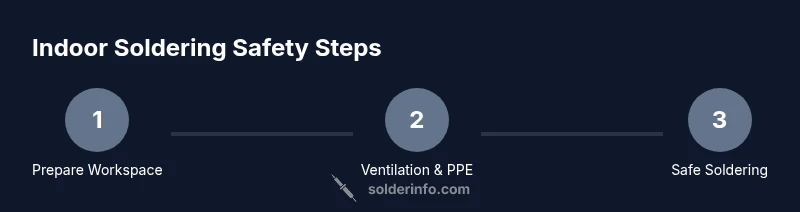
Prepare the workspace
Clear the area of flammables and organize tools. Set the heat-safe mat, stand, and ventilation. Pre-check the iron temperature and ensure power supply is stable. Having a clean, organized space reduces风险 and improves precision.
Tip: Test fit parts on scrap before committing to a joint. - 2
Gather and ready materials
Lay out solder, flux, tweezers, and components within arm's reach. Keep flux capped when not in use and inspect solder quality. Verify that you’re using lead-free solder for safety in indoor environments.
Tip: Use fresh flux and avoid contaminated containers. - 3
Set up ventilation & PPE
Power up your fume extractor or fan. Open any nearby windows if possible and ensure cross-ventilation. Put on safety glasses, heat-resistant gloves, and a mask if fumes are noticeable.
Tip: Position the extractor close to the work zone, not behind you. - 4
Pre-tin the tip and test
Lightly tin the tip with a small amount of solder, wipe clean, and test on a scrap pad. Confirm heat transfer is smooth and the joint will wet properly before working on the actual board.
Tip: A clean, tinned tip improves heat transfer and joint quality. - 5
Solder joints with controlled heat
Apply heat to the joint, not the solder directly. Feed solder into the joint as the heat is steady, then remove heat promptly once wetted. Avoid overheating which can damage components or boards.
Tip: Work in 2–3 second cycles to prevent overheating. - 6
Inspect, cool, and cleanup
Allow joints to cool naturally. Inspect for good Wetting and shiny joints; rework dull or cracked joints as needed. Clean the board with flux remover if necessary and store tools safely.
Tip: Use a magnifier to check for cold joints or bridges.
Quick Answers
Is ventilation optional if I work with low-mist flux?
Ventilation greatly reduces exposure to fumes even with low-mist flux. Always use some form of air movement and consider a fume extractor for prolonged sessions.
Ventilation is important for reducing fumes, even with low-mist flux; use airflow and a fume extractor if you can.
What PPE should I wear when soldering indoors?
Wear safety glasses, heat-resistant gloves, and a mask if you are sensitive to fumes. Maintain good ventilation and keep a fire extinguisher nearby.
Wear safety glasses and heat-resistant gloves, and use a mask if fumes bother you; ensure good ventilation.
Is lead-free solder safer for indoor use?
Lead-free solder is generally preferred for indoor environments to avoid lead exposure. Always follow local safety regulations and use rosin-core flux appropriately.
Lead-free solder is typically safer indoors; follow safety rules and use flux carefully.
What are signs of dangerous fumes I should stop and investigate?
If you notice persistent coughing, dizziness, eye irritation, or a strong solvent smell, stop and improve ventilation immediately. Check the setup for leaks or burning materials.
If you feel dizzy or irritated, stop and increase ventilation, then reassess the setup.
How should I dispose of flux and solder waste?
Let flux residues cool, collect waste in a metal container, and follow local hazardous waste guidelines. Do not pour flux or molten solder down the drain.
Cool and collect flux waste properly, then follow local disposal rules.
Can I move to a dedicated workshop later if room soldering becomes unsafe?
Yes. If you require better ventilation, higher heat work, or more space, consider relocating to a dedicated workshop or maker space with proper safety infrastructure.
If safety is compromised or you need more space, move to a dedicated workshop.
Watch Video
Top Takeaways
- Set up a ventilated, dedicated soldering workspace.
- Use PPE and fire-safe surfaces to reduce risk.
- Ensure proper ventilation or fume extraction for fumes.
- Dispose of waste and flux safely; never leave hot components.
- Know when to avoid room soldering and seek a workshop.