How to Solder Lead: Safe Practices and Techniques
A comprehensive, safety-focused guide on how to solder lead (PbSn) joints. Learn equipment choices, safety protocols, tinning, flux usage, heat control, troubleshooting, and lead-wsaste handling for reliable, compliant results.


This guide teaches how to solder lead safely and effectively. You’ll cover prep, tinning, flux selection, heat control, and joint inspection, plus troubleshooting for lead-based solders. Expect clear steps, practical tips, and safety guidance to help you achieve durable, conductive joints while minimizing exposure. This overview sets expectations and safety boundaries.
Understanding lead soldering: hazards, legality, and what you’re working with
Lead soldering uses tin-lead alloys, and this guide focuses on how to solder lead safely. While modern electronics often use lead-free solders, many vintage boards and hobby projects still rely on lead-based solder such as Sn63Pb37 or Sn60Pb40. The hazards are real: lead can irritate skin and eyes, and inhaling or ingesting lead dust or fumes poses health risks. Work in a well-ventilated area, ideally with a fume extractor, and wash hands after handling solder. Do not eat, drink, or touch your face while soldering, and keep solder away from food prep surfaces. Store lead-containing materials in a closed container and dispose of waste according to local regulations, using EPA or OSHA guidelines. According to SolderInfo Analysis, 2026, many hobbyists encounter lead when working with older electronics; always treat lead with respect and follow safety steps to minimize exposure.
Safety first: PPE, workspace, ventilation, and handling waste
PPE is your first line of defense when soldering lead: wear safety glasses to protect eyes from splashes, gloves to reduce skin contact, and a respirator or at least good ventilation to minimize fume inhalation. Set up a dedicated, non-flammable work surface with ample clearance and a heat-resistant mat. Use a fume extractor or keep the area ventilated to reduce lead exposure. Collect and store any lead scrap in sealed containers and dispose of residues following local environmental rules. After finishing, wash hands thoroughly before touching anything else. This disciplined setup dramatically lowers risk while you work on PbSn joints.
Tools and materials overview for lead soldering
Begin with a reliable, temperature-controlled soldering iron; for lead-based solders, you’ll want a tip kept clean and tinned. Have lead-based solder (or approved lead-containing alloy) and flux on hand, plus desoldering braid and a soldering sponge or brass wool. Keep isopropyl alcohol or flux remover nearby for cleanup, and use tweezers for component handling. A dedicated tip cleaner helps maintain tip life, and a storage container for used tips prevents corrosion. If you’re new, start with basic tools and add specialty items as you gain experience, ensuring your workspace remains organized and safe.
The lead soldering process: preparing joints, tinning, flux, heat, and inspection
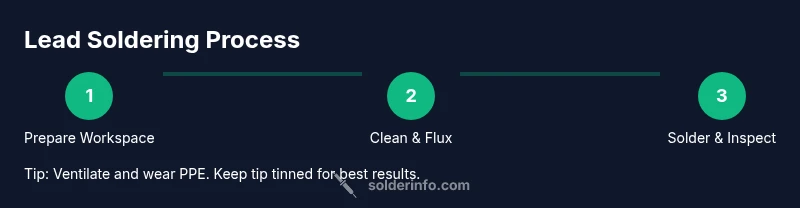
Start by cleaning the surfaces to be joined to remove oxides. Apply flux to the joint to improve wetting, then tin the soldering iron tip and the lead solder wire. Place the joint and apply heat with the iron, allowing solder to flow smoothly onto the joint rather than onto the tip. Withdraw the iron and let the joint cool undisturbed for a solid, shiny connection. Inspect for a smooth, concave fillet without gaps or gaps. If needed, rework with a tiny amount of flux and a fresh solder bead. Consistent technique reduces cold joints and brittleness.
Common mistakes and how to avoid them
Common errors include cold joints from insufficient heat, overheating causing lead oxidation, and applying solder to the iron instead of the joint. Avoid excessive flux, which can trap residue; use just enough to wet the joint. Maintain a clean, damp sponge or brass wool to keep the tip tinned. Work with a steady hand and pause to re-clean the tip if it oxidizes. If bridging occurs, reflow and remove excess with desoldering braid. Regular practice with proper technique yields reliable, repeatable results.
Maintenance and post-work cleanup
After soldering, clean the area and wipe away flux residues with isopropyl alcohol or flux remover. Tin the iron tip before storage to prevent oxidation. Store lead-containing solder and components in labeled containers away from food areas. Regularly inspect and replace worn tips, and keep desoldering aids handy for future work. A tidy workstation improves safety and joint quality over time.
Lead soldering vs lead-free considerations for electronics
Lead-based solders offer lower melting points and forgiving wetting, which some hobbyists still prefer for certain vintage electronics. However, many regulations encourage lead-free assemblies due to toxicity. When choosing between PbSn and lead-free alloys, consider substrate materials, component compatibility, and the expected operating temperature. If you work on mixed boards, prepare to switch flux types and adjust heat settings to accommodate different alloys. Understanding these distinctions helps you make safer, compliant decisions.
Tools & Materials
- Soldering iron (adjustable temperature)(30-60W; include temperature control; possible max 350-380°C for Pb-based solder; keep tip tinned)
- Lead-based solder (e.g., Sn63-Pb37)(Check local regulations; ventilation required; avoid ingestion exposure)
- Flux (rosin-core or paste)(Flux improves wetting; rosin-core solder includes flux)
- Flux remover or isopropyl alcohol(For residue cleanup after soldering)
- Soldering sponge or brass wool(Keeps tip clean and tinned)
- Solder wick (desoldering braid)(Useful for removing excess solder or correcting joints)
- Desoldering pump (solder sucker)(Optional but helps with larger corrections)
- Safety gear: safety glasses, gloves(Lead exposure risk; PPE reduces contact and exposure)
- Ventilation: fume extractor or well-ventilated area(Alleviates inhalation risk; essential forPb-based solder)
- Tweezers and small pliers(Hold components securely without touching hot surfaces)
- Copper or brass cleaning pad(For tip surface maintenance)
- Tip tinner/cleaner(Restores oxidized tips)
Steps
Estimated time: 60-90 minutes
- 1
Assess task and workspace safety
Review the project, identify lead-containing components, and ensure you have a dedicated, ventilated workspace. Gather PPE and all required tools before starting. Confirm the board is powered off and cooled before handling.
Tip: Prepare a clean, dedicated area to prevent cross-contamination with food or drinks. - 2
Prepare surfaces and components
Wipe down joints with isopropyl alcohol to remove oils and oxides. For heavily oxidized surfaces, gently abrade with a clean pad. Handle components with tweezers to avoid contamination.
Tip: A clean joint wets more reliably; dirty surfaces cause cold joints. - 3
Apply flux and tin the tip
Apply a thin layer of flux to the joint. Clean and pre-tin the soldering iron tip, then tin the wire end of the lead solder for easier wetting.
Tip: Tin the tip immediately after cleaning to reduce oxidation and improve heat transfer. - 4
Tack and heat the joint
Hold the joint together with tweezers, bring the hot tip to the joint, and apply solder to the joint (not the tip) until the fillet forms. Remove heat and let cool.
Tip: Feed solder slowly; avoid continuous contact with heat to prevent excessive joint heating. - 5
Build a proper fillet
Continue feeding solder to the joint until a smooth, glossy fillet forms that covers the joint completely. If excess solder pools, rework with desoldering braid.
Tip: A good fillet should be concave and cover the joint fully. - 6
Inspect and rework if necessary
Examine for a shiny, solid joint without gaps or cracks. If dull or crumbling, reflow with a small amount of flux and solder and re-test.
Tip: Inspect with a loupe or magnifier for small defects. - 7
Clean and cooldown
Wipe away flux residues with isopropyl alcohol. Allow the joint to cool naturally; avoid chilling with forceful airflow.
Tip: Cleanliness improves reliability and reduces corrosion risk. - 8
Finalize and store tools
Switch off and unplug equipment, tidy away tools, and store lead-based solder in a sealed container. Dispose of any waste following local regulations.
Tip: Label lead-containing waste clearly for proper disposal. - 9
Review safety and next steps
Document any anomalies encountered and plan for testing or replacement of joints. Review safety practices to prevent exposure in future projects.
Tip: Continuous improvement reduces risks over time.
Quick Answers
Is it safe to solder lead indoors?
Yes, with proper ventilation and safety precautions. Use a fume extractor or work in a well-ventilated area, wear PPE, and wash hands after handling solder.
Yes, you can solder lead indoors safely if you ventilate and wear protective gear.
What’s the difference between lead-based solder and lead-free solder in practice?
Lead-based solders melt at lower temperatures and wet joints more readily, which some hobbyists prefer for vintage electronics. Lead-free solders require higher temperatures and careful flux management to achieve reliable joints.
Lead-based solder is easier to wet at lower temperatures; lead-free needs higher heat and good flux.
Can I reuse lead solder after it cools?
Yes. You can remelt and reuse lead solder as long as the joint is clean and fluxed appropriately. Avoid contamination from oxidized or dirty solder.
Yes, you can reuse lead solder if it’s clean and fluxed properly.
How do I remove a faulty lead joint without damaging the PCB?
Use desoldering braid or a desoldering pump with heat and flux. Gently lift the component and rework the joint with fresh solder.
Use a desoldering braid or pump with heat, then re-solder properly.
What safety precautions should I take when disposing of lead waste?
Seal lead waste in a contained bag or jar and follow local environmental guidelines. Do not dispose of lead with regular trash.
Seal the waste and follow local rules for disposal.
Are there alternatives to lead solder for electronics?
Lead-free solders are common today; they require higher temperatures and compatible flux for reliable joints. Check product specs and regulatory guidance for your project.
Yes—lead-free solders are widely used today, with different heat and flux needs.
Watch Video
Top Takeaways
- Plan a ventilated workspace before starting
- Tin both the joint and the tip for best results
- Use flux to ensure proper wetting and clean joints
- Inspect joints visually and retry if any defects appear
- Maintain a tidy, safe setup and proper storage for lead materials