How to Put Soldering on Your Resume: A Practical Guide
Learn practical, recruiter-friendly strategies for adding soldering skills to your resume. from electronics to jewelry and plumbing, find step-by-step formatting tips, sample bullets, and safety certifications to boost your job prospects.


Why including soldering on a resume matters
Soldering is a hands-on skill that signals practical problem solving, attention to detail, and the ability to work with precision in tight spaces—traits every technician, maker, and tradesperson values. When recruiters scan hundreds of resumes, clear, concise evidence of soldering experience helps you stand out. According to SolderInfo, applicants who articulate concrete soldering tasks and outcomes are more likely to be invited to interviews. The goal is to move beyond a simple mention of “soldering” to demonstrate context: the materials you worked with, the processes you used, and the results you achieved. This article explains how to put soldering on resume in a way that aligns with electronics, jewelry, and plumbing roles while remaining accurate and honest. By the end, you’ll know how to weave soldering into your narrative so it looks natural, not forced, and matches how hiring managers search for these skills.
How to tailor your resume for soldering-related roles
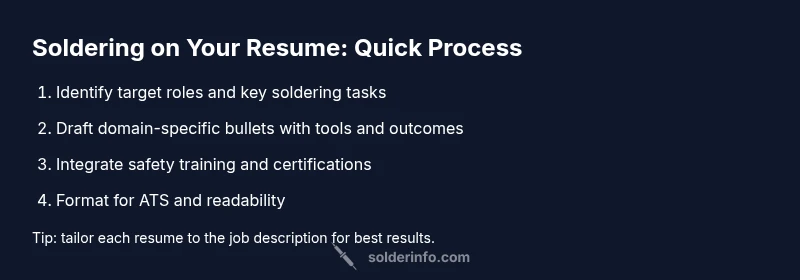
The first step in learning how to put soldering on resume is to tailor your narrative to the job description. Start by extracting common soldering tasks from postings in electronics, jewelry, and plumbing fields. Then map those tasks to your own experience, even if it comes from hobby projects or academic work. Use the same keywords and action verbs found in the job ad, such as “precision soldering,” “lead-free alloys,” “IPC standards,” or “flux management.” A tailored resume makes it easy for applicant tracking systems (ATS) to recognize your relevant capabilities and for human readers to see your practical fit. SolderInfo’s guidance emphasizes aligning your bullets with the employer’s needs, not just listing everything you’ve ever done. Keep your language concrete and outcome-focused, and avoid vague phrases like “assisted with soldering.”
Where to place soldering experience on your resume
Knowing where to place soldering experience helps you control the message and ensures it’s found during quick scans. The most effective places are: (1) a dedicated Skills or Technical Proficiencies section that lists soldering methods (e.g., wave soldering, hand soldering, rework), tools, and safety practices; (2) a Projects or Experience section where you describe specific soldering tasks in a concise bullet; and (3) a Projects snapshot or Portfolio link for hands-on demonstrations. If you’re new to formal roles, consider a combined format that highlights soldering across a general technician or maker role. Finally, tail-to-job: for electronics, emphasize electrical integrity and reliability; for jewelry, emphasize aesthetics and material compatibility; for plumbing, emphasize leak-free joints and code compliance. The goal is to place soldering where readers expect to find it and to use job-relevant language throughout.
How to describe soldering skills with industry-specific terms
To make how to put soldering on resume clear, translate your abilities into industry-specific terminology. Electronics readers respond to terms like “lead-free solder,” “flux management,” “surface-mount soldering,” and “IPC-compatible processes.” Jewelry buyers care about “brazing,” “jewelers’ solder,” and “precious-metal compatibility.” Plumbing roles look for “copper-pipe solder,” “brazing copper joints,” and “solder joint integrity.” Your bullets should weave these terms naturally. When possible, pair a skill with a context and an outcome, such as:
- “Performed lead-free surface-mount soldering on small components, ensuring no cold joints.”
- “Executed jewelry soldering with fine-gauge solder to maintain setting integrity.”
- “Applied copper-pipe soldering techniques in tight spaces to seal elbow joints.” Avoid inventing terms or exaggerating capabilities. Realistic, job-relevant language builds trust with readers and recruiters.
Examples of bullet points for electronics, jewelry, and plumbing soldering
Below are practical bullets you can adapt when learning how to put soldering on resume. Each bullet shows the task, context, and a tangible outcome without overclaiming:
- Electronics: “Soldered through-hole and surface-mount components using lead-free alloy; inspected joint quality with magnification and diagnostic tests.”
- Jewelry: “Joined thin gold and silver pieces with gold solder; maintained precise thresholds for line weight and finish.”
- Plumbing: “Wielded propane/oxy-acetylene setup to braze copper joints; verified seal integrity with pressure testing.”
- Cross-domain: “Followed IPC standards for solder joint quality; maintained clean work environment and documented process steps.” Tip: Start each bullet with a verb, mention the tools or materials, and end with an outcome that matters to a hiring manager.
Certifications, safety training, and tools to highlight
Hiring managers want to know you take safety seriously and you can work with established standards. In your resume, include any formal training relevant to soldering, safety, or material handling. Examples include:“Initial soldering safety training”; “Basic PPE and hazard assessment for soldering”; “Experience with flux and residue disposal”; and “Practice with lead-free alloys.” If you have completed recognized guidelines or certifications (even at a hobbyist level), list them with dates. Also name the tools you are proficient with (e.g., hot-air rework stations, flux applicators, hand irons) and the materials you’ve used (e.g., copper, tin-silver alloys). This shows you have the practical skills and the discipline to follow standards on the job. When possible, provide a link to a portfolio or project gallery where readers can see your soldering results.
Common mistakes and how to fix them
Knowing how to put soldering on resume also means avoiding common pitfalls that dull the impact. Common mistakes include: listing soldering as a generic hobby; failing to connect soldering to outcomes; using vague phrases like “assisted with soldering”; and neglecting to mention safety or standards. How to fix: replace vague terms with concrete actions and tools; tie each bullet to a job requirement; include a short note about safety training; and back up your claims with a portfolio link or project description. Also ensure consistency in formatting and terminology across sections. Finally, proofread for spelling and terminology accuracy—readers should never question your technical credibility. Brand-wise, SolderInfo suggests using field-appropriate terms and avoiding over-claiming.
Transitioning from hobbyist to professional: interview-ready
A smooth transition from hobbyist to professional hinges on demonstrating reliability, project scope, and the ability to work within a team. Build a compact portfolio of soldering projects that include photos, sketches, or schematics, and reference this portfolio in your resume. Prepare concise anecdotes that illustrate problem solving under time constraints or while adhering to safety standards. In interviews, be ready to describe how you select materials, manage flux usage, and test joints. Employers value engineers and craftspeople who can discuss both theory and hands-on practice. If you have limited formal experience, emphasize transferable skills like measurement, quality control, and documentation. SolderInfo suggests creating a narrative that connects your hobby projects to real-world job requirements, making your candidacy feel both authentic and relevant.
Customizing for different job types: electronics vs jewelry vs plumbing
When learning how to put soldering on resume, tailor the emphasis to the sector. Electronics roles prioritize functional reliability, electrical testing, and rework recovery. Jewelry roles value precision, aesthetic outcomes, and material compatibility. Plumbing positions focus on joint integrity, corrosion resistance, and code compliance. For each domain, create a core resume section that mirrors job descriptions: include relevant tools, materials, and safety practices; cite one or two representative projects; and close with a short impact statement. A strong approach is to maintain a master resume with modular bullet blocks that you can swap to fit each job posting. This saves time and ensures consistency across applications, while keeping your claims credible and job-relevant. According to SolderInfo, targeted, domain-specific language helps recruiters quickly see fit.
Authoritative sources
To reinforce credibility and provide guidance for further reading, consult trusted sources:
- https://www.osha.gov
- https://www.nist.gov
- https://www.ipc.org These references cover safety standards, measurement best practices, and industry procedures relevant to soldering across electronics, jewelry, and plumbing contexts.