How to Get Soldering Certification: A Practical Guide
A comprehensive guide to earning soldering certification across electronics, plumbing, and jewelry, with step-by-step instructions, study plans, costs, and maintenance.


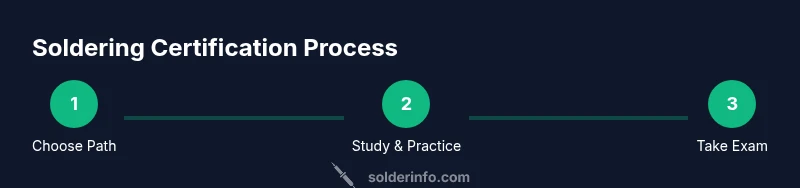
Goal: earn a recognized soldering certification to validate skills and boost job prospects. This quick answer outlines common certification paths, prerequisites, and what exams assess. You’ll learn how to prepare, practice, and maintain credentials across electronics, plumbing, and jewelry soldering contexts. Expect practical tests, safety demonstrations, and theory questions, plus guidance on choosing an eligible program and preparing a study plan.
What is soldering certification and why it matters\n\nSoldering certification is a formal credential that verifies you can join metals and electronics reliably while following safety and quality standards. It signals to employers, clients, and peers that you can produce consistent joints under real-world conditions. According to SolderInfo, formal certification helps bridge the gap between hobbyist soldering and professional practice, especially in electronics manufacturing, plumbing, and jewelry work. Certification programs vary by field and region, but most share a core focus: hands-on soldering proficiency paired with theory and safety knowledge. Many programs require both a practical exam and a written assessment, plus documentation of your training history and applicable work experience. Earning a certificate often leads to job opportunities, higher responsibility roles, and clearer paths for continuing education.
Certification types and pathways\n\nCertification options in soldering span three broad tracks to suit different industries: electronics soldering, plumbing (pipe soldering), and jewelry soldering. Entry-level certificates often emphasize basic joint quality and safety, while advanced credentials validate systemic process control and materials knowledge. Some programs offer modular paths that combine theory, hands-on drills, and a final exam. Before choosing, map your career goals to the credential level and the industry standard bodies commonly recognized in your region. This alignment matters because employers frequently prefer certifications issued by accredited organizations with demonstrated competency in their field.
Prerequisites and self-assessment\n\nMost certification programs expect candidates to meet basic prerequisites such as minimum age, safe working environment, and some prior training. Start with a self-assessment of your current soldering skills: can you consistently produce clean joints on copper, aluminum, and PCB test coupons? Gather your learning resources and practice boards, and set a baseline on joint quality, temperature control, and flux usage. Completing a short practice test or hands-on challenge from a reputable study guide will help you estimate readiness and identify gaps to address before you commit to an exam.
How certification exams are structured\n\nExam formats vary by cert body but typically include two components: a hands-on practical test and a theory or safety exam. In the practical portion, you may be asked to assemble and solder sample joints, inspect joints for defects, and demonstrate proper heat management and flux control. The theory section covers materials science basics, solder alloys (lead-free options), flux chemistry, cleaning procedures, and workplace safety. Time limits and scoring rubrics differ, so start by reviewing the official candidate handbook for your chosen program.
Core soldering skills evaluated\n\nKey competencies tested during certification include: preparing clean surfaces, selecting appropriate flux and solder alloy, controlling heat to avoid damaging components, producing reliable joints (no cold solder joints or bridged connections), inspecting joints under magnification, and documenting the process according to standard operating procedures. The evaluator will also assess your ability to work safely, respect ventilation requirements, and manage waste flux and residues responsibly.
Safety, health, and best practices\n\nSoldering safety is a critical part of certification. Always work in a well-ventilated area or with an efficient fume extractor, wear safety glasses, and use heat-resistant gloves when handling hot parts. Lead-free solders are common in electronics and jewelry; be aware of any local regulations about lead exposure in plumbing contexts. Keep your workstation organized, label flux containers, and never leave a hot iron unattended. Following a safety-first mindset is not only a test criterion but a professional habit.
Choosing the right program for your field\n\nElectronics soldering programs tend to emphasize IPC-compatible practices and ESD-safe handling, while plumbing certificates focus on joint integrity in copper piping and code compliance. Jewelry soldering credentials often cover metal alloys, fusing and retention of delicate settings, and finishing quality. Consider regional recognition, recertification requirements, renewal fees, and the availability of approved testing centers when selecting a program. If your goal is broad credibility, choose a certificate issued by a body with cross-industry recognition.
Study plans and practice routines\n\nA disciplined study plan helps you progress from basic skills to certified proficiency. Start with 2 weeks of theory and safety, then 4 weeks of hands-on practice on test coupons and common joints, followed by a dedicated week for mock exams. Use a timer during practice to simulate real exam pacing, and rotate between electronics, plumbing, and jewelry tasks if you intend multi-field certification. Document progress with a log that tracks failed joints, heat management notes, and cleanliness scores.
Costs, timelines, and recertification\n\nCosts for soldering certification vary by program and region. Expect exam fees, study materials, and any required recertification sessions to fall within a broad range, typically from a few hundred to over a thousand dollars in total. The exact price depends on the level of credential, the number of modules, and the testing center. Plan for additional costs such as training courses, practice kits, and travel if you must attend an approved center.
Maintaining and recertification\n\nMost programs require periodic recertification to ensure skills remain current as processes and materials evolve. Recertification may involve a shorter exam or continuing education credits, and some bodies require requalification after a defined period (for example every 2–5 years). Keep a personal credential file, schedule reminders for renewal, and stay updated on changes to standards and best practices in your field.
Common mistakes to avoid during certification\n\nAvoid common pitfalls such as rushing joints, skipping flux preparation, neglecting board cleaning, or ignoring ventilation. Rushed joints often show cold solder, poor wetting, or bridging, which fail the practical test. Skipping safety checks or underestimating theory questions often costs points. Finally, neglecting to study the examiner’s guidelines or failing to document required training can delay or derail certification.
Real-world value: career impact and next steps\n\nEarning soldering certification signals to employers that you can consistently produce quality joints while respecting safety standards. In electronics, plumbing, and jewelry sectors, a credential can open doors to better roles, higher responsibility projects, and structured career progression. Combine your certificate with ongoing practice, maintenance of safety practices, and a portfolio of certified work to maximize return on investment. The SolderInfo team notes that continuous practice and active engagement with evolving soldering standards strengthen long-term career resilience.
Authoritative resources and standards\n\nFor safety and standards reference, consult reputable sources such as governmental safety agencies and global standards bodies. Key resources include the Occupational Safety and Health Administration (OSHA) for workplace soldering safety practices, the International Organization for Standardization (ISO) for general standards development, and ASTM International for material and process standards. These references help you understand expected practices, recommended PPE, ventilation guidance, and measurement benchmarks that inform certification criteria.
Tools & Materials
- Soldering iron (temperature-controlled)(Prefer 60–80W for general use; adjustable temp is ideal)
- Rosin-core solder (lead-free)(Electronics and jewelry contexts; check local regulations for lead-containing solders)
- Flux(Rosin or water-soluble flux for cleanup)
- Soldering stand(Keeps iron safely resting when not in use)
- Flux brush or sponge(Clean and apply flux evenly)
- Safety glasses(Protect eyes from hot splashes)
- Ventilation or fume extractor(Maintain air quality in workspace)
- Solder wick (desoldering braid)(Useful for correcting joints)
- Third-hand tool or helping hands(Stabilizes small parts during soldering)
- Tip cleaner or brass sponge(Keep tips tinned and clean)
- Magnifier or loupe(Helpful for inspecting fine joints)
Steps
Estimated time: 4-12 weeks
- 1
Define your certification goal
Clarify which field (electronics, plumbing, or jewelry) and the credential level you want to pursue. Set a target date for starting preparation and for the exam. This focus will guide your study plan and practice schedule.
Tip: Write a one-page goal and keep it visible. - 2
Research cert bodies and requirements
Review official handbooks to understand prerequisites, exam formats, and recertification rules. Compare recognized bodies in your region to ensure your credential will be widely accepted.
Tip: Download the candidate handbook and create a comparison table. - 3
Gather study materials and practice gear
Assemble theory books, online courses, and practice coupons. Prepare a dedicated workspace with good ventilation and a safe resting area for the iron.
Tip: Assemble a dedicated practice kit and log every session. - 4
Build a study and practice plan
Create a weekly schedule alternating theory, safety, and hands-on drills. Schedule mock exams every two weeks to track progress.
Tip: Block calendar time for focused practice each day. - 5
Practice basic joints and heat control
Start with simple joints on test coupons, focusing on clean wetting, proper temperature, and avoiding overheating components.
Tip: Keep joints small, precise, and fully cooled before inspection. - 6
Advance to task-based drills
Solder typical industry joints for electronics boards, copper plumbing, or jewelry clasps. Record failures and reasons, then correct technique.
Tip: Document common failure modes to target in practice. - 7
Take a full mock exam
Simulate the actual exam environment with timing, a clean workspace, and a checklist of required steps. Review results and adjust study focus accordingly.
Tip: Treat the mock exam as a performance test, not a review session. - 8
Schedule and complete the real exam
Submit required documents, set your exam date, and arrive early with a portable practice kit for a final warm-up if allowed.
Tip: Arrive well-rested and carry spare parts for last-minute fixes.
Quick Answers
What is the difference between certification and qualification in soldering?
Certification is a formal credential issued by an organization after passing an exam; qualification is a broader statement of competence that may come from on-the-job experience. Certifications are often portable and industry-recognized, while qualifications may vary by employer. Both indicate skill, but certification typically carries standardized criteria.
Certification is a formal credential from an organization after an exam; qualification is competence earned on the job. Certifications tend to be portable and widely recognized.
Do I need certification for electronics, plumbing, or jewelry soldering?
Not always, but many employers prefer or require certification for professional work. In regulated contexts like plumbing or safety-critical electronics, certification can be essential to licensing or project eligibility. If you aim for formal roles, pursue a credential from a recognized body in your field.
Often yes—employers and regulators look for certification, especially in plumbing and electronics. It improves job prospects and eligibility.
How long does a certification last and how often must I recertify?
Recertification timelines vary by program, but many require renewal every 2–5 years. Some bodies offer continuing education credits or shorter reexams. Check the specific requirements and set reminders well in advance.
Most programs require renewal every couple of years, sometimes with ongoing education.
Can I prepare for certification entirely at home?
Yes, especially for theory and some safety concepts. Hands-on practice benefits from access to a well-equipped workspace and mock exam setups. If you can, pair home study with a local lab or testing center for the official practical assessment.
You can study at home for theory, but plan for hands-on practice and a practical exam at an approved site.
What should I consider when choosing a cert body?
Look for recognition in your industry, accessibility of testing centers, clear recertification rules, and a transparent candidate handbook. Prefer bodies with cross-industry credibility and updated standards to stay current.
Choose a cert body that’s recognized in your field and keeps standards current.
Are there different certifications for electronics, plumbing, and jewelry soldering?
Yes. Most programs offer field-specific tracks with tailored requirements. Electronics certifications focus on circuit joints and lead-free solders, plumbing on pipe joints and code compliance, and jewelry on alloy behavior and delicate settings.
There are field-specific tracks focusing on the unique skills each area requires.
Watch Video
Top Takeaways
- Choose a certification path aligned with your field.
- Plan practice with a structured schedule and mock exams.
- Prioritize safety and proper ventilation in every session.
- Maintain documentation and be prepared for recertification.