How Much Solder Should You Use: A Practical Guide
Discover how to estimate the right solder amount for electronics, plumbing, and jewelry joints. Learn joint types, solder varieties, flux use, essential tools, step-by-step methods, and safety to prevent cold joints and bridges.


According to SolderInfo, you will learn how much solder to apply for reliable joints across electronics, plumbing, and jewelry. The right amount varies by joint type, solder type, and heating method, but you can use practical rules of thumb to avoid cold joints or bridges. This guide covers measurement, application, inspection, and troubleshooting techniques, plus safety considerations and common mistakes.
Why getting the solder amount right matters
Solder quantity directly affects joint integrity, electrical reliability, and long-term durability. In practice, too little solder can leave a weak fillet that dries and cracks under vibration or thermal cycling; too much solder can cause bridges, cold joints, and accidental solder flow where it isn’t wanted. The goal is a clean, well-wetted joint with a smooth, glossy fillet that indicates good heat transfer. According to SolderInfo, establishing the right amount starts with understanding the joint type, the solder alloy, and the heating method you will use. This foundation helps you predict how much solder is appropriate before you begin, reducing guesswork and rework. With the right mindset, you can consistently achieve reliable joints across electronics, plumbing, and jewelry projects.
How solder amount affects joint strength and electrical reliability
Wetting behavior is the key indicator of whether you have the right amount. Proper wetting produces a smooth, tapered fillet that encircles the pad and component lead, creating a strong mechanical bond and a low-resistance electrical path. If you apply too much solder, it can pool and form fillets that trap air, create bridging to adjacent pads, or wick beneath components, potentially causing shorts. Too little solder can leave voids that compromise mechanical strength and permit moisture ingress. The amount interacts with flux activity, heat transfer, and cleanliness; a clean surface with adequate flux makes it easier to achieve the correct amount. In practice, work with controlled heat and steady hands to fine-tune the amount for each joint type.
Solder types and how they influence how much you should use
Different solder chemistries change how much you need to apply. Rosin-core solder and flux-rich variants enhance wetting, making it easier to achieve a proper fillet with a small amount of solder. Leaded alloys typically melt at lower temperatures and may require less heat to reach good wetting, while lead-free variants tend to require higher heat and more cautious management of oxidation and flux activity. Solder diameter also matters: thicker wires can require more solder to wet a larger pad, while fine-pore joints benefit from a thinner wire. The overarching principle is to tailor the amount to the joint size, the alloy’s melting behavior, and the flux’s effectiveness. Practice with scrap pieces to feel how much is enough for your preferred alloy and temperature settings.
Solder amount by joint type: electronics, plumbing, and jewelry
For electronics, aim for a small, controlled bead that wets the pad and lead without creating a lump. In PCB work, clean pads and precise flux application help you use very little solder while ensuring reliable joints. Plumbing copper joints typically require a slightly larger fillet to seal the joint and fill capillary gaps, but you still want to avoid floods that could trap air or obscure the joint. Jewelry soldering often uses tiny, delicate joints where a minimal amount of solder ensures clean lines and strong yet discreet joints. In all cases, the guiding idea is to seek a glossy, convex fillet that indicates complete wetting without pooling or bridging. The right amount varies by material, joint geometry, and heat control.
Practical steps to measure and apply solder
Start with a clean, fluxed surface and a well-prepared joint. Apply flux to the joint area, place components in alignment, and tin the soldering iron tip to promote heat transfer. Introduce the solder at the heated joint, not directly onto the iron, and let capillary action draw the solder into the joint. Withdraw the solder and the iron together once the fillet begins to form, then inspect for complete wetting. If excess solder appears, remove it with solder wick or rework with flux and heat. Allow the joint to cool undisturbed to avoid stressing the bond. This approach minimizes waste while maximizing reliability.
Common mistakes and how to fix them
Common errors include using too much solder, insufficient flux, or failing to pre-tin the tip. Overloading creates bridges and blobs; under-fluxed surfaces resist wetting and can trap air. If a joint looks dull, reflow with a tiny amount of solder and more flux, ensuring the pad remains clean. For a bridged joint, carefully wick away the excess solder and inspect adjacent pads for cleanliness. When in doubt, rework on scrap test pieces before attempting critical joints. Practice with varied joint types to build muscle memory for the right amount under different temperatures and flux conditions.
Inspecting joints: cues for too little or too much solder
Look for a glossy, well-wetted fillet that covers the pad and lead without overflowing onto adjacent areas. A dull, grainy, or grainy surface may indicate insufficient solder or poor wetting; rework with flux and heat to improve wetting. A large blob or bridge suggests too much solder, poor heat distribution, or movement during cooling. Visual inspection and gentle bending tests (for non-sensitive joints) help identify weak mechanical bonds. If you see voids or gaps, reflow the joint with a small amount of solder and ensure steady heat.
Adapting to temperature, flux, and technique to fine-tune amount
As temperature, flux quality, and pad cleanliness change, the amount needed can shift slightly. Higher flux activity and cleaner surfaces reduce the amount required for reliable wetting; elevated temperatures can help wet larger joints but risk thermal damage if not controlled. When using lead-free solder, be mindful of the higher melting point and longer reflow times, which may necessitate a slightly larger initial bead and slower cooling. Practice adjusting the application technique on scrap joints to build intuitive sense for the right amount in varied scenarios.
Tools & Materials
- Soldering iron with temperature control(Set to 315-360°C for electronics; adjust for plumbing or jewelry as needed)
- Solder wire (rosin-core, lead-free preferred)(Diameter 0.6-0.8 mm is common; choose finer for small joints)
- Flux (pens, paste, or liquid)(Use fresh flux to improve wetting and prevent oxidation)
- Solder wick (desoldering braid)(For removing excess solder and correcting bridges)
- Solder sucker (desoldering pump)(Optional; useful for larger excesses)
- Helping hands or third-hand tool(Stabilize components during placement and heating)
- Small flush cutters and tweezers(Trim leads and handle tiny components accurately)
- Heat-resistant mat or silicone work surface(Protects bench and absorbs stray heat)
- Safety glasses and fume extractor or well-ventilated area(Always protect eyes and lungs from fumes)
- Magnifying glass or jeweler's loupe(Helpful for small SMT joints)
Steps
Estimated time: 25-40 minutes
- 1
Prepare workspace and safety gear
Clear the bench, connect the fume extractor, and put on safety glasses. Ensure your soldering iron is on a stable stand and preheated to the correct temperature. Clean surfaces and flux-ready tools before handling parts.
Tip: Verify ventilation and stance before starting to avoid heat fatigue. - 2
Tin the tip and apply flux to the joint
Lightly tin the iron tip to improve heat transfer. Apply flux to the joint area to promote wetting and reduce oxidation during heating.
Tip: A well-tinned tip reduces the amount of solder needed later and improves control. - 3
Position components and secure the joint
Align pads, leads, and components with tweezers or helping hands. Secure the assembly to prevent motion during heating, which can cause misalignment.
Tip: Use a gentle, stable grip; avoid forcing parts together with excess force. - 4
Apply solder with a light, steady bead
Touch the joint with the solder wire close to the heated area, letting capillary action draw solder into the joint. Move the iron slightly to prevent heating one spot too long.
Tip: Aim for a tiny bead and stop as soon as wetting starts; prevent solder blowouts. - 5
Withdraw solder and heat together; inspect wetting
Pull away the solder while lifting the iron away from the joint to avoid overheating. Inspect the fillet for full coverage and smooth contour.
Tip: If you see dullness or gaps, reflow with a tiny amount of flux and reapply. - 6
Cool, clean, and verify the joint
Allow the joint to cool naturally; do not blow on it. Clean flux residues if necessary and perform a visual or functional check.
Tip: Cooling too quickly can cause micro-cracking; a slow cool helps integrity.
Quick Answers
How can I tell if I used too much solder on a joint?
Signs of excessive solder include visible bridges, blobs, and a bulky fillet that crowds adjacent pads. If you suspect overfill, rework using flux and a wick to remove the excess, then reapply a controlled amount after re-cleaning the joint.
Overfill shows bridges or blobs; use flux and a wick to remove excess, then reflow with a small amount.
What's the difference between leaded and lead-free solder in terms of amount used?
Lead-free solder generally requires careful temperature control and may need a slightly larger bead due to its higher melting point. Leaded solder often wets more easily at lower heat. In both cases, apply the minimum amount needed for full wetting and inspect the joint to confirm.
Lead-free needs a bit more heat and careful control; leaded wets more easily. Apply minimal solder for full wetting in both cases.
Why does temperature affect how much solder I should use?
Higher temperatures can increase wetting speed and reduce the need for extra solder, but they also risk damaging components. Lower temperatures may require a slightly larger bead to ensure complete wetting. Balance heat with controlled application and flux efficiency.
More heat can wet joints faster but risks damage; start with moderate temps and adjust as needed.
Can I fix a joint that has too much solder?
Yes. Use flux and a desoldering wick to draw away the excess, then reflow with a minimal bead. After removal, inspect and touch up as necessary to ensure complete wetting without bridges.
Yes. Wick away the extra solder, reflow with a tiny bead, and inspect for wetting.
How much solder do I need for plumbing copper joints vs electronics?
Plumbing joints typically require a larger fillet to seal joints and fill gaps, while electronics demand precision with tiny beads. Always prioritize adequate wetting and avoid creating pools that trap air or cause bridges.
Plumbing uses larger fillets; electronics use tiny beads. Wetting matters in both.
Is there a quick test to check if a joint is soldered correctly?
A visual inspection for a glossy fillet is a good quick indicator. Function testing or a gentle pull test (where safe) can help confirm mechanical integrity. Always rework if you see dullness, gaps, or suspected poor wetting.
Look for a glossy fillet; test function and inspect for gaps or dull areas.
Watch Video
Top Takeaways
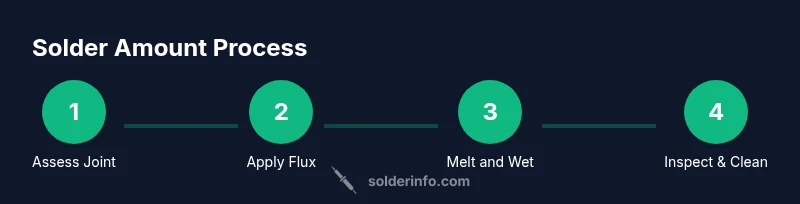
- Assess the joint type before applying solder.
- Tin the tip and apply flux for optimal wetting.
- Use minimal solder to avoid bridges and cold joints.
- Inspect joints with magnification to ensure proper wetting.
- Choose the right solder type for electronics vs plumbing.